Publication Type: Article

  • Critical Race Theory

    Critical Race Theory

    In this contribution to the Cambridge Handbook of Sociology, Mary Romero provides a comprehensive overview of critical race theory as an analytical framework for sociological research. The chapter traces the intellectual origins of CRT in legal scholarship and charts its expansion into sociology, education, and other disciplines where it has become an essential tool for analyzing systemic racism.

    Romero examines how CRT’s core tenets — the permanence of racism, interest convergence, the social construction of race, intersectionality, and counter-storytelling — have been applied to empirical research questions across a range of social institutions. The chapter pays particular attention to how CRT intersects with Latina/o critical theory (LatCrit) and other frameworks that center the experiences of communities of color.

  • The Ghosts of Bisbee

    The Ghosts of Bisbee

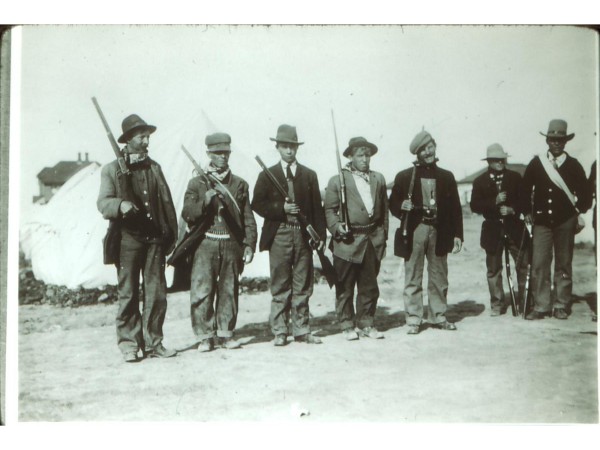
    Bisbee, Arizona was once a thriving copper mining town — until 1917, when over a thousand striking miners and their supporters were rounded up at gunpoint, loaded into cattle cars, and deported to the New Mexico desert. In The Ghosts of Bisbee, Eric Margolis and Mary Romero revisit this largely forgotten episode of American labor history, examining how the memory of the Bisbee Deportation haunts the town and the nation.

    The article combines historical research with visual documentation to explore how places carry the traces of past violence, and how communities choose to remember or forget the conflicts that shaped them. The authors find in Bisbee a microcosm of larger American struggles over labor rights, corporate power, and the suppression of dissent.

  • Video Ethnography: Toward a Reflexive Paradigm for Documentary

    Video Ethnography: Toward a Reflexive Paradigm for Documentary

    Video Ethnography:
    Toward a Reflexive Paradigm for Documentary

    By Eric Margolis

    Division of 
    Educational Leadership and Policy Studies
    Arizona State University 
    margolis@asu.edu

    This article was originally published in the journal Jump Cut as “Video Ethnography” (1994, Jump Cut 39, pp. 122-131). The web version has a number of additional photographs but the text is the same.

    Introduction

    Between 1974 and 1984 I produced a series of documentaries on coal miners in the Rocky Mountain West. Because I am a sociologist first, and a documentary maker only second, I bring a set of theoretical/methodological concerns to the enterprise of shooting and editing, that are in many ways different from those of the documentarian. My interests revolved around questions like: What is the nature of history and social life? What is the proper role for the sociologist as researcher/theorist with respect to the people and communities that (s)he studies? In oral history/ethnography, what standards can be used to evaluate the stories that we collect? And, how can these stories be utilized? The tentative answers to these questions with which I approached the miners’ world were drawn from the tradition of critical theory, specifically from the Existentialist Marxism of Jean Paul Sartre. While some of the social theory is fairly abstract, many of the issues that are problematic for sociologists have concrete applicability to the work of documentary including interviewing and editing. As much as possible I will try to illustrate the theoretical and methodological discussions with concrete referents from the coal project.[1]

    Developing the Project

    Publicly funded arts, humanities, and social science projects do not occur in a vacuum. In the same way that anthropology rested upon the foundation of colonialism, specific social, political, and technological relations allowed the coal project to get funded.[2] In 1974 Jimmy Carter had recently been elected, and the National Endowment for the Humanities (NEH) was using a revenue sharing model to establish state-based humanities programs. The Colorado Humanities Program (CHP) issued a request for proposals that would involve the “out of school adult public” and “local humanities scholars” in discussions of “public policy issues.”


    In the seventies the western states were in the midst of an energy boom that included oil and natural gas development, experimental oil shale and synfuel projects, and renewed coal mining much of it from large surface mines associated with mine-mouth power plant construction. Boom-towns and the environmental and social impacts of large scale energy development constituted one set of public policy issues. Another set of policy issues stemmed from history. Coal had been mined in the West at least since the 1860’s and legacies of that earlier coal age included “bust-towns,” environmental damage, and black lung disease. The social impacts of both the old and the new coal industry constituted the kind of “public issues” upon which the CHP was interested in bringing humanities expertise to bear. I want to emphasize that there was a very narrow window for programs such as the coal project. During the Carter years the NEH funded a number of documentary programs with labor history topics: films were made on the Wobblies, Rosie the Riveter, and the Lincoln Brigades for example. After Reagan was elected the window shut tight, moreover Reagan’s shift to a market-driven energy “policy” produced a dramatic recession in the West and drove boomtowns into bust-towns faster than ever before.

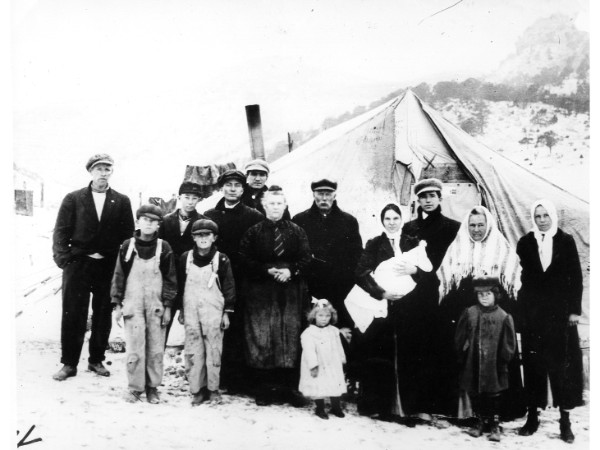
    The coal project began with a CHP grant for about $20,000. The money funded us to conduct life history interviews with miners living in Colorado coal towns. We interviewed working miners and photographed in both surface and underground mines. But most of the interviewees were retired miners living in towns that had been all but abandoned when the first coal age ended in the 1950’s.


    The Regressive Moment: Interviewing and Data Collection

    We asked the old timers to recount the events of their lives beginning with stories they had heard from their parents and continuing with immigration experiences, recollections of childhood, working life, retirement and the experience of growing old. We probed to discover the big events of mining history like strikes and disasters, but we also searched for the mundane reality of everyday life. We sought the communities’ articulation of their identity, recognizing that this included contrary positions and community conflicts. Only the most general interview schedule was prepared in advance; interviews were not interrogations, questions were conversational and open-ended. There was no time limit, the interview technique assumed agency on the part of the respondents and provided space for them to determine their own agenda. As a sociologist I hoped to discover “natural” social and historical explanations in the mining communities. Film makers would of course be appalled at a shooting ratio of 100 to 1 or more.

    As part of the interview we asked subjects to suggest other respondents. Through this snowball sampling process a network of interviewees was developed which spanned the coal fields and included: union and non-union miners, union organizers, mine operators, bosses and foremen, mining engineers, occupational health and safety specialists, government officials, coal miners’ daughters, wives and widows, shopkeepers, doctors and others who lived in the coal communities but did not work the mines. We also took steps to make sure that the sample represented the many ethnic groups that came west to mine coal — Italians, Welsh, Slavs, Greeks, Mexicans etc. We interviewed people representing the range and variety of factions, social groups, and specific viewpoints found in coal communities. The community participated in and welcomed the coal project. The miners’ felt that their perspective had been systematically ignored or devalued and relished the opportunity to talk. Perhaps the situation was best summed up by one old timer who after an interview said: “who’d have ever thought you guys from the university would come down here and want to hear all this stuff.” We quickly had far more people volunteer to participate that we would ever be able to interview.

    Interviews ran as long as three hours and audio recordings were made so that excerpts could be used in a slide-tape production. With a 35mm camera we photographed the miners, their families and the environment. The recording technology, rather than making people shy, seemed to raise the event in importance. With a couple of visits to libraries and historical museums we began to uncover the rich visual history of black-and-white photographs. Many subjects volunteered family albums and documents which were copied as part of the record. Thousands of additional historic photographs were copied from archives, and company files. We used Panatomic X film and Kodak’s direct positive development kits to make beautiful sharp black-and-white slides.

    The recounting of historic events is one way that individuals make community. Oral history is thus a social process that occurs whether someone is there with a tape recorder or not. The other kind of oral history, the research process, is fraught with problems. In essence an outsider is attempting to enter the community process for a “higher” purpose. That is, they seek to “discover” or “preserve” or “bring to a wider audience” the taken-for-granted realities of a community to which they do not belong. Outside interviewers must therefore “negotiate access,” “establish rapport,” protect the confidentiality of human “subjects” and so on. In sum, they must construct an identity acceptable to community members so that they will talk with them. Anyone who has done much interviewing is aware of the ways that questions overdetermine the answers. If you ask “What was life in a company town like” they will tell you about the exploitation of company stores and scrip. If you ask, “What was life in a small town like?” they will tell you how everyone got along and helped one another in ways that they don’t today. Experience as an interviewer also makes you aware that while questions elicit information they frequently get in the way — that is they side-track people, lead off on tangents, are distracting etc. Most of us also live with the feeling that the person sitting across from us would tell a good story, if only we knew the right question to bring them out. Not being members of the community, however, we do not know what to ask. We fumble around. Frustrations with the interview process and the notion that oral history was going on all the time led me to try to develop procedures that allowed us to record history-speaking while avoiding some of the pitfalls of interviewing.

    I noticed that old timers got together at certain formal locations as well as informally to tell stories, “mine coal” and “swap lies.” So we went to some of these places and recorded. A day was spent in a clinic where miners went for the medical tests necessary to proving that they were eligible for federal black lung benefits. We also recorded a meeting crowded with retired miners where officials from the Department of Labor explained the rules and administrative procedures for black lung benefits. We set up situations allowing us to record discussions of history between participants — bringing together husbands and wives, brothers, friends, or small groups of subjects. Recording sessions were held in bars and restaurants as well as living rooms, kitchens, and front porches. In one remarkable session, a man who had operated a small mine took us through a collection of artifacts he had accumulated. Everything he picked up had stories connected to it and we simply recorded while things asked “what is this and what does it mean.” In these situations the role of interviewer shrank to asking an occasional question while subjects took over directing the discussion.

    I was the naive interviewer at first. I had not studied the written history; in fact the first time someone mentioned Mother Jones I did not recognize the name. There were two theoretical/methodological reasons to begin with interviews, rather than the more usual scholarly process of reviewing the literature. In the first place, I was forced to ask questions which frequently led to important explanations. (later, as I became more “expert” I had to feign ignorance to elicit information and this never felt natural or worked as well). The second reason is more subtle. Sociologists including critical theorists, and Marxists, tend to begin with theory and frequently ignore the messy empirical features of the lived reality. Ethnic relations, the generation gap, voluntary organizations like labor union locals, particular local towns, the idiosyncratic psychology and comprehensions of individuals, etc., have all too often been relegated to the realm of accident, tagged with pejorative labels like superstructure or false consciousness, or simply reduced to the mean, merged and glossed into abstract categories of subculture, role, class, etc. In place of the detailed historiography which Marx, Weber and Durkheim practiced, recent sociologists (and post-modernists are among the worst offenders) substitute slogans, abstract generalizations, or the exegeses of sacred tests.

    By the end of the first interviewing phase several dozen interviews had been recorded on audiotape and the tapes had been transcribed. Several hundred color slides of the interview subjects had been made and a couple of thousand historic photos had been copied as black-and-white slides. We sat down to edit a multimedia document portraying the history and present conditions of the Colorado coal community.

    The Progressive Moment: Editing

    I conceived of editing as a place where biography and history intersected. Editing was the process which would transform individual biographies into a historical progression elucidating the individual’s role in history. Employing Sartre’s theoretical suggestions (discussed more thoroughly in the conclusion), I planned the editing process to be alternately regressive and progressive. In the regressive moment transcripts became the basis of the script. They were analyzed, cut apart, and organized topically: mine explosions, mules, Mother Jones, Ludlow, company scrip, etc. Photographs were similarly indexed. This analytic procedure converted heterogeneous interviews into homogeneous categories. Many people providing perspectives on similar or identical events portrayed the unity or conflicts of events in the coal miners’ history. The progressive moment was the attempt to produce synthesis. Efforts at “totalization” produced scenes utilizing juxtaposition, montage, agreement and contradiction that further developed the process intended to create a document that captured the movement of history.[3]

    I intended to use the editing process to produce “documents” rather than documentaries. My role as editor was not that of providing the sociologist’s standard of objective truth, but rather to arrange an order that reflected the living relation between biography and history. I wanted to capture the emphasis of knowledge held in common by communicating people’s analysis in their own words. As much as possible I wanted to avoid relying on a narrator or expert commentator to impose an overview or legislate meaning. The process was designed to avoid forcing a preconceived analysis on the material. Ethnographic editing techniques allowed the raw materials to inspire both form and content. Certain topics brought up in almost every interview suggested scenes: immigration, ethnic relations, changing techniques and technology of mining, exploitation in the company town, the struggle to organize, the Ludlow strike, the IWW Strike, disasters, etc. Each individual biography lent unique content even as people recounted history that they made in common. Historical categories were not imposed by the editor but were nominated by coal people out of their own experience.

    The assembled documents were architectonic in the same sense as Frank Lloyd Wright’s buildings: historical structures were constructed out of materials available in the local environment, depicting historic relations that gathered together coal, technology and man. Editing itself was a materialist process concentrating on assembling and ordering thingsthat had been collected including: recordingsof people’s talk about the past; photograph and other iconswhich remain after the things they represent have gone; and objectsleft over the coal age, including the miners’ bodies, tools, and other things that were preserved. The edited document was intended as a model of the relation between biography and history. Art and artifice entered the process. In order for the finished documents to be worth watching they had to be artistic creations able to engage the audience and keep their attention. Craft was important. Aesthetic concerns and the ability to capture both reality and an audience were essential. Music and sound or visual effects were employed to emphasize a mood or make the program flow.

    The initial production was a multimedia slide show. When the paper transcript files were completed, sound clips were taken from the interviews and were assembled as the backbone of a sound track which included music and sound effects. Black-and-white slide copies of historical photographs were used to flesh out the program, they were selected to illustrate the events being spoken about. Color slides of the interview subjects introduced the narrators. Once the program was assembled a pulse track was created that drove four slide projectors with dissolves. The program was shown on a nine by twelve foot rear projection screen.

    The program had three documents: history, modern mining, and black lung disease. The history document began with an introductory discussion of immigration experiences, testifying to how coal towns became polyglot communities and drawing attention to conflicts between ethnic groups. “Immigration” segued into a montage of voices explaining the work process and organization of production; company towns, scrip, crooked checkweighmen, and other forms of exploitation led to safety issues, disasters and the need for a union. In pattern the scene mirrored the structure of biographical accounts given by individual miners. The second history scene briefly discussed the 1927 Colorado strike led by the Industrial Workers of the World (Wobblies). Using this scene at this point interrupted the historical progression, it was an editorial decision based on pacing. The IWW strike was not the most important strike, but it introduced strike violence and was used to build towards the bloody climax of the Ludlow Massacre.

    From 1927, the program “flashed back” to the 1913-14 strike and Ludlow massacre which were mentioned by every miner interviewed; it was the most important event in the community’s history. The Ludlow scene occupied about a third of the one hour program. A tremendous collection of historical photographs and excerpts from interviews with several participants and one of the union organizers brought the story to life. Structurally, an interview with Barron Beshoar, who wrote a book on the strike, provided a framework upon which we “hung” first person accounts.[4] Sound effects and montage technique helped build the pace to a climax, but actually with the exception of a few gun shots little artifice was needed for this section. Strike events had their own relentless pace: the UMWA issued a strike call; strikers and their families were evicted from the company towns; tent colonies were set up; company guards and strikebreakers arrived; violence ensued; the militia were mobilized; Mother Jones arrived and was arrested; a women’s march was broken up by saber wielding troopers; a small tent colony was destroyed by the militia. Eight months after the strike was called the Ludlow tent colony was set afire by the militia and eleven children and two women suffocated beneath a tent. Funerals were held while enraged miners attacked mines along Colorado’s front range. Finally federal troops arrived and an uneasy truce was established.

    The Ludlow scene ended with a totalization from Beshoar:

    As you know, the miners’ lost the strike and the miners never became the people they are today until Roosevelt became President…. And finally, the UMWA, years and years later, gets a contract–a proper union contract in the mine. But from 1913 until the Roosevelt administration they had not won anything really.

    After a fade to black, the sound of modern mining machinery faded up to a roar. Dark slides of underground mechanical miners filled the screen. A montage of voices, old and young, exclaimed an optimism that coal mining was coming back to the mountains and prairies. The visuals switched to brilliant sundrenched photos of strip mines and 100 car coal trains. A kaleidoscope of topics were brought up but not fully explored: modern technology, safety, young miners rejecting the union, social and environmental impacts. The modern mining document was brief, about ten minutes, and offered no conclusions. It was meant to reinforce the orientation toward the future that made the entire program a “document” rather than a historical documentary.

    The last document, “black lung,” took twenty minutes to explain the causes and symptoms of the disease from the miners’ perspective. They discussed problems applying for and receiving federal black lung benefits. Miners and a medical doctor frustrated with the federal bureaucracy were intercut with representatives of the Social Security Administration, and an Administrative Law Judge who explained why applications were turned down. Parallel cutting techniques raised this to a confrontational level. Slides of old timers on tread mills, having blood drawn, and in hospital beds, the miners’ voices and the bureaucratic rational for rejecting applications indicted the system. The essence of the document was contained in one miner’s comment that “You’ve always had to fight for everything you’ve gotten.” The comment totalized the miner’s experience: they fought the coal, they fought to build a community on the frontier, they fought for wages, for working conditions, for a union, and now they fought the bureaucracy for the benefits they felt entitled to.

    For the sociologist qua editor, the attempt to create a totalizing document began as a process of cross-referencing, seeking to enumerate the historical particularities of the life of the coal miner. Transcript analysis altered the order of the material from biographical to historical. The goal was:

    [to] progressively determine a biography… by examining the period, and the period of examining the biography. For from seeking immediately to integrate one into the other, it will hold them separate until the reciprocal involvement comes to pass of itself and puts a temporary end to the research. (Sartre, 1960:135)

    This description of editing is not to argue for some kind of mechanical procedure or formula, nor to suggest that the program produced itself. The work of making “documents” was in large part no different from any editing project. For the multimedia show hundreds of hours of interviews were cut down to less than sixty minutes. Thousands of historic photos were similarly winnowed, selected and incorporated. Historic and modern music was located, selected and added to the production. But behind it all we sought to establish a certain understanding.

    The social scientific approach which Sartre recommended gives concrete content to the method of “comprehension” or Verstehen. Comprehension is not a specialized method that is the property of professionals; it is no more (and no less) than the natural understanding each one of us uses every day to guide our lives. The comprehension of any human action simply requires knowledge of the conditions which led to action and the actor’s goal. A example is the editing decision which brought together comments by Kate Livoda, and Donald Mitchell.[5] Both grew up in Southern Colorado coal towns and talked about experiences in a company school:

    Kate: And then we had to walk several miles to school and all such as that. And of course there was the miners’ kids and they weren’t treated any too good, cause the superintendent’s children had the front seat, of course

    Donald: Even in the schools we wasn’t, we was treated different. Hell, I fought my way through school here and I got to be quite a fighter, from just over that, heh, heh, heh.

    Kate Livoda provided the regressive understanding of how deep the class system penetrated into coal camp life to reproduce the structures of exploitation. Donald Mitchell, however, thrusts our understanding into the future by telling us how he made himself a fighter. Mitchell showed how historic circumstances lead to action which takes place within a world of objective conditions and is motivated by intentions. Comprehension of an action, in Sartre’s (1960:155) terminology, “…is the totalizing movement which gathers together my neighbor, myself and the environment in the synthetic unity of an objectification in process.” In sum, comprehension is not abstract passive activity which remains in a world of contemplation; comprehension exists as part of our living praxis. Sociological comprehension is action, is social, and is itself part of history. Historical events are comprehended as unique, but this, very comprehension introduces a new possibility:

    In fact, when the object is rediscoveredin its profundity and its particularity, then instead of remaining external to the totalization…it enters immediately into contradiction with it. In short, the simple inert juxtaposition of the epoch and the object gives way abruptly to a living conflict. (Sartre, 1960:148-149)

    Public Editing

    In Being and Nothingness,written before he declared himself a Marxist, Sartre (1943:643) paraphrased Marx in an observation about the work of social science: “The historian is himself historical; that is, he historicises himself by illuminating ‘history’ in the light of his project and those of this society.” This critical observation destroys the possibility of an objective “social physics” and indicates the path to a social science based on “revolutionary practice,” praxis. Sartre argued that praxis, the movement of surpassing which unites knowing and being, is the only adequate ground for a historical and structural anthropology. Sartre asserted with Marx that people, not prior conditions, make history.

    Social scientists can no longer maintain an attitude of “ethical neutrality” or the “disinterested observer.” As Sartre (1960:179) demonstrated: “The foundation of anthropology is man himself, not as the object of practical knowledge, but as a practical organism producing knowledge as a moment of praxis.” The historical process produces an understanding analogous to self-consciousness as a moment of its development. History and social science cannot avoid being reflexive; because of this the human sciences should become cognizant of their role as a historical actor and develop methods to reduce the distinction between the investigator, and the human subject. Whether we admit it or not, our findings will be subject to modification imposed by our “subjects.” The constructions of the film or video editor likewise take their place in history as one of several competing explanations: a kind of self-consciousness which emerges from the social process.

    The slide program had been underwritten by a state based humanities program and was intended to spark public discussion of policy issues. The research process drew to a close as the slide show was completed. What was being created at this point was a “work in process.” The program was not simply an end in itself but a methodological tool, a provisional portrayal to be taken back to the communities where it originated. The methodology provided an totalizing process in the reflexive phase which I termed “public editing.” Public editing was a way to operationalize the concept of reflexivity. COAL MINING AS A WAY OF LIFE was shown and the audience was invited to comment on, criticize, and amplify the production.

    As an example, I will discuss a single public editing meeting held in Trinidad, Colorado on April 21, 1978. About 50 people viewed the program in a room at the junior college. A panel of old timers, including Edgar Chinowith, a political figure and local judge in his nineties, sat at a long table in front but they did not make formal presentations or dominate the discussion. When the lights came on the video cameras were rolling and the project director set an agenda:

    Do you think this was a fairly accurate reflection of life, the early part of the movie, of life around 1913 or 14 around here?

    There was a general chorus: “I think it was,” and the discussion started. For the first few minutes people gave testimonials in the form of “I was there,” “I remember mules in the mine.” Then someone observed that Trinidad was bigger and better twenty years ago. The judge then gave his perspective on the future: “Our trouble right now is that we need more mines around here because we’re down to two mines… oh I guess forty or fifty years ago there must have been at least thirty different mines and coal camps going.” The judge’s discussion connected the past to speculations on the possibility of renewed mining. He then expressed Trinidad’s self-identity as a coal boom-town:

    Trinidad was essentially a coal mining town. At one time the Chamber of Commerce of the United States designated Trinidad as the outstanding city of its size for business in the entire United States. We showed a trading area of 30,000 as far as they do to coal. Course those days are gone now. Natural gas has come in and you’ll never see those days again as we knew them at that time.

    The project director asked what Trinidad was like at that time.

    A booming town. A booming town in every respect. there were streetcars running between a number of the coal camps… C&W railroad bringing in miners. Stores open till 10:00 at night, Saturday night, midnight. A boom town, lots of business, lots of money.

    I understood this as an implied critique of the program’s emphasis on strikes and hardship. The refutation of our negative presentation was picked up by a second generation Yugoslavian who eulogized his parents:

    They had to leave there because they couldn’t make a living over there. They come over here to make a living and thought this was a wonderful country even with all the hardships.

    Another second generation resident, an Italian, brought the criticism to a sharp focus:

    As you pointed out here there was a lot of negation against the companies. But I was born and raised up here at Morley, about 11 miles up the road, CF&I coal camp. And I remember as a young boy they provided a YMCA for us, they had a little library there, pool tables, bowling alleys, gymnasium …. So there was a lot of fun along with it—Of course this was in the 30s and 40s. It wasn’t–strikes was going on but not as severe as this.

    In the slide show some of speakers had used terms like Wop and Bohunk, Amidst a general murmur of agreement, another member of the audience felt it necessary to clear up any wrong impressions of ethnic relations:

    I think there’s one thing that could very well be emphasized in a documentary like this. There wasn’t all this racial undertone at that time. I know. I grew up as the dumb Swede and I suppose Ernest was the Wop, but we never worried about it. I was in his home, anytime. I was welcome. And he was in mine. I had friends from south of the border and Slavish people, we had lots of them in Money.

    The discussion ranged for about 45 minutes, generally celebrating the miners’ way of life, but most of the second half was devoted to expressions of anxiety about the future. In the midst of the great western energy boom of the nineteen seventies, Trinidad was being passed by. The economy remained depressed with few jobs, young people leaving, and most of the oldtimers living on social security and union pensions. The transition was accomplished by the ninety year old judge who said:

    Go to Washington, to the archive building, it says: “What is past is prologue ….” Many mistakes were made on both sides. But it’s gone now. Now what are we going to do about coal? I thought that was frankly what was the purpose of this meeting here tonight.

    According to Sartre (1960:96), “Society is presented to each man as a perspective on the future not as a past which rules men like the cause rules effect.” Human action can only be understood in relation to the historical material situation in which it occurs and in relation to a future object which the action is intended to produce. This is what Sartre called the project. It is the transcendent concept of the project which contains the dialectic between biography and history. Without this totalizing process at the heart of understanding, social science can only remain a misplaced abstraction (Marxism) which speaks in generalities, and an abstracted empiricism which has only a certain idealism in place of theory (sociology).

    Only on the ground of the “project” can the meaning of history can be discovered. The progressive-regressive reflexive method is precisely a social science project. The long-term goal of the paradigm is to enter the ongoing totalization. The reflex meetings produced a agenda for the second round of interviewing and photo research. It led to far more emphasis on everyday life, childhood, actual relations between ethnic groups, and the tenor of women’s lives. Public editing meetings produced other effects and understandings as well. After the Trinidad meeting a young man came up to me to thank me and shake my hand. His grandfather was dead he told me, and he had always told stories about the mines and strikes. But he had not paid attention to the old man, and it was only after seeing it in TV that he realized that it might have been important and that he might have missed something. To me, this brought a profound realization that the mass media’s imitation of life was indeed more real than the community’s oral tradition.

    In another instance a reflex meeting taught me an off camera lesson about the complexity of social relationships in coal towns. One of the central people that we interviewed, Victor Bazanelle, had been a striker at Ludlow in 1913 and had died shortly after the interview. We had arranged a another reflex meeting in Trinidad, this one was co-sponsored by the United Mine Workers and held in the Eagles Hall which was also the UMWA hall. I phoned Victor’s son Aldo and invited him to attend. As it turned out, in inviting Aldo I had violated local norms. Despite Victor’s role in helping found the union, and the fact that Aldo had been a union member, he had turned in his union card and was currently a master mechanic at CF&I’s Allen mine. This was a salaried position, Aldo had become a boss. He and his wife came to the union hall because I had requested it, but they were extremely uncomfortable. The union miners felt their space was being infringed upon, and as soon as the media program was over Aldo left without participating in the discussion.

    The slide show had provoked the community into an oral historic discussion which was recorded. Tapes of reflex meetings were handled like other program material and incorporated into later generation documents. In this way the processes of inquiry became incorporated in the structure of the document; the subjects of the program participated in the editing process and made meaningful decisions on how their history would be comprehended. The reflexive method made it possible to produce programs reflecting the vertical and horizontal complexity of the coal community. Non-print media facilitated an “electronic dialogue” between individuals and communities that had historically been isolated from one another both geographically and socially. The basis for communication was history and the common future lying beneath the mountains and plains, while the medium made information exchange possible despite physical and social distance.

    The Video Project

    In 1976 more than fifteen reflex meetings were held in Colorado towns with a history of coal mining.[6] At one of the meetings, at the Aspen Humanities Institute, a representative of the NEH saw the program and invited us to apply for a grant to continue the process using video. To make a long story short, the coal project received a large public media grant in 1977. We purchased the first generation of one-inch highband color video equipment (Ampex VPR-1’s). We transferred the slide show to video and continued to use it in public editing meetings while recording the audience discussions on video. As might be expected, one of the benefits of public editing was to introduce us to an enormous number of new potential interview subjects. After every meeting people offered names and addresses of new subjects. In spring and summer of 1978 we began another round of oral history interviewing with the new equipment and in the second round of interviews we recorded more than one hundred hours. We enlarged our geographic scope from Colorado to include coal towns in Wyoming, Utah, and New Mexico. All of the ethnographic data was transcribed. More than 10,000 additional historic photos were collected and cataloged. A search of the archives yielded many hours of historic film footage, period music including folk and ethnomusicological recordings, and a number of historic documents.

    Public editing had become part of the ongoing research process, not simply a stage in a production plan. The entire investigation thus became methodical and replicable. However, instead of a written report, the research findings appeared on videotape. By 1981 two new one-hour video documents had been produced: TOIL AND RAGE IN A NEW LAND portrayed the history of the western coal community from the turn of the century through 1913, OUT OF THE DEPTHS told the story of the 1913-14 Colorado strike. In 1984 a third program, HARD TIMES, SOFT COAL, carried the story from 1914 through the 1927 IWW strike. The video documents followed a historical temporal logic, except that the first program included a fifteen minute section introduced with the title “Public Editing.” The reflexive chapter had three sections, each beginning with a shot taken from the Trinidad reflex meeting: good times in the coal camps, racial and ethnic relations, and the lives of women and children. The goal was to demonstrate the manifold, contradictory, and interpretative nature of history and social life.

    Out of the Depths — The Miners’ Story

    Eventually OUT OFTHE DEPTHS–THE MINERS’ STORY made its way to public television. It was aired in 1984 as an episode of the PBS series, “A Walk Through the 20th Century with Bill Moyers.” Moyers’ production house recut the two “documents” as an hour long documentary. The first half described working and living conditions, the second focused on the strike and the Ludlow massacre. Public editing was omitted. The documentary was subtly different from the preceding documents. More polished, less tentative, it was “finished;” there was nothing more to add. The conveyed message was emphatically not “What’s past is prologue” but that history “was past and gone;” history speaking was not presented as part of the living reality of the coal communities. “Historification” was accomplished by Moyers’ narration, which in typical documentary fashion interrupted the old timers’ talk to provide summaries of what they “meant.”

    Moyer’s PBS documentary collapsed a multi-faceted and contradictory reality always oriented towards the future, into the expected story, abused and exploited miners were forced to fight back against overwhelming odds but through their struggle achieved higher wages, shorter hours, and a safer workplace-or even more grandiosely: a better America. In essence the meaning was transformed from “coal mining as a way of life” to “lo the poor miner.” As just a brief example, consider the introductory sequence. The program begins with a montage of old timers’ voices, the last of which is Alfred Owens, an African American miner from Walsenburg, Colorado. Alfred says:

    Well before, when the mines was running here it was good times. The people, you know, they had plenty and they would have dances and things like that, and they had places to go. Well of course it isn’t – Now the mines is all shut down, there’s nothing here but just old people.Washington, to the archive building, it says: “What is past is prologue ….” Many mistakes were made on both sides. But it’s gone now. Now what are we going to do about coal? I thought that was frankly what was the purpose of this meeting here tonight.

    Moyers breaks in at this point to say:

    Just old people. But where there are old people there are memories, and through these memories run the veins of the American past like seams of coal winding deep in the rock of the earth. In this broadcast you’ll meet some people who helped to build America by putting the pick to that rock and freeing its treasure for the industrial expansion of the 20th Century. This is their story. Its a story of struggle. They had to rest their livelihood from the stubborn earth, and their rights from men even more stubborn.

    Many things can be said about Moyers re-reading of the miner’s story. Alfred Owens’ living history and biography, totalized as a lack of things for old people to do and a town in which all the young people have left, has simply vanished. Deindustrializing processes which result in cast-off old people and dying towns are not one of Moyers’ problematics. It might have been read as a continuing form of exploitation, but Moyers program portrays the miners’ as having successfully struggled not as being exploited. Next, Moyers describes the memories of old people, history, as a kind of natural resource to be exploited. Presumably we are to learn a lesson. In the next sentence we learn that this history consisted in providing the fuel for progress “the industrial expansion of the 20th Century.” Now the lesson is applied, struggle over adversity is rewarded. Obviously the miners “wrested” their living and their rights from stubborn natural forces (rocks or capitalists).

    The subtle “historification” and “naturalization” accomplished by Moyers re-cut of the coal project was emphasized by the fact that the name “Rockefeller” was never mentioned. A brief description of my contacts with the Moyers group will make it clear how curious was this omission. One of Moyer’s producers called me seeking still photographs or historic footage of the Ludlow massacre for a program they were working on. THE IMAGE MAKERS, one of the “Walk Through the 20th Century” programs, was going to examine the growth of the public relations industry. The first half of the show focused on the campaign created by Ivy Lee to improve the image of the Rockefellers after the deaths of women and children at Ludlow had tarnished the family name. I provided them with photographs and other material for that program and sent Bill Moyers copies of my tapes. As it turned out, one of the programs planned for the series had fallen through and Moyers decided to contract with me to replace it with a program on the Colorado miners.

    In essence, then, Moyers produced two programs. The first showed Ludlow in a quick montage to establish the teirible events which led Rockefeller hire Ivy Lee to manipulate and recast his image. According to the program this was the first time that public relations had been used to create a personal image. One legacy of Lee’s effort is the image of the old man giving away dimes and JDR Junior as the great philanthropist. The blurb for THE IMAGE MAKERS sums up the program: “Practitioners of public relations claim they are exercising their democratic rights to inform and persuade, but Moyers points out that this powerful tool must be carefully scrutanized since truth can be disguised at many levels.” This program is recommended for “business, advertising, marketing and public relations training” (PBS, 1987-88).

    The second program, OUT OF THE DEPTHS-THE MINERS’ STORY, was recommended for “labor relations, sociology and American history courses.” In Moyers’ introduction to the program he sets the strike in a curious far away land:

    Our story takes place in that part of the old west where the Rockies meet the prairies in Southern Colorado. If you don’t live there, and not many of us do, your idea of that country was perhaps forged as mine was by the tales of Kit Carson and Jim Bridger, the cowboys and Indians of Hollywood. It was the wild wild west. Bat Masterson was the sheriff of Trinidad, the biggest town around. Farmers fought cattlemen, cattlemen fought sheepherders, and there were shootouts just like in the movies. But there was another way of life that doesn’t fit the romanticised image of the old west. I mean the life of the coal miner.

    The program might have been contextualized quite differently. In 1903 John D. Rockefeller had acquired a controlling interest in the Colorado Fuel and Iron Company. By 1913, when the strike began, absentee capitalists controlled the company which was both the largest employer in Colorado and the dominant coal operator in the state. CF&I refused to negotiate with the United Mine Workers of America and their lead was followed by the other operators. The company hired the Baldwin-Felts Detective Agency of West Virginia which specialized in breaking mine strikes and was responsible for widespread violence. In my program these events were emphasized and repeatedly discussed by a number of interview subjects. Miners held Rockefeller personally responsible for the strike and the escalating climate of violence, and they attributed the deaths at Ludlow to Baldwin-Felts mine guards who had been inducted into the Colorado Militia.

    All of this was left out of Moyers’ re-cut. When I was invited to help write narration for Moyers, I tried to write the Rockefellers back in, arguing that it was a central part of the story. But my arguments did not prevail. One might be tempted to attribute the shift in context to a decision on Moyers’ part not to bite the hand that fed him. “A Walk Through the 20th Century” with Bill Moyers was funded by Chevron, AKA Standard Oil of California. Certainly many of the residents of southern Colorado are convinced that the long arm of the Rockefeller family continues to suppress attempts to tell the Ludlow story. But even without a conspiracy, it is clear that, as Moyers’ put it “truth can be disguised at many levels.” In this case it was accomplished by re-contextualizing the strike to make it just another example of widespread violence between cowboys and Indians, cattlemen and sheepherders, etc.; truth was further, disguised by leaving Rockefeller out, and by segmenting the audience. One program sold as suitable for business and the other for sociology classes, making it unlikely that viewers could put the story back together again.

    Broadcast television plays a reflexive role in our culture, gathering images and reflecting them back to us in various self-amplifying or self-correcting ways. However the reflection offered is generally pacifying and therapeutic, as in Moyers’ presentation; the struggle took place long ago in a distant place but the miner’s sacrifice made possible the modern world where everything is much better. However, the fact that television has not been used critically or in rigorous scholarship is more a critique of scholars than of television. Interviewers who have been privileged to encounter history in the first person know how exciting the experience can be. Oral history/ethnography offers a sense of immediacy but more importantly conveys “participation” which is utterly different from the “one-way” experience of written or documentary history. It makes clear that meaning is negotiated. Oral history allows scholars to develop more active roles than “expert commentators” on documentary or “talk” shows, and goes a long way toward raising the level of discourse in the “global village.”

    Sartre’s work pointed the way to reconstruct history and social science in a fundamentally different relation to the society which produced it. He suggested that explanation shift from narrow, technical, and manipulative languages of control based on the earlier model of physics, to a reflexive “comprehension,” in which historians and social scientists function as translators and communicators rather than law givers. The paradigm for a historical structural anthropology is not limited to either oral history or videotape, but this technology offers one way to operationalize the concepts, and perhaps to revive history-speaking as a community building activity.

    In Conclusion

    Marx and others observed that historians are products of history and sociologists members of society. I began the coal project from this perspective but in the course of the research I formulated a corollary: oral histories are not merely accounts elicited by a researcher with a tape recorder; historyspeaking is a big part of an ongoing social process which creates communities out of groups of individuals. These realizations were critical in my attempts to develop a “reflexive” approach to doing ethnographic and oral historical research. Briefly, the term reflexive describes a different role for the investigator who recognizes that they are working within society and history. In this essay I sketched some of the implications of that observation.

    Film, audiotape and videotape are appropriate media to record communities’ spoken traditions. Documentary also offers new ways to address a deep and profound contradiction within the social and human sciences. Sartre (1960:9) described the human sciences as suffering from a crisis which arose from the contradiction between knowing and being, existence and knowledge: “We are not only knowers, in the triumph of intellectual self-consciousness, we appear as the known.” On an epistemological level, the crisis resulted from the failure of the anthropological sciences to recognize the Heisenberg principle. “The only theory of knowledge which can be valid today is one which is founded on the truth of microphysics: the experimenter is a part of the experimental system” (Sartre, 1960:32N). This observation is just as true, of course, for film and video makers. There is no place “outside” society or history for us to stand. The quest for objectivity is mis-taken.

    The use of non-print media offers opportunities for the investigator to record social processes directly, to explicitly enter into the process, and to record the effect of that interaction. At the same time that I “studied” coal miners, I intended to explore the developing relations between what I was doing and the miners. Not only do cameras and tape recorders open up new possibilities to record social interaction and for sociologists to present their findings, they also have the potential to reduce the dualism experimenter/experimental subject. Reflexive research designs utilizing non-print media have the potential to provide checks on the work by encouraging “subjects” to participate actively in the research and take a critical role in the presentation of research findings. With this in mind, I set out to utilize audio-visual technology within the epistemological framework set forth by critical theory. This essay sketched the theoretical and practical dimensions of a documentary project which used non-print media in specifically dialectical and non-positivist processes of social research. In essence the project had three “moments”: oral history interviewing, editing, and presentations of edited programs to the community which included the interviewees. This entire process was repeated more than once at expanded levels.

    Sartre (1960:52N) praised Henri LeFebvre, the French sociologist, for suggesting “a simple and faultless method for integrating sociology and history in the perspective of a materialistic-dialectic.” In LeFebvre’s studies of rural communities he first studied horizontalcomplexity: environment, the existing state of technology, the social structure, community relations, ideology, the relations between the community and its neighbors in the state, the region and the rest of the world. Horizontal complexity was merely one moment of verticalor historical complexity: we know that it was not always thus. ie two dimensions “react upon one another.” In order to ep all the complex relations clear, LeFebvre devised certain ethodological procedures:[7]

    • Descriptive: Observation but with a scrutiny guided by experience and by a general theory…
    • Analytico-regressive: Analysis of reality. Attempt to date it precisely.
    • Historical-genetic: Attempt to rediscover the present, but elucidated, understood, explained.

    Although LeFebvre was recommending a methodical apoach to be employed by professional sociologists, it is imirtant to understand that these are not specialized techlues. Material and dialectical moments of comprehension part of our everyday understanding. Consider for instance following observation by Claude Amicarella, a retired miner:

    You depended on a little coal stove to keep you warm. And you had to deal out of a company store. And if you didn’t deal out of the company store your job was at stake. And if you didn’t bend over backwards to the people that were your superior, your job was at stake. So you had to take these and graciously swallow them and hope that someday things would be different, but they haven’t changed,

    Amicarella began horizontally, describing the objective state technology. His next sentence rises to a description of sod structure and the exploitation embedded in the “truck sysn,” company stores and scrip which required miners to end their wages in the coal camp. His analysis continues in ; description of having to kowtow to petty bosses and superintendents who controlled jobs and patronage in the mine urns. Claude then moves beyond horizontal description. He alizes his historical experience using his analysis to recover the present. The last sentence bears repeating because it is key in what I hoped to convey with the coal project: “So u had to take these and graciously swallow them and hope it someday things would be different, but they haven’t changed.”Claude’s sentence illuminated the present. He did t mean, of course, that we still had company towns, but that ; fundamental structure of exploitation, that he had starkly pealed in its vertical and horizontal complexity, still haunt the world.

    To Lefebvre’s paradigm Sartre had only one addition, albeit an important one:

    This method with its phase of phenomenological description and its double movement of regression followed by progress is valid–with the modifications which its objects may impose on it…

    Sartre’s addition to LeFebvre’s methodology distinguished it rm all other sociologies whether they are adopted a priorilike Marxism and academic sociology, or practice “atheoretical” description like phenomenology or ethnomethods. None these approaches encourage the “objects” of investigation modify the science’s methods. The problem comes when etries to operationalize Sartre’s concepts. I offer the coal oject as one way to do historical-structural social science.

    END NOTES

    [1] – The “coal project” was an ethnographic investigation exploring the intersections between biography and history that sought to develop methods for presenting oral history research to a wide audience. The project was begun by two graduate students in sociology at the University of Colorado, Eric Margolis and Ronald L. McMahan. Randall C. Vik was the technical engineer, but made many substantive contributions, to shooting and editing. Kai Schuman served as still photographer, Oliver Ask operated the video camera, and Ruth Astor helped with the editing. Unless otherwise noted, all photographs in this paper were taken by the coal project.

    [2] – Sartre (1960:72) emphasized that “Research is a living relationship between men (sic.),” in which “the sociologist and his’object’ form a couplet, each of which is to be interpreted by the other; the relationshipbetween them must be itself interpreted as a moment of history.” For instance, “The sociology of’primitive people’ is established on the more profound relation, which may be …colonialism.”

    [3] – As I am using the term, “totalization” defines both the movement of history and the editor’s practical attempt to situate an event, a person, or an interpretation. As Sartre (1960:108) explained:

    Every action has many significations and exists in relation to a future and is determined by a past; every action can be analyzed, isolated and broken down to its diverse significations. But the movement which has joined them together in life is, on the contrary, synthetic.

    [4] – Barron Beshoar is a pivotal figure in the oral history and the production, not exactly a narrator but more an expert witness. A third generation resident of Trinidad, Colorado, where the strike took place, his father was the union doctor in 1913. In 1943 Batron wrote Out of the Depths,the first book on the Ludlow incident, and later went on to be a Bureau Chief for Time-Life. When I met him he had returned to Trinidad to retire. He took an interest in the project, providing an extensive personal photograph collection, taking us on tours of the region, giving several interviews and reading from his book.

    [5] – This excerpt was selected from the video program TOIL AND RAGE IN A NEW LAND, which was the first of the series produced with NEH funding.

    [6] – Towns included Trinidad, Aguilar, Walsenburg, Lafayette, Louisville, Erie, Craig, Meeker, Hayden, Durango, Crested Butte, Gunnison, Carbondale, Denver and Boulder.

    [7] – Henri LeFebvre: “Perspectives de Sociologie Rurale,” Cahiers de Sociologie,1953: as quoted by Sartre, (1960: 52N).

    REFERENCES

    • Beshoar, Barron [1943] Out of the Depths: The Story of John R. Lawson a Labor Leader, Golden Bell Press, Denver Colorado.
    • PBS Video. Catalog Supplement, Public Broadcasting System, 1987-88. Alexandria, VA.
    • Sartre, Jean Paul. [1943] Being and Nothingness,Tr. Hazel E. Barnes, Washington Square Press, 1966
    • [ 1960] Search for a Method.Tr. Hazel E. Barnes. New York: Alfred A. Knopf, 1963.
    • [ 1960] Search for a Method.Tr. Hazel E. Barnes. New York: Alfred A. Knopf, 1963.
    • [1960a] Critique of Dialectical Reason.Tr. Alan Sheridan Smith. London: New Left Books, 1968.
  • Blind Spots: Thoughts for Visual Sociology Upon Reading Martin Jay’s Downcast Eyes: The Denigration of Vision in Twentieth-Century French Thought

    Blind Spots: Thoughts for Visual Sociology Upon Reading Martin Jay’s Downcast Eyes: The Denigration of Vision in Twentieth-Century French Thought

    Blind Spots: Thoughts for Visual Sociology
    Upon Reading Martin Jay’s
    Downcast Eyes: The Denigration of Vision
    in Twentieth-Century French Thought

    Reviewed by Eric Margolis
    Associate Professor
    Educational Leadership and Policy Studies
    Arizona State University
    margolis@asu.edu

    Ranging from Plato to Lyotard, Jay’s remarkable book is a 600 page introduction to the role of vision in western thought focusing on 20th century French philosophy. Among many other themes, the investigation chronicles the systematic interrogation of visible evidence and the disinterested observer that is the ground of every social science. Jay is the perfect guide. While admitting an affinity to the Enlightenment “ideal of illumination,” and recognizing the distancing and pitfalls of the totalizing gaze, (17-18) Jay remains agnostic, neither worshiping nor denigrating vision, but like Dante’s Virgil, he makes it clear to readers that the only path is to go through hell itself.[Note 1] He examines writers, artists and thinkers who doubt the centrality and trustworthiness of vision: “French thought in a wide variety of fields is in one way or another imbued with a profound suspicion of vision and its hegemonic role in the modern era” (14). Yet, in the end, Jay concluded that “…it cannot be denied that for all its hyperbolic rhetoric, for all its inclination to demonize, the antiocularcentric discourse has successfully posed substantial and troubling questions about the status of visuality in the dominant cultural traditions of the west” (589). In my reading of Jay’s book I will try to address some of the questions that are most troubling for visual sociologists. We visualistas, sociologists who look the world straight in the face, who gather it as data with our eyes and cameras, have a lot to learn from those for whom seeing is not believing, who are not from Missouri, who denegrate vision and view the world through downcast eyes. In approaching Jay’s book through the eyes of a visual sociologist I will look specifically at four themes raised repeatedly in this history of ideas: The centrality of vision, looking at and being looked at by others, surveillance, and photography.[Note 2] At the end I’ll briefly consider the image world

    I. The Dominant Scoptic Regime

    Over hearing, touch or smell, western thought has privileged vision at least since Plato’s cave allegory. In his chapter called “The Noblest of the Senses,” Jay develops the point made by Hans Jonas “that the externality of sight allows the observer to avoid direct engagement with the object of his gaze. Thus the very distinction between subject and object and the belief in the neutral apprehension of the latter by the former, a distinction so crucial for much later thought, was abetted by the ocularcentrism of Greek thought” (25). Vision further wormed its way into the heart of “objective” science as it came to be modeled after the passive Copernican contemplation of the night sky; but it was Descartes who enthroned vision as the master sense in Western thought. In describing the journeys he undertook in preparation for his philosophical investigations, Descartes ?(1637 [1960]:22)wrote that for nine years “I wandered here and there throughout the world, trying everywhere to be spectator rather than actor in all the comedies that go on.” He further proposed that the attitude of the spectator was ethically neutral: “the mental process of knowing a thing is good or bad is distinct from, and can occur without, the mental process of knowing that we know it” (Descartes 1637 [1960]:19). Anticipating the gaze of street photographers like Eugène Atget or Helen Levitt, Descartes adopted the modern attitude of the Flâneur or, for our purposes, the disinterested observer. This stance underpins much of sociology in general and visual sociology in particular.?

    Jay embellished the first chapter with a Cartesian epigraph celebrating vision and further supporting those of us who favor cameras in social research:

    All the management of our lives depends on the senses, and since that of sight is the most comprehensive and noblest of these, there is no doubt that the inventions which serve to augment its power are among the most useful that there can be. (21)

    In one of three treatises appended to the Discourse on Method, La Dioptrique (1637), Descartes set out views on vision which, as Jay noted, laid the ground for the modern “visualist paradigm:”?

    …[Descartes] tacitly adopted the position of a perspectivalist painter using a camera obscura to reproduce the observed world. “Cartesian perspectivalism,” in fact, may nicely serve as a shorthand way to characterize the dominant scoptic regime of the modern era (69-70).

    The Cartesian mind/body duality relates consciousness to matter as if a deduction machine in our head was gazing through a window on the world. Jay quoted Richard Rorty’s contention in Philosophy and the Mirror of Nature that:

    In the Cartesian model, the intellect inspects entities modeled on retinal images…. In Descartes conception – the one that became the basis for modern epistemology – it is representations which are in the “mind” (70).

    There are two consequences to Cartesian perspectivalism. One is what Jay termed the “modern epistemological habit of ‘seeing’ ideas in the mind” (70). Descartes did not imagine ideas to be mere sensory reflections of the material world; in his famous epoché, it was the reasoning process not empirical evidence that he found undoubtable (73). The other consequence, of particular importance to visual sociologists, is the “legitimating mode of scientific investigation through visual observation of evidence (from the Latin videre)…” (70-71). Going back to the Greeks, Jay noted the identification of the mind’s eye with “speculation” and binocular vision of two eyes with “observation” (29). As visual sociologists we thus engage in a distinctly Cartesian project; treating the visually observed world (including photographs and other representations facilitated by instrumentation) as empirical evidence from which we deduce such mental constructs as social relationships and speculate on their meaning. Prefiguring some of the discussions in semiotics, Descartes’ Optics opened yet another window for the visual sociological imagination:?

    We should consider that there are many other things besides pictures which can stimulate our thought, such as, for example, signs and words, which do not in any way resemble the things which they signify …. There are no images that must resemble in every way the objects they represent – for otherwise there would be no distinction between the object and its image – but that it is sufficient for them to resemble the objects in but a few ways (75-76 quoting Descartes, Optics).

    As Jay explained, “Images in the mind were thus perceptual judgments, not mere simulacra. They involved the intervention of language to read them correctly” (79). Nonetheless, in his search for a guarantor of truth, Descartes rejected popular belief, custom, the “testimony of the majority,” and the wisdom of the ancients refusing, as Jay put it, “the voices of the past and trusting instead only to what one could ‘see with one’s eyes.’” The bulk of Downcast Eyes consists of Jay brilliantly guiding the reader through the variety of criticism’s of the dominant scoptic regime. As he noted, this critique was not restricted to Descartes: “Insofar as the Enlightenment was premised largely on that same attitude, the antiocularcentric discourse often took on a self-consciously Counter-Enlightenment tone” (82). The territory Jay covers is encyclopedic, in one of his comprehensive summaries he lists the following critics of ocularcentrism:

    Bergson’s critique of the spatialization of time, Bataille’s celebration of the blinding sun and the acephalic body, Breton’s ultimate disenchantment with the savage eye, Sartre’s depiction of the sadomasochism of the “look,” Merleau-Ponty’s diminished faith in a new ontology of vision, Lacan’s disparagement of the ego produced by the mirror stage, Althusser’s appropriation of Lacan for a Marxist theory of ideology, Foucault’s strictures against the medical gaze and panoptic surveillance, Debord’s critique of the society of the spectacle, Barthes’s linkage of photography and death, Metz’s excoriation of the scopic regime of the cinema, Derrida’s double reading of the specular tradition of philosophy and the white mythology, Irigaray’s outrage at the privileging of the visual in patriarchy, Levinas’s claim that ethics is thwarted by a visually based ontology, and Lyotard’s identification of postmodernism with the sublime foreclosure of the visual… (588)

    All this hostile terrain is not necessarily of equal interest to visual sociologists. To my way of thinking one of the most telling attacks on Cartesian perspectivalism is what Sartre termed “the look.” Let me briefly examine four issues: Sartre’s statement of the look in Being and Nothingness that Jay castigated as a “paranoid ontology of the gaze” (408), an alternate formulation of Le Regard associated with Merleau-Ponty, the feminist argument that the gaze is male, and the oddly compelling notion that the eye projects emotional meaning.?

    Here’s Looking at You:

    We become conscious of another’s subjectivity when we become aware of them looking at us and conversely we feel our selves as object in the same instant. We want to be in control, we want others to exist for us, but when we observe that we are fixed in the other’s gaze we become aware that we exist for them; that we are an object for them. We experience the other’s look as an attack on our freedom because it is an alien point of view over which we have no control. Thus Sartre wrote: “To be looked at is to apprehend oneself as the unknown object of unknowable appraisals – in particular, of value judgements. … Those subjective reactions to the Other’s look (include) fear (the feeling of being in danger before the Other’s freedom), pride, or shame (the feeling of being finally what I am but elsewhere, over there for the Other, the recognition of my slavery (the feeling of the alienation of all my possibilities)” (Sartre 1943 [1971]:358). Sartre thus denied Descartes formulation that knowing could be non-judgmental and that it was possible to avoid complicity or maintain the “clean hands” of the disinterested observer (284). For Sartre (1943 [1971]:358): “A judgment is the transcendental act of a free being.” In Jay’s summary “the Cartesian self-reflecting cogito is replaced by a self that is constituted by the gaze of the other” (288). [Note 3] When two subjectivities encounter one another, then, the look is a duel similar to the conflict expressed in English as being “eyeball to eyeball.” The loser is the one who “blinks,” thus, in an instant, turned into an object for the other. Dogs and people know the stare as an aggressive act.

    Jay is correct as far as he goes, but I think that his discussion of Sartre’s ontology was weakened by the failure to include in his account Sartre’s use of the plural subject “we” which can be traced from Being and Nothingness through the Critique of Dialectical Reason:

    In the “we,” nobody is the object. The “we” includes a plurality of subjectivities which recognize one another as subjectivities. Nevertheless this recognition is not the object of an explicit thesis; what is explicitly posited is a common action or the object of a common perception. “We” resist, “we” advance to the attack, “we” condemn the guilty, “we” look at this or that spectacle. Thus the recognition of subjectivities is analogous to the self recognition of the non-thetic consciousness. More precisely it must be effected laterally by a non-thetic consciousness whose thetic object is this or that spectacle in the world (Sartre 1943 [1971]:535).?

    Sartre described the epistemological ground for “we projects” accomplished not by staring at each other, which becomes the game of mirrors, but by being co-intent on the world. We recognize each other’s subjectivity as we work matter together. In the Critique of Dialectical Reason, Sartre ([1960] 1968:351ff.) wrote a chapter on the storming of the Bastille that develops the we project into social “groups in fusion” in which “an injury to one is an injury to all.” This is a far more open and hopeful possibility than Jay’s slogan “paranoid ontology of the gaze” suggests.?

    Admittedly this is pretty esoteric stuff. It has however a number of consequences for visual sociologists. Despite the fact that, as Jay put it, “we are beings to be looked at” (359), visual sociologist’s tend not to include themselves in the frame. [Note 4] This practice is similar to, and just as curious as, the general practice in writing up qualitative research and editing out the questions. It is common to include one’s “questionnaire” as an appendix, a far different effect than including the actual words that provoked the quoted response. Similarly, we often present photos of our subjects as if they occurred sui generis and the observer was not there.? [Note 5] This might be an act of omission, of denial, or a form of aggression.? We might consider what it means not to stare directly at the other but to cultivate peripheral vision; to focus on things or spectacles in the world alongside the other so that a we project might emerge. Some of Doug Harper’s (1987) photos in Working Knowledge come close to realizing this possibility. A we project is accomplished as Willie shows Doug (and the camera) how he cuts, shapes, bends and welds metal.

    Regards, Maurice Merleau-Ponty

    Jay observed that the word “regard” has two meanings; in both English and French it means to look at but also to care for. The second meaning was highlighted by Merleau-Ponty who disagreed with Sartre on this point and “more optimistically posited a cooperative, complementary world of intersubjectivity in which mutual regard is a visual as well as emotional phenomena” (312). Merleau-Ponty rejected classical schools of perception which he classified as “empiricist” or “intellectualist:”

    … empiricism because it turned the subject into an object in the world like all others, intellectualism because it made the cognitive subject all-powerful, turning perception into a mere function of thought, an effect of judgment. In both cases the world was. construed as a spectacle to be observed from afar by a disembodied mind (308).

    In opposition Merleau-Ponty posited “being in the world ” to, as Jay contended, “mingle the viewer with the world on view” (309). “Wild Being, the flesh of the world, thus became the fundamental category for Merleau-Ponty, grounding both subject and object, viewer and viewed, mind and body” (319). [Note 6] Jay contended that, Merleau-Ponty confronted the Sartrean ossifying look with language:

    “What is it like when one of the others turns upon me, meets my gaze, and fastens his own upon my body and my face?” His answer was that “unless we have recourse to the ruse of speech, putting a common domain of thoughts between us and a third party, the experience is intolerable. There is nothing left to look at but a look. Seer and seen are exactly interchangeable. The two glances are immobilized upon one another . . . . Vision produces what reflection will never understand – a combat which at times has no victor …. Speech . . . would interrupt this fascination” (324).

    Merleau-Ponty was nonetheless critical of vision and the Cartesian project. If indeed language makes perception intelligible then there can be no Cartesian or Sartrean subject constituted by the eye or the look alone. But language’s relation to perception is ambivalent; it may add to perception; it can contradict it as well. Jay quoted Merleau-Ponty’s position in The Visible and the Invisible:

    “… there is all the same this difference between perception and language, that I see the perceived things and that the significations on the contrary are invisible. The natural being is at rest in itself, my look can stop on it. The Being whose home is language cannot be fixed, looked at” (324).

    This point was further elucidated by Emmanuel Levinas who quipped “Even when he does not regard me, he regards me” (543). Levinas argued that: “the two meanings of “regard” should therefore be rigorously separated, for to care for the Other meant refusing to turn him or her into an object of visual knowledge or aesthetic contemplation” (556). The relation of language and visual perception might be recognized as the essential ground for a visual sociology seeking to unify the senses rather than privileging vision over other sources of information about the world. The invisible meanings – concept, social relationship, ideology, and so on that exist solely as language – cannot be dispensed with. Although we use images in our texts, words flow all around them. It is curious to me that so many visual sociologies, especially visual ethnographies, documentaries, and photo elicitation studies are as much aural as visual. We talk to people, quote them at length, and together with them explicitly seek the visible and invisible in the “flesh of the world.” This can be the very essence of Sartre’s concept of the “we project,” yet we endlessly call for respect as visual sociologists not aural sociologists or “whole body” sociologists. [Note 7] If sight is “othering,” if words bring us to community, if we intend our “regard” of the other to mean “care for,” then I think we do not pay nearly enough attention to the talk that fills pages between photographs.

    A central question raised by Merleau-Ponty and by Martin Jay is: How do visual sociologists regard our subjects? Is our regard the medusan look that petrifies and objectifies, or the regard that “cares for”? Be careful! There is no easy answer despite every researcher’s knee-jerk reaction of identification and sympathy with their subjects. Once we manufacture and present an image of the other, and despite the blizzard of words we offer in support of this or that sympathetic reading, we cannot control the gaze of the viewer. We must heed Levinas’s warning about not turning our subjects into “the objects of visual knowledge.” As Sartre wrote in a broader discussion of language:

    …the “meaning” of my expressions always escapes me.?I never know exactly if I signify what I wish to signify nor even if I am signifying anything. … Thus the word is sacred when I employ it and magic when the Other hears it. Thus I do not know my language any more than I know my body for the Other. I cannot hear myself speak nor see myself smile (Sartre 1943 [1971]:486,487).

    What is true for words is doubly true for images. We cannot control how others see the images we produce or highlight. To the extent that sociology is part of the dominant perspectivialist regime it transfixes the Other as an insect on a pin. Moreover, we don’t know how we look when we are looking, that is how we are regarded. Visual sociologists typically look and are not looked at. As we’ll investigate later in discussing photography; motion, sound, history are stopped, objectified. Whether we love our subjects or not, the act of writing about them and showing their images is objectifying. That is the epistemological problem; there is a related political problem.?

    Despite our regards, or perhaps because of them, we overwhelmingly look down. [Note 8] In a quick and dirty review of past issues of Visual Sociology/Visual Studies I found no one looking on the level examining professors, students, or university life, the mall, suburbia – although I’ll warrant most visual sociologists spend their lives in these places. Apparently we don’t look up either – where are the visual sociologies of the life styles of the rich and powerful? Where is the C. Wright Mills of visual sociology? Our pages seem overwhelmingly to be illustrated with working class cultures and exotic others: Samoans, Asylums, Palestinians, African Americans, Sports Fans, Coal miners, Demonstrators, Farmers in Cape Breton in the 1950’s, Swiss farmers in the 1940’s, Advertising images of sexuality, gender, and race, Black Stereotypes, Tattoos, Homeless persons in various urban and rural settings, Motorcycle riders, Drag queens, and the like. These are people who cannot resist our gaze. Visual sociology seems, perhaps inadvertently, to be reproducing the dominant scoptic regime that so clearly differentiates subject from object.

    Flâneur or Voyeur?

    The crowd is his element, as the air is that of birds and water of fishes. His passion and his profession are to become one? flesh with the crowd. For the perfect flâneur, for the passionate spectator, it is an immense joy to set up house in the heart of the multitude, amid the ebb and flow of movement, in the midst of the fugitive and the infinite. To be away from home and yet to feel oneself everywhere at home; to see the world, to be at the centre of the world, and yet to remain hidden from the world – impartial natures which the tongue can but clumsily define. The spectator is a prince who everywhere rejoices in his incognito. (Baudelaire [1863] 1964).


    The crowd is his element, as the air is that of birds and water of fishBaudelaire’s description of the flâneur captures many of the qualities of the ethnographic stance. One of the most telling criticism’s of the dominant view of observation as a non-judgmental, disinterested activity forces us to recognize that looking is pleasurable even lustful. There is a pornography of the gaze stemming, in some accounts, from Freud who, as Jay informed us, “came to believe that the very desire to know (Wisstrieb), rather than being innocent, was itself ultimately derived from an infantile desire to see, which had sexual origins” (332). As Jay also noted: “Bryson goes so far as to claim that ‘the life of vision is one of endless wanderlust, and in its carnal form the eye is nothing but desire.’ It was, however, by and large the decarnalized eye that characterized the Cartesian perspectivalist scopic regime” (166). Many antiocularcentric writers, especially Georges Bataille, emphasized, not the nobility of vision but its involvement with base desire. For French feminists ocularcentrism was phallocentrism (526). I first encountered the curious relationship between the eye and the phallus in the early 1970’s in a talk by Norman O. Brown in which he deconstructed the Greek myth of Actaeon [Note 9] who, you’ll recall, was out hunting and peeked at Diana as she bathed naked. She splashed water in his face; horns grew where his eyes had been and he was hunted down by his own dogs and torn to pieces. Tracing the myth through history, Brown made much of horny eyes: “Caught in a thicket by his horns, the cornea of his eyes. Some interpret the gates of horn as the eyes, taking the part for the whole, in that the outermost covering of the eye is horny” (Brown, 1991:40)..es. His passion and his profession are to become one? flesh with the crowd. For the perfect flâneur, for the passionate spectator, it is an immense joy to set up house in the heart of the multitude, amid the ebb and flow of movement, in the midst of the fugitive and the infinite. To be away from home and yet to feel oneself everywhere at home; to see the world, to be at the centre of the world, and yet to remain hidden from the world – impartial natures which the tongue can but clumsily define. The spectator is a prince who everywhere rejoices in his incognito. (Baudelaire [1863] 1964).

    Actaeon; alien horns added to his forehead; the dogs that sated themselves in the blood of their own master; all for the sin of seeing. Cur aliquid vidi? ?Why did I have to see something? (Brown 1991:31)

    Lust and remorse are as much a part of seeing as clarity and objectivity. Jay noted that after 1968 French feminists turned to the investigation of how vision contributed to patriarchal domination, adding deeply to the attack on ocularcentrism:

    For as Alice Jardine has remarked, in France, “woman” or “the feminine” has not only been a metaphor for a certain kind of reading and writing, but also “a tool for declaring war on the Image within the more general twentieth-century iconoclastic imagination” (528).

    For Irigaray the gaze was male and as impersonal and threatening as Sartre’s look (538); but the intertwined questions of visual pleasure and whether the gaze was male intrigued many feminist theorists including Teresa de Lauretis and Laura Mulvey on moving pictures, and Abigail Solomon-Godeau’s examination of photography. For our purposes as visual sociologists, the issue is probably not Lacanian or Freudian notions of castration complexes or even the linguistic similarity of horns and cornea. We need to confront two issues: the first, scopophilia/scopophobia, asks us to consider the pleasures and terrors of seeing: Why do visual sociologists like to look? What do we like to look at? What are we afraid to look at? What is the role of desire in the work of visual sociology? Does visual sociology manifest a desire to penetrate to the core of society? Do we enjoy the Flâneur’s search for secret places? Are we attracted to glossy surfaces? Are there things we are afraid to see? I am not sure visual sociologists ask themselves often enough or deeply enough why we like to look. Once the issue of dispassionate social science has been debunked with the recognition that like everyone visual sociologists have dirty eyes, a second issue arises. It all too clear that the gaze of visual sociology cannot be raceless, genderless, classless. Jay quoted Sartre from Black Orpheus on the gaze of the white man and at the white man:

    I want you to feel, as I, the sensation of being seen. For the white man has enjoyed for three thousand years the privilege of seeing without being seen. It was a seeing pure and uncomplicated; the light of his eyes drew all things from their primeval darkness. The whiteness of his skin was a further aspect of vision, a light condensed. The white man, white because he was a man, white like the day, white as truth is white, white like virtue, lighted like a torch all creation; he unfolded the essence, secret and white, of existence. Today, these black men have fixed their gaze upon us and our gaze is thrown back into our eyes …. By this steady and corrosive gaze, we are picked to the bone (294).

    Not only are there male and female gazes, gay and straight gazes, and Black and White gazes. There are political gazes, aesthetic gazes, artistic gazes, ethnographic and positivist gazes and so on.? Does visual sociology have a gaze or gazes? The identity, position and stance of the observer central to understanding the work of visual sociologists, is captured in the elegant title to an essay on documentary photography by Abigail Solomon-Godeau, “Who is speaking thus” (1991).

    The Evil Eye:

    The fourth element of the look, the ability to project a look, anticipates the human ability to read the eyes of the other. Jay described this at length:

    For the eye-broadly understood as including the complex of muscles, flesh, and even hair around the eyeball – can clearly project, signal, and emit emotions with remarkable power. Common phrases such as “a piercing or penetrating gaze,” “melting eyes,” “a come-hither look,” or “casting a cold eye” all capture this ability with striking vividness. Aided by its capacity to overflow with the tears necessary to bathe it with constant moisture, a capacity triggered by a multitude of different stimuli, some physical, some emotional (the latter found only in humans), the eye is not only, as the familiar cliches would have it, a “window on the world,” but also a “mirror of the soul.” Even the dilation of the pupil can unintentionally betray an inner state, subtly conveying interest or aversion to the beholder.

    There is, moreover, a learned ability to use the eyes to express something deliberately, a skill more sharply honed than in the case of the other senses. Ranging from the casual glance to the fixed glare, the eye can obey the conscious will of the viewer in a way denied the other more passive senses, once again the only competitor being touch with its ability to strangle as well as caress. The phenomenon of the evil eye, mentioned above, is only one manifestation of this potential for sending powerful messages (10).

    Many cultures have a concept of the “evil eye,” that (like superman) one can literally project a deadly force with their eyes. More broadly, this quality of the eye helps make it possible for viewers to interpret facial expressions. Interpretation of face value is explicitly or implicitly a requirement of much of visual sociology. Cassius is not the only one with a lean and hungry look. English offers an enormous vocabulary to describe sent gazes: blindly, hooded, bedroom eyes, shameless, guileless, pitiless, askance, veiled, threatening, glassy, dull, bright, darkly, furrowed, suspiciously, sharply, blandly, menacing, looking daggers and so on. Visual sociology relies on the human ability to discern meaning in the gaze of those we observe and portray, but the discipline has not focused on “the look” as of sociological interest. Are the abilities to “read” the look physiological, psychological, or culturally determined? What does age, race, gender, sexuality etc. have to do with giving and receiving eye messages? How do various readers interpret the look?

    II.Surveillance

    Jay dealt with Jacques Lacan’s contribution to the antiocularist position in great detail. For this discussion I will attend only to a small part of Lacan’s psychoanalytic perspective. For Lacan the eye defined Cartesian perspectivalism.? The gaze locates the subject in “a general perceptual field,” “Caught, manipulated, captured in the field of vision,” as Lacan wrote (364). Lacan thus retained much of Sartre’s concept of the petrifying look, but transformed from the one-on-one relationship into the gaze, the characteristic of a general social field. For example, Jay noted that “In trompe l’oeil painting … the gaze in fact triumphs over the eye” which I take to mean that socially constituted perception easily undermines Descartes’s (1637 [1960]:29) principle that “all those things that which we conceived very clearly and distinctly are true.” The gaze is thus not a quality of the individual other, but of the collective in which, as Jay explained “vision … may be understood as a conflictual field in which the looker is always a body to be observed” (368). In other words, the individual look is here replaced with a social field of vision, a general surveillance that includes everyone.


    I doubt there are many sociologists not at least passingly familiar with Jeremy Bentham’s concept of the panopticon prison, so I will not reiterate the architectural description. Sociological interest in the panopticon is usually credited to Foucault’s (1995) essential text Discipline and Punish. [Note 10] Foucault published in 1975 but Jay traced the concept two years earlier, to an essay by Lacan’s son-in-law, a psychiatrist named Jacques-Alain Miller who wrote of the panoptic prison:

    This configuration sets up a brutal dissymmetry of visibility. The enclosed space lacks depth; it is spread out and open to a single, solitary central eye. It is bathed in light. Nothing and no one can be hidden inside it – except the gaze itself, the invisible omnivoyeur. Surveillance confiscates the gaze for its own profit, appropriates it, and submits the inmate to it (382).

    At the center of the panopticon is nothing less than the ubiquitous watcher, the eye of Mordor, the cameras in Orwell’s 1984. It is simultaneously the fulfillment of social scientific projects of the enlightenment like Comte’s social physics, the Protestant ethic as described by Weber, and Durkheim’s social solidarity – each sought mechanisms to produce a rational and well-ordered society. In Jay’s summary of Miller’s essay, the panopticon:

    …struck at the older Enlightenment project of linking reason and illumination. “The Panopticon,” he wrote, “is the temple of reason, a temple luminous and transparent in every sense: first because there are no shadows and nowhere to hide: it is open to constant surveillance by the invisible eye; but also, because totalitarian mastery of the environment excludes everything irrational: no opacity can withstand logic.” Even the jailor is subjected to the controlling gaze of the public, which provides the ultimate moral sanction against deviance from the norm (382).

    Foucault’s contribution was to expand the notion of panoptic surveillance into grand social theory. “Our society is not one of spectacle, but of surveillance,” he contended, “We are neither in the amphitheatre, nor on the stage, but in the panoptic machine, invested by its effects of power, which we bring to ourselves since we are part of its mechanism” (Foucault 1995:217) (381):

    The object of power is everywhere penetrated by the benevolently sadistic gaze of a diffuse and anonymous power whose actual existence soon becomes superfluous to the process of discipline. The Panopticon, Foucault wrote, is a “machinery that assures dissymmetry, disequilibrium, difference. Consequently, it does not matter who exercises power. Any individual, taken almost at random, can operate the machine” (410).

    Foucault’s concern with vision was not solely with the panopticon prison. He had earlier investigated the cool, calculating, therapeutic gaze in The Birth of the Clinic:

    The new medical gaze differed from the Cartesian privileging of internal vision at the cost of the actual senses, and rejected its belief in a transcendent, ideal Spectator. Instead, it emphasized the totality of observers, whose “sovereign power of the empirical gaze” played over the solid and opaque surfaces of the body. “No light could now dissolve them in ideal truths; but the gaze directed upon them would, in turn, awaken them and make them stand out against a background of objectivity. The gaze is no longer reductive, it is, rather, that which establishes the individual in his irreducible quality” (393).

    “What this individualizing gaze ‘sees,’” argued Jay, is “an epistemic field, constructed as much linguistically as visually” (393). [Note 11] Moreover, this became the mode for all the human sciences (394). Echoing Hegel, Foucault wrote: “man appears in his ambiguous position as an object of knowledge and as subject that knows; enslaved sovereign, observed spectator” (406). The consequence as Jay explained, was that:

    the external look becomes an internalized and self-regulating mechanism that extends the old religious preoccupation with the smallest detail that was still immense “in the sight of God.” Although by no means restricted to its ocular dimension, this new mechanism of control was first and foremost a part of the visual economy of the modern world (410).

    Foucault’s investigations were deeply concerned with the mechanisms by which human beings have domesticated themselves. Visuality is both a mechanism and a metaphor for the watchfulness by which power insinuated itself throughout the social. Constituting what Jay termed an “epistemic shift,” the projects of humanism were accomplished by replacing “the absent spectator, the king, by the ‘observed spectator,’ Man in a still visually constituted epistemological field” (406). Given that even in its most neo-positivist guise, much of modernist sociology is both humanist and involved with social order maintenance functions, in considering Foucault’s work we need to interrogate the relationship between visual sociology, the therapeutic gaze, and the panopticon. We must even ask if visual sociology might be a gaze of the evil eye: Quoting Lacan, “For the evil eye operates as the fascinum, ‘that which has the effect of arresting movement and, literally killing life” (367). Jay concluded that the evil eye: “emerged from superstition to become the ruling metaphor of social control and political oppression at its most insidious” (378). What we need to consider is not only our intent and practices in individual investigations, but the uses to which others may put our work, and most importantly the aggregate effect of a “visual sociology.”

    III. The Pleasures and Dangers of Images

    Not all visual sociologists employ cameras, those that do typically proceed from the realist perspective that a photograph is a window on the social world: the world we photograph is objective; it will go on whether we study it or not; and given the coincidence of certain optical and chemical processes, this object world can leave traces on film. This naive realism lurks behind the insistence that visual sociologists use “straight” photography. Our journals are filled with photographs taken at eye level, showing full frame, sharply in focus, well exposed, etc. [Note 12] The camera is assumed to depict what any observer with normal vision would see if they were present at the instant the shutter was released. Only because of this can the camera be considered neutral, a device for gathering visual data from which we then analyze (deduce) certain social patterns and meanings. For the antiocularists, on the other hand, the camera is not simply another instrument to augment the power of sight like the lenses Descartes might have had in mind. Jay quoted Joel Snyder’s (1980) important statement on the difference between sight and photograph:

    To begin with, our vision is not formed within a rectangular boundary; it is, per Aristotle, unbounded. Second, even if we were to close one eye and place a rectangular frame of the same dimensions as the original negative at a distance from the eye equal to the focal length of the lens [the so-called distance point of perspective construction] and then look at the field represented in the picture, we would still not see what is shown in the picture. The photograph shows everything in sharp delineation from edge to edge, while our vision, because our eyes are foveate, is sharp only at its “center.” The picture is monochromatic, while most of us see in “natural” color (and there are some critics who maintain that the picture would be less realistic if it were in color). Finally, the photograph shows objects in sharp focus in and across every plane, from the nearest to the farthest. We do not-because we cannot-see things this way (131).

    Cameras and photographs add another important layer to Jay’s analysis of the antiocular discourse. There is a voluminous literature on the development, history and meaning of photography; while a large sub-set of that literature denigrates cameras and photographic images, only a small part originated with the French antiocularcentrists. [Note 13] Jay himself, in his earlier study of the Frankfurt School, examined the profound distrust of images in the works of Max Horkheimer, Theodor Adorno, Herbert Marcuse, and Walter Benjamin (Jay [1973] 1996). In that investigation, as in the one under discussion here, Jay traced at least part of the suspicion of photographic images about as far back as one can go in western thought – to the breaking of the tablets, the icon of the golden calf and old testament prohibition of graven images. While not overlooking French anti-Semitism, Jay identified a new interest in Judaism and (re)incorporation of iconoclasm in the antiocular discourse:

    An explicitly acknowledged reason for this new fascination with Jewish themes was the importance of the biblical interdiction of graven images. Interestingly, one of the justifications for their hostility advanced by earlier anti-Semitic French intellectuals like Maurice Bardeche and Robert Brasillach was precisely the atomizing effect of the taboo, which they claimed undermined the beneficent power of images in films to create a popular community. Now the reverse implication was drawn, as a multitude of scholars, Jews and Gentiles alike, pondered its wisdom. Literary critics like Jean-Joseph Goux explored the implications of iconoclasm for everything from modern abstract art and the fall of the gold standard to the Nazi persecution of the Jews and the Marxist theory of commodity fetishism. Theologians like the Protestant Jacques Ellul claimed that Christianity properly understood was no less hostile to the primacy of sight than Judaism, and vehemently denounced the current “humiliation of the word” in the society of the spectacle (548).

    In surveying French rejections of the image, Jay traverses a wide expanse of obscure terrain: Emmanuel Levinas’s biblical distrust of images, Roland Barthes on photographs, and the image world from Debord’s concept of the spectacle to Baudrilliard’s simulacrum.? Jay commented that: “Bergson set the tone for many who followed with his suspicious disdain for both the snapshot’s violent interruption of the flow of temporal duration and the cinema’s inept attempt to restore its vitality” (436). Once again this review will only skim the surface and try to draw some implications for visual sociology

    Roland Barthes, well-known as a semiologist, examined denotative and connotative capacities of photographs. Jay contended that Barthes maintained the denotative/connotative paradigm through all the twists and turns of his remarkable oeuvre. “Connotatively, photos bore an iconic relation to the object represented as, in Barthe’s term, “analogical perfection;” denotatively, they simultaneously existed as signs whose symbolic meaning required cultural capital to decode (442). Barthes wrote that science “interprets the gaze in three (combinable) ways: in terms of information (the gaze informs), in terms of relation (gazes are exchanged), in terms of possession (by the gaze, I touch, I attain, I seize, I am seized): three functions: optical, linguistic, haptic. But the gaze seeks: something, someone. It is an anxious sign: singular dynamics for a sign: its power overflows it” (441). This restlessness was in part addressed in John Berger’s claim that, “In every act of looking there is an expectation of meaning.” (Berger 1982:117). But Jay also noted that “Barthes’s identification of photographic denotation with emotional trauma … provides a clue to … why the seeking gaze produced anxiety (443). Jay suggested that Barthes believed extremely traumatic images could escape the denotative: “trauma is a suspension of language, the blockage of meaning …. One could imagine a kind of law: the more direct the trauma, the more difficult is connotation; or again, the `mythological’ effect of a photograph is inversely proportional to its traumatic effect” (442). The photograph viewer is not conscious of, as Jay wrote:

    … the being-there of the thing (which any copy could provoke) but an awareness of its having-been-there. ?What we have is a new space-time category: spatial immediacy and temporal anteriority, the photograph being an illogical conjunction between the here-now and the there-then. The implication of this argument was profound, for now Barthes had uncovered a further source of the anxiety surrounding the photographic image. That is, beyond the fact that the denotative power of photographs was most evident and when they showed explicit traumas, the inevitable aura of a lost past attached to all photographs suggested an implicit trauma as well: the pain associated with mourning that loss (443-444).

    This is not about nostalgia. In summarizing Barthes, Jay wrote (Photography) “provides no anamnestic totalization, no means of making history – personal or collective – intelligible. …” Quoting Barthes from Camera Lucida: “The Photograph is violent: not because it shows violent things, but because on each occasion it fills the sight by force, and because in it nothing can be refused or transformed.” Jay concluded that “what precisely cannot be ignored is its message of what Barthes called ‘flat death,’ yielding up no meaning beyond mortality” (455). If photography is necrophilia, if a photograph is memento mori, if, as Barthes famously wrote about posing:

    once I feel myself observed by the lens, everything changes: I constitute myself in the process of “posing,” I instantaneously make another body for myself, I transform myself in advance into an image …. I feel that the Photograph creates my body or mortifies it, according to its caprice… The Photograph is the advent of myself as other, a cunning dissociation of consciousness from identity (452).


    Then the camera is truly an evil eye accomplishing black magic, transmuting subject to object: “I have become Total-Image, which is to say, Death in person,” wrote Barthes (452). Visual sociologists, I think, intend the opposite. We regard our subjects highly, in fact referring to them as “subjects” not objects. Our goal is for our subjects to “live” through being seen, for their cultures and societies to be brought to life through our exposure. Yet there is something in what Barthes described: there (is) in every photograph the return of the dead” (452). We shoot our subjects, but I do not think we intend to kill – yet people wind up just as dead from friendly fire, or collateral damage. The “flat death” effect seems particularly strong with black and white images. Can our sociological goals be reconciled with Barthes’ (and many others) skeptical view of the photographic process itself? Why are we, ourselves, so rarely in the picture? Perhaps we resist posing because of the gut level resistance to “creating” or “mortifying” our bodies. More precisely, I think that as camera operators, visual sociologists seek to become pure subject to, as Sartre put it, “claim the right of seeing without being seen” (290). There have been several attempts to squirm out of this dilemma, notably the “Shooting Back” series (Hubbard 1991; Hubbard 1994). Whatever the benefits, however, of putting camera’s in the hands of poor children, the practice does not allow escape for the investigator who has removed himself even further from the scene. [Note 14]

    Jay observed that “… the invention of the camera can be credited with helping educate Western eyes to new aesthetic possibilities. From another perspective, however, the extension of the range of Western aesthetic experience could be interpreted as an example of the dominating anthropological gaze at the ‘other’” (140). I would argue that, especially in visual sociology’s concern with deviance, the downtrodden, the exotic, our discipline continues to be deeply implicated in both these practices. Part of the problem can be traced to photography itself, straight photography of the mundane familiar patterns of everyday life tends not to be very interesting. It seems difficult to create “new aesthetic possibilities” from the quotidian. Visual sociology has our own version of the well-known problematic of the news media “if it bleeds it leads.” Thus we find a visual study of a dying professor compelling, and don’t have any visual ethnographies of a professor’s life (Pillar 1996).??

    In several places in the book Jay described Surrealism’s contribution to antiocular discourse as a counter to realist photography. He noted, for instance that in pictures like “Cici n’est pas une pipe” and “the key of dreams” “Magritte put the visual image on trial, stressing its weakness and demonstrating the subordinate character of figures of speech and thought” (247). In doubting the relationship between signified and signifier, Surrealists contributed their challenge to the “crisis of ocularcentrism” visually (251). “Surrealist photography proved a scandal for what can be called the dominant tradition of “straight photography,” with its assumed spectator still the unified subject of the Cartesian perspectivalist tradition” (253). However, following Simon Watney, Jay concluded that the political project undertaken by the Surrealists to “expose social contradictions” with “estrangement and defamiliarization,” (250) had failed:

    (Watney) contends that different contexts of reception have to be taken into account as well, because certain contexts more easily absorb shocks than others. The history of Surrealism’s refunctioning for advertising purposes bears out his warning (250).

    “Refunctioning,” of course, is a problem faced by all photography even the realist and earnest tales of visual sociological . Nevertheless, one might easily conclude that some of our downward gaze stems from a similar desire to reveal contradictions and oppositions in society.? Might sociologists use photography to interrogate the social by using less “straight” technique? Shouldn’t we put the visual on trial in our own photography in the same way, for example, that Goffman did in Gender Advertisements (Goffman 1976)?? Given the above criticisms of the visual and photography, some of which are quite trenchant, why does visual sociology remain stuck in the realist mode of Cartesian perspectivalism?? Might not visual sociologists imagine surreal projects, perhaps a visual ethnomethodology using photography to discover and test social rules by violating expectations? The use of doubling and jarring juxtaposition, montage, and so on offer the possibility to reveal truths of social structure and social relations that undergird the surface gloss of realist photography. Perhaps a little more of the disruptive – a la Dianne Arbus or Weegee – would make it seem less like visual sociology inherited the mantle of 1930’s Farm Security Administration documentarians.

    IV. Living in the Archive

    In much the same way that “the look” morphed into “the gaze” and general concern with a social field of surveillance, the single image exploded into self-referential media worlds of spectacle and simulacrum. There are two crucial questions that stem from the endless multiplication of images in the modern/post-modern era. The first was raised by Guy Debord and Jean Baudrillard: What is the nature of this whatchamacallit media world we have created? The second I will raise for our discipline: The term “visual sociology” suggests a totalization of our various projects; do visual sociologies add up?

    For Debord and Baudrillard, humanity has breathed life into a Golum by creating a image world that, while clearly our creation, has taken on a life of its own. Images have torn themselves loose from their referents. Jay used this quotation from Guy Debord as an epigram:

    The entire life of societies in which modern conditions of production reign announces itself as an immense accumulation of spectacles. Everything that was directly lived has moved away into a representation (381).

    Debord and the Situationist movement that bloomed with the revolutions of 1968, proposed that the modern world of commodity capitalism was no longer experienced directly but only through the mediation of an image world. This world of commodities and representations he called “spectacle”.? In Jay’s summary: “the visible form of the commodity totally occupied everyday life, uniting production and consumption in one monstrous system” (429). Debord’s account drew on both the iconoclastic Christianity of Ludwig Feuerbach (a member of the young Hegelian circle that included Marx and Engels) and from the Marxian analysis of fetishism and reification (426). Like Marx who saw capitalism as a stage in human development, Debord saw spectacle as a product of the commodity fetishism of later stages of capitalism, but held forth the possibility for an unalienated “festival” celebrating human qualities. The hoped for transcendence faded with the hippy-like Situationist movement, and, as Jay noted:

    In the 1980s, postmodernist writers like Jean Baudrillard stopped worrying and found a way to accept and even celebrate what Debord and his colleagues had found so troubling: the ubiquity of images without referents and the reification of experience. Baudrillard, who also exhorted his readers to “forget Foucault,” ‘ giddily embraced rather than castigated the “hyperreal simulacrum” of reality. (433)

    For Baudrillard, The world is composed of maps that refer to no territory, representations of other representations. He called the world “hyperreal” and “simulacrum” implying copies of copies of copies with no original referent. Photographs refer to photographs; symbols in the system refer only to other symbols. Basic to the discussion of the image world is Baudrillard’s (1983:3) observation that: “Abstraction today is no longer that of the map, the double, the mirror, or the concept. Simulation is no longer that of a territory, a referential being or a substance. It is the generation by models of a real without origin or reality…”

    Whatever one’s position on the media world – neutral, good, or ill – it is clear that this is a recent and very important development in the human condition. Jay pointed out the remarkable way the word “image” refers to “graphic, optical, perceptual, mental or verbal phenomena” (8-9). The whatchamacallit becomes more encompassing as all images, visual, aural, and written are reduced to the digital strings of ones and zeros. Music, film, video, talk, text, photographs all are shrunk to an underlying pattern that can be accessed with the flick of a wrist. Moreover, there is no outside for the observer – visual sociology is inside and contributes to the whatchamacallit. We have had a journal since the 1980’s. Our words and photos are bound in books, sedimented in archives and have found their way onto the web, that grand repository of digitized images. We need to consider how visual sociology contributes to spectacle, simulacrum, or whatchamacallit in our imag(ining) of society.

    Regards for the Discipline

    So, Captain Kirk, is the enterprise doomed? Much of antiocular critique seems harsh, perhaps hyperbolic, simply because there is no way to escape the visual. Certainly there is no reason to abandon visual sociology. But it is also true that everyone is more skeptical of visual images than we were in the 1840’s when the camera was thought to be a “pencil of nature” or a century later when the Roosevelt administration sent photographers to “document” the depression.? Moreover questions once raised cannot be ignored. We have come to a place where we need to ask ourselves how visual sociology looks as a whole. Do the elegant visual ethnographies, life histories and oral histories; the critical studies of images and photographs that unveil propaganda, ideology, stereotype and other “hidden” functions of the image; the panoramic views of social change and urban spaces; the intimate investigations of family photography; our critical and theoretical papers, and so on constitute a whole? Or, does this work exist solely as individual gems to be admired, collected, and shown to students.

    Perhaps visual studies are exemplars. I am asking first if visual sociology constitutes a scientific “paradigm” as Kuhn defined it to: “include law, theory, application, and instrumentation together and provide models from which spring coherent traditions of scientific research” (Kuhn 1970:11). We have instrumentation and application, do we have theories to counter or accommodate the antiocular philosophies? Is visual sociology a mere method like interviewing or counting that contributes data to other paradigms – say, Symbolic Interaction or Critical Theory? Do we have a sociological stare to mimic Foucault’s medical gaze? Are we building an application, a language, a spectacle, a simulacrum? Following Foucault, Jay would ask us to consider how visual sociology develops, by the accretion of sense data – facts and images collected by the social scientific eye? Or is visual sociology primarily a conceptual activity that works with verbal and visual images absent “real verification by sense data” (388-89)?

    My second question is whether “art” or “literature” are better metaphors for what we do than “science”? Are our works better conceived of as narratives than studies, as parts in a mosaic depicting, adding, contradicting, multiplying and constituting possible viewpoints of some vaguely “intuited” social whole? Are our papers, websites, multi-media presentations, films and videos pastiche imitating other styles of art or literature?? Jay raised the contributions of the deconstructionists to again make the point that authors cannot legislate the meaning of their work:

    “Derrida challenged any univocal reading of the images, which takes the “right to inspect” as license to hold the “thread of the labrynth” to tightly. So too he sought to unsettle the initial power of the photographer to fix meaning (519).

    Readers have as much to do with the meaning of poetic images as poets, viewers contribute as much to the meaning of photographs as photographers. This fundamental truth may govern the rest of sociology, working with words and numbers, as well. There can be nothing but limited and partial views of a whole, the parts do not add up:

    It was, moreover, impossible to reach the absolute by harmonistically combining partial viewpoints into a unified whole (a ploy suggested by later thinkers like Karl Mannheim, whose “relationism” sought to overcome relativism in precisely this way). “Though all the photographs of a city taken from all possible points of view indefinitely complete one another,” Bergson protested, “they will never equal in value that dimensional object along whose streets one walks …. A representation taken from a certain point of view, a translation made with certain symbols still remain imperfect in comparison with the object whose picture has been taken or which the symbols seek to express. But the absolute is perfect in that it is perfectly what it is.” Only intuition, he lamely concluded, can provide the sympathetic entry into the interiority of the object, which is blocked by intellectual analysis, linguistic symbolization and visual representation. (202)

    This would suggest eschewing “abstracted, monocular, inflexible, unmoving, rigid, ego-logical and exclusionary” viewpoints with a visual sociology that is “multiple, aware of its context, inclusionary, horizonal, and caring” (275).? A worthy goal for a “whole body” sociology.

    Regards for the Discipline

    Adler, P. A. and P. Adler (2003). “The promise and pitfalls of going into the field.” Contexts 2(2): 41-47.

    Barrett, T. (1990). Criticizing Photographs: An introduction to understanding images. Mountain View ca., Mayfield Publishing Company.

    Baudelaire, C. ([1863] 1964). The Painter of Modern Life. The painter of modern life, and other essays, by Charles Baudelaire. J. Mayne. London, Phaidon: 1-41.

    Baudrillard, J. (1983). “The Precession of Simulacra.” Art and Text 11: 3-47.

    Becker, H. (1963). Outsiders: studies in the sociology of deviance. Glencoe, Ill, The Free Press.

    Berger, J. a. J. M. (1982). Another Way of Telling. New York, Pantheon.

    Brodsky, J. (2002). “How to “see” with the whole body.” Visual Studies 17(2): 99-112.

    Brown, N. O. (1991). Metamorphoses II Actaeon. Apocalypse and/or Metamorphosis. Berkeley, University of California Press: 31-45.

    Descartes, R. (1637 [1960]). Discourse on method and meditations. Indianapolis and New York, Bobbs-Merrill.

    Emmison, M. and P. Smith (2000). Researching the visual. Thousand Oaks, CA, Sage.

    Foucault, M. (1995). Discipline and punish: The birth of the prison. New York, Vintage Books.

    Goffman, E. (1976). “Gender Advertisements.” Studies in the Anthropology of Visual Communication 3: 69-154.

    Harper, D. (1987). Working Knowledge. Berkeley, University of California Press.

    Hubbard, J. (1991). Shooting back: A photographic view of life by homeless children. San Francisco, Chronicle books.

    Hubbard, J. (1994). Shooting back from the reservation: A photographic view of life by Native American youth. New York, The New Press.

    Jay, M. (1994). Downcast Eyes: The denigration of vision in twentieth-century French thought. Berkeley and Los Angeles, University of California Press.

    Jay, M. ([1973] 1996). The Dialectical Imagination: A History of the Frankfurt School and the Institute of Social Research 1923-1950. Berkeley, Ca, University of California Press.

    Kuhn, T. (1970). The Structure of Scientific Revolutions. Chicago, University of Chicago Press.

    Margolis, E. (1994). Video ethnography: Toward a reflexive paradigm for documentary. http://courses.ed.asu.edu/margolis/videth2001.html

    Pillar, H. (1996). “Living while dying: A professor’s last lesson.” Visual Sociology 11(1): 60-74.

    Sartre, J. P. (1943 [1971]). Being and nothingness. New York, Washington Square Press.

    Sartre, J.-P. ([1960] 1968). Critique of dialectical reason. London, New Left Books.

    Snyder, J. (1980). “Picturing Vision.” Critical Inquiry 5(3).

    Solomon-Godeau, A. (1991). Who is speaking thus? Some questions about documentary photography. Photography at the Dock: Essays on Photographic History, Institutions, and Practices. A. Solomon-Godeau. Minneapolis, University of Minnesota Press: 169-217.

    Tagg, J. (1988). The burden of representation: Essays on photographies and histories. Amherst, MA, The University of Massachusetts Press.

    Wagner, J. (2002). “Contrasting images, complementary trajectories: sociology, visual sociology and visual research.” Visual Studies 17(2): 99-112.

    END NOTES

    [1] – Throughout this review numbers in parentheses refer to pages in (Jay 1994). All other works will receive full citations.[2] –It is nearly impossible to write without using visual figures of speech, and fun to use them where they work as puns, but I can’t come close to Martin Jay’s introductory paragraph in which he consciously employed 21 visual metaphors. As he noted: “…vigilant is derived from the Latin vigilare, to watch, which in its French form veiller is the root of surveillance. Demonstrate comes from the Latin monstrare, to show. Inspect, prospect, introspect (and other words like aspect or circumspect) all derive from the Latin specere, to look at or observe. Speculate has the same root. Scope comes from the Latin scopium, a translation of a Greek word for to look at or examine. Synopsis is from the Greek word for general view. These are latent or dead metaphors, but they still express the sedimented importance of the visual in the English language.” (n 1)[3] – This ontological perception should be familiar to symbolic interactionists as the “looking glass self,” although Cooley did not examine it as an arena of conflict and struggle.[4] – Isn’t it interesting that Howard Becker’s first book Outsiders, (1963) reeks with the scent of marijuana and perhaps even more deviance on the part of the participant observer ? This was far more involved sociology than anything I can recall in visual sociology. It was precisely that Becker, a self confessed jazz musician, was in the picture that led credence to his humanizing argument about how deviance was learned.[5] –Oddly enough, this practice of “othering” our subjects is repeated in the Adler’s (2003) recent article on field work They solicited photographs of sociological field workers on the job and reproduced them for our viewing pleasure. Of course they did not include themselves in this presentation.[6] – Jane Brodsky (2002) paid homage to Merleau-Ponty and addressed the issue of unification of the senses in her recent article in Visual Studies discussing how art works are made and viewed.[7] –But see, Brodsky (2002) “How to “see” with the whole body.”[8] – Visual sociologists are not the only ones with this problem. In a recent list of eleven “Notable Ethnographies” in Contexts (Spring 2003:43), only 4 could be said to be on the level: a study of mushroom collectors, a study of doctors, a study of people with depression, and a study of people with canine companions. The other eight are looking down. Two focus on street people, one on female gang members, one on immigrant domestic workers, one on crack dealers, one on inner city violence, and one on rural survivalists.[9] –This piece was published (Brown 1991), but it was a far better talk than article. In print it appears precious, stilted and odd.[10] –The roles photography played in the general surveillance were explored deeply in John Tagg’s (1988) important collection of essays The Burden of Representation.[11] – Foucault was interested in the surrealist paintings of René Magrit and thought of works like “this is not a pipe” as the opposite of trompe l’oeli “because they refused to close the gap between image and word” (400).[12] – We are in good company here, this was the position and practice of master photographers like Paul Strand, Minor White, and Ansel Adams, see (Barrett 1990).[13] – There are even visual sociologists who denegrate the use of the camera. In a review essay in Visual Studies, Jon Wagner (2003) examined Emmison and Smith’s (2000) argument against the exclusive use of cameras in visual sociology that “reveal(s) visual data to be much more varied, complex, and ubiquitous than photographs or other fixed ‘images’.”? No doubt this is true, and visual sociology which uses cameras extensively needs to be especially aware of the troubles with “fixed” images. At the same time, it is naive to think that trading cameras for eyeballs solves any of the ontological or epistemological issues raised above that cleave deeply into the enterprise of visual sociology.[14] – I tried to escape this dilemma with a notion of reflexivity – involving the coal community that was the object of my investigation in the telling of their story through a process of “public editing” c.f., (Margolis 2003). These devices, however, become an infinite regress. As Jay drew from the work of Christian Metz:

    Reflexive films seeking to bare the device are still the prisoner of the apparatus they seek to disrupt. “When one undertakes to raise the purpose of the film one degree higher, the imaginary raises itself (without being wished or invited) the same degree higher because you have to shoot the second degree thing, the second degree imaginary, and you can shoot it only from a third degree imaginary point of view” (484).

  • Through a Lens Darkly: U.S. Urban schools and the photographic imagination

    Through a Lens Darkly: U.S. Urban schools and the photographic imagination

    Through a Lens Darkly: U.S. Urban Schools and the Photographic Imagination

    ABSTRACT

    Reviewed by Eric Margolis
    Associate Professor
    Educational Leadership and Policy Studies
    Arizona State University
    margolis@asu.edu

    ABSTRACT

    Advancing technology that includes digitized images, search and retrieval databases, and the Internet has made it possible for major historical photograph collections to go on-line thus creating searchable data bases of millions of historic images. This paper examines a selection of photographs of urban schools culled from on-line photograph archives. The goal is to see how the image of the urban school has changed over time. Analysis of photographs requires obtaining as much information as possible about the images so as to build a logical context for understanding, I employ a three-fold structure examining Evidence objective, factual, documentary information provided by the photograph or its context; Interpretation deductions built on circumstantial evidence and context that can be clearly verified to and by others; and Speculation subjective attributions that extend the interpretation based on less concrete evidence, or emotional reaction to the image. Historical periods examined include: 19 century turn-of-the-century, the depression and war years, and the 1960’s. Issues related to school discipline, pedagogical authority, overt and hidden curricula, gender, race and ethnicity are discussed

    KEYWORDS: urban schools, photographic archive, social diversity, power.

    INTRODUCTION

    As the critic and photographer John Berger explained, photographs “quote from appearances;” They have an indexical quality of directing attention at things in the world (Berger and Mohr 1982). They are also social constructions with symbolic meanings. As reflections of “reality,” the possibilities of organized systems led people to imagine grand libraries. For example, in 1859 Dr. Oliver Wendell Holmes, was spellbound by stereoscopic images. He envisioned an “Imperial, National, or City Stereographic Library” where people could see “any object, natural or artificial” (Trachtenberg 1989:16). However, so long as photographs resided in what were in effect silver mines buried deep in the bowels of research libraries, Holmes’s library was more dream than reality. Thus, in the 1970’s when I first became interested in the sociological use of historic images, access required going to the repository with copy stand, camera, and lights; I carefully photographed the photographs and took notes keyed to my negative numbers to record names, dates, captions and other provenance material.

    Salute to the flag in a public school in San Francisco previous to evacuation. 1942.

    “Rogues on the streets, 11:00 am at school day” (1910)

    Today, Holmes’s vision is being realized. Advancing technology that includes digitized images, search and retrieval databases, and the Internet has made it possible for major historical photograph collections to go on-line thus creating searchable data bases of millions of historic images. Sites like the National Archives and Records Administration with more than 124,000 digitized photos are enormously popular. Public libraries in New York City, Denver, and Los Angeles and Historical societies in Minnesota, Oregon, and many other states also maintain online collections, each with hundreds of thousands of photographs. One of the largest sites is the Library of Congress’ “American Memory” As the name suggests, image archives have become a virtual representation of collective memory.[1]  The American Memory site describes itself as: …”a multimedia web site of digitized historical documents, photographs, sound recordings, moving pictures, books, pamphlets, maps, and other resources from the Library of Congress’s vast holdings. A historic initiative in its own right, American Memory currently makes available more than 100 collections and more than 9 million individual items to users in the U.S. and throughout the world”… (fuente)

    Most of the photographs come from the Library of Congress Prints and Photographs Division, which recently passed the one million mark for digitized images available online. Free and open to the public twenty-four hours a day and seven days a week, image banks have quickly become valuable sources of data for students, scholars, and others preparing lectures, doing research, or just browsing. American Memory receives over 10 million page views per month and over 7 million visits per month. As well as the ongoing project of digitizing their collections, American memory accept donations of new materials, if they are deemed historically significant. Approximately 20% of traffic to the Library of Congress site, not just American Memory, comes from teachers[2]. The site makes a specific appeal to schools: “Let us be your “front door” to more than 100 American Memory collections! Here is a ‘teacher’s eye view’ of over 7 million historical documents, photographs, maps, films, and audio recordings. You will find lessons, features, activities, and tips and tricks for using these collections in your classroom. Please join us”. (fuente)The central question is what is the nature of that memory? The viewer seems confronted by the appearance of history itself, yet photographs cannot be simply accepted, as “proof” of the existence of the object[3] . Visual images are evidence of human productive activity, worked matter, and as such their use and understanding is governed by socially established symbolic codes. Each time a photograph is examined four variables combine to provide meaning: technological capability, photographer’s intent, the image itself, and the perspective of the viewer. In other words, far from being uncontested reflections of reality, photographic images are polysemic social constructions with multiple meanings. The photographer’s intent can frequently be learned or deduced from captions, documentary material, other photographs in a serie, etc. The image itself can be examined from a number of perspectives including the disciplines of semiotics, history, cultural criticism, literature and so on. The goal is to describe as deeply as possible the iconic, indexical and symbolic elements of the image. The intent of the first two investigations is to gather as much evidence of meaning as possible concerning the image in question. The third variable, the standpoint and project of the observer, contributes to the selection and codification of meanings from among those meanings available. Whether, for instance, the viewer focuses on artistic style, symbolic meaning, or historic context — and which of the available meanings is chosen or foregrounded — has to do with the stance and standpoint of the observer.

    Evidence –  objective, factual, documentary information provided by the photograph or its context (e.g. format, content within the photograph, attribution to photographic studio based on imprint or printed identification from the period, etc.).

    Interpretation –  deductions built on circumstantial evidence and context that can be clearly verified to and by others (e.g. dating from format or image content, verification of period or more recent written identification, comparison with other known images, etc.).

    Speculation –  subjective attributions that extend the interpretation based on less concrete evidence, or emotional reaction to the image. (Rowe 2002; Margolis and Rowe 2002).

    Historical photographs have typically been used for positivist or narrative projects. Most history books, for instance, contain a photograph section intended to simply reinforce the text. My approach, to the contrary, is hermeneutic, critical and ethnographic. In what follows I will not examine urban schooling systematically in any specific city or historic period, though such approaches are essential (cf Cremin, 1988; Cuban 1993). Instead I will offer a brief survey, incorporating examples of the visual in educational research employing a hybrid mix of methods borrowed from grounded theory, symbolic interactionism, semiotics, and critical theory. In providing examples I will try to be clear about which of these hermeneutic practices is being used, and why. I will examine single images as social constructions but also consider larger projects of individual photographers or institutions. Curious about their use and the social settings in which they are produced and consumed, I also examine the archival practices that preserves some images while leaving others to the pure exchange value of the e-bay auction.

    The Image of the Urban School

    Photographs offer an important way to look at the history of urban education in the United States. From Jacob Riis’ muckraking in the slums of New York and Frances Benjamin Johnston’s shots in Washington DC schools at the end of the 19th century, through the Farm Security Administrations files of the 1930’s and 40’s, to the documentation of “juvenile delinquency” and racial integration in the 1950’s and counter-cultures in the 1960’s, urban schools have been the targets of photographers. The photographers’ many different agendas reveal much, both about education and about the ways that powerful groups have used education as a trope for a variety of real or imagined social ills. Photographs bring something special to the study of schools. Singly, they spark imaginations. One after another they have a curious additive effect – perhaps something similar to the way the brain merges 24 frames per second into a moving image. Moreover, juxtaposition, montage, doubling and contradiction are wellknown effects produced by the visual experience itself. Even absent written texts and captions, photographs have a way of raising questions. To again quote John Berger (1982:117): “In every act of looking there is an expectation of meaning.”

    It is impossible in this short essay either to do justice to the many ways that photographs can be studied or the controversies over photographic meaning. Nor is it possible to do more that provide a brief, but perhaps indicative, survey of images of urban education. I’ll select a handful of images to reproduce and comment on them briefly. There are many things that can be directly observed in school photographs: socially constructed qualities of teachers and students including gender, race, ability/disability, and social class – in this one can also discern degrees of exclusion, segregation, diversity and integration; details of schools as physical plants – buildings, classrooms, the arrangements of desks and so on; arrangements of surveillance and discipline as suggested by Michele Foucault (1995) and John Tagg (1988)[4]  ; and elements of 6 the overt and hidden curricula which are often visible. One also learns, very quickly, that no uniform image of urban schooling emerges (C.f. Tyack, 1974:5). What connects images of urban schooling are contradictory and conflicting representations.

    My emphasis is on how the image of urban schools has changed over the time. Having said that, I will quickly add that I will not examine the three most common photographic genres which are very much the same today as they were in 1860: sports teams, graduation, and class photographs. In the modern world state education is charged with reproduction of social structures including beliefs and attitudes, political and socio-economic systems, and social stratifications (Durkheim 1961 [1925], Parsons 1959, Giroux 1983). Sports teams reproduce competition and cooperation; graduation is an essential element of the sorting and selecting process of social stratification; the end of term class photograph represents socialization, citizenship, and social bonding. These genres testify that school is one of the most conservative of social institutions, but while extremely resistant to change, it does change.

    Nineteenth Century Images

    A good place to begin this visual survey of urban schools is with a drawing from Harper’ weekly dated to the 1870’s [5] . It depicts an enormous auditorium. The body language 7 being depicted is best examined through a lens of symbolic interaction (Goffman, 1976). In front, a bearded male teacher stands with his finger on a bell. His raised desk allows him to see each of the students who sit at long benches like church pews. There are windows on both sides of the hall and on the back wall, which is decorated with an American flag and flag bunting. The students are all male and appear to be white and well-dressed; they all about the same age. They wear what today would be called sports jackets and ties or scarfs [6] . The action, the occasion for the drawing, is to demonstrate a fire drill. The students are exiting the rows to the right and left, they march single file toward exits at the front and back of the hall. Fire drills exemplify the Foucaldian sense of “discipline”: “These methods, which made possible the meticulous control of the operations of the body, which assured the constant subjection of its forces and imposed upon them a relation of docility-utility, might be called “disciplines.”” (Foucault 1995:137).

     Figure 1: New York City : a fire-escape drill 1877 training the pupils in a public school to effect a quick and orderly exit in case of emergency. Source: Harper’s weekly : a journal of civilization.

    The architecture of schools and school rooms, the design and alignment of desks, are additional examples of what Foucault termed the “little technologies of power.” In response to a tap on the bell, the main function of the action is the ceremonial performance of social order, conducted without thought in response to nearly imperceptible signals, a species of “dressage”” (Foucault 1995:166). In this way schools are special examples of Goffman’s “total institutions” the hallmarks of which were “mortifications of the self:” removal of personal possessions, loss of control over your schedule, uniforms, hair-cuts, and the inability to escape from organizational rules and procedures (Goffman, 1961). The institutional goal is to recreate the individual to fit the demands of the organization. The larger function of schooling the body is to shape the it to fit society not just the institution.

    The built environment of the city and its attendant social institutions shaped the behaviors referred to as metropolitan or urban culture. While mass transport, high rise buildings, apartments and factories all played a part, schools were among the central institutions disciplining the mind and body. Images of urban schools depict the school in its material form and social organization, but also show how it shaped the kind of behaviors referred to by the educational historian Lawrence Cremin (1988) as “Metropolitanization,” the regimentation of the body and the personality by which schools sought to produce “urban persons.” Many images depict urban schools as highly regimented and disciplined. As Joseph Baldwin wrote in an 1897 book on school management: “When called to the board pupils await signals. At the signal “Board!” each pupil turns to the left. At the signal “attention!” each pupil faces to the right. At the signal “Erase!” the pupils turn to the board and erase by moving erasers down. At the signal “Write!” each pupil takes a crayon and proceeds as directed”. (Baldwin 1897:176).

    In lectures on moral education at the Sorbonne given in the 1890’s, Emile Durkheim described the social function of such practices: “It is by respecting the school rules that the child learns to respect rules in general, that he develops the habit of self-control and restraint simply because be should control and restrain himself. It is a first initiation into the austerity of duty” (Durkheim 1961 [1925]:149). Rows and files of pupils, age graded classrooms, established rhythms and cycles of behavior organized by clocks and bells are the little disciplines designed to domesticate the urban individual. Surveillance is provided by the watching teacher with his bell who assigns rank in the form of grades and rewards for performance. As Foucault explained: “the rhythm imposed by signals, whistles, orders imposed on everyone temporal norms that were intended both to accelerate the process of learning and to teach speed as a virtue… (Foucault 1995:154). With each drill, then, children were trained in the hidden curriculum of speed and efficiency and were being prepared to take their places in the metropolitan order.

    Alongside the urban disciplines, one of the hallmarks of the metropolitan order is what we have come to call “diversity.” The city encompasses groups of many different races and ethnicities. As everybody knows, these groups are not evenly dispersed but clustered in what the sociologist Herbert Gans (1962) termed “Urban Villages.” Given the local “neighborhood” structure of school catchment areas, this meant (and continues to mean) that U.S. schools are distinctly segregated by race/ethnicity and social class. Thus most school photographs show homogeneous student bodies. But there are exceptions. Figure 2 depicts an ethnically diverse (but apparently homogeneous in terms of social-class) class of students; it comes from an album of nineteen class pictures from the elite San Francisco Girls’ High School taken in 1877. Not only are the young women extremely well-dressed, their teachers sit amongst them. The postures suggest an equality of position in distinction to the teacher’s position in figure 1. Graduates were admitted without examination to the University of California or Stanford University. The school offered three courses of study: Scientific, Latin Scientific, and Classical; the building was equipped with laboratories, an assembly hall, and an art department. Graduates could go on to university or complete the normal course that offered teaching certificates (San Francisco ND).

    The crusading Danish American newspaperman and photographer, Jacob Riis, is most well-known today for haunting the back alleys and tenements of New York City with a camera and pan of magnesium flash powder. Many of his photos were reproduced in How the Other Half Lives (Riis 1971 [1890]). One of the first photographic essays, the book focused almost exclusively on the problems of the slums, there are sections on Italians, Jews, Blacks and other immigrants. His photos of children – homeless, delinquent, or doing piecework in windowless rooms – are icons of the progressive movement. However, Riis did not stop with photographing problems, he imag(in)ed solutions. He was a staunch believer in the power of schools to overcome the slum: “The purpose of (The Industrial School) is “to …receive and educate children who cannot be accepted by the public schools either by reason of their ragged and dirty condition, or owing to the fact that they cannot attend but part of the time, because they are obliged to sell papers or stay at home to help their parents.”(Riis 1915 [1892]:189 quoting the report of the Children’s Aid Society)

     Figure 2: Mrs. Hunt’s Middle Class. Photographs of Classes in the San Francisco Girls’ High School, 1877. Photographer The A. & A. Lightning Photographic Company Repository The Bancroft Library. University of California, Berkeley.

    The Industrial Schools run by the Children’s Aid Society taught “the three R’s” but also cooking, hygiene, sewing, and the other skills necessary to convert desperately poor immigrant children into productive parents, workers, and urban citizens. Riis’s photograph demonstrates how they also functioned to socialize and assimilate:

    Very lately a unique exercise has been added to the course in these schools, that lays hold of the very marrow of the problem with which they deal. It is called “saluting the flag,” and originated with Colonel George T. Balch, of the Board of education, who conceived of the idea of instilling patriotism into the little future citizens of the Republic in doses to suit their childish minds. To talk about the Union, of which most of them had but the vaguest notion, or of the duty of the citizen, of which they had no notion at all, was nonsense. In the flag it was all found embodied in a central idea which they could grasp. (Riis 1915 [1892]:204)

    Figure 3 was the frontpiece to Children of the Poor (Riis 1915 [1892]). Note the crowded classroom with windows that open onto a brick wall, Riis’s image symbolically represents the progressive view of schooling as a process of Americanization. Although we can make out a desk with a book and school bell in front, two female teachers (or a teacher and teacher aide), and what appears to be an arithmetic lesson on the board, clearly the most important lesson is the diverse group of students saluting the flag [7] . The bell brought them 9 to attention (as in Figure 1), all eyes on the flag, bodies in rank and file, little hands raised in salute, the watchful gaze of the teachers. Here again Foucault helps understand the deeper curriculum beyond reflex patriotism: “Place the bodies in a little world of signals to each of which is attached a single, obligatory response: it is a technique of training, of dressage… .. The training of school children was to be carried out in the same way: few words, no explanation, a total silence interrupted by signals – bells, clapping of hands, gestures, a mere glance from the teacher …” (Foucault 1995:166).

     Figure 3: Autor: Jacob Riis. Título: Saludando la bandera en Mott Street Industrial School. Nueva York, c1892. División de Impresos y Fotografías, Biblioteca del Congreso.

    Figure 4a. 
    High school, Albany, N.Y. CALL NUMBER: LC-D4-9579 CREATED/PUBLISHED: [between 1900 and 1910]. Detroit Publishing Co. no. 09579.

    Figure 4b. 
    Boys’ High School, Philadelphia,
    Pa. CALL NUMBER: LC-D4-17522
    CREATED/PUBLISHED: c1904. Detroit Publishing Co. no. 017522.

    Figure 4c. 
    Hughes High School, Cincinnati,
    O[hio] CALL NUMBER: LC-D4-73358. CREATED/PUBLISHED: [between 1910 and 1920]. Detroit Publishing Co. no. 073358.

    Figure 4d. 
    [Central High School, Detroit, Mich.] CALL NUMBER: LC-D4-3384. CREATED/PUBLISHED: [1904?]. Detroit Publishing Co. no. 033384.

    Turn of the Century Photographs

    In Camera Lucida Roland Barthes (1981:22-26) described two qualities of photographs: “punctum” (which I will discuss later), and “studium” which is informed by a “kind of education (civility, politeness)…” Studium is the socially prescribed, statistically “average,” meaning of interest to the historian and social scientist interested in describing what the image depicts. The Detroit Publishing Company collection at the Library of Congress alone has more than 200 photographs of ornate urban highschool buildings dated between 1900 and 1910 similar to Figures 4a,b,c,d. These images were made to be published as postcards and testify to an outbreak of conspicuous civic consumption that the historian of urban education, David Tyack (1974:56), punned as an “edifice complex.” City schools cost three times as much in 1910 as they did in 1890. Between 1890 and 1918 high school attendance increased by a staggering 711% (Tyack 1974:183). Secular Gothic cathedrals, urban high schools symbolized both the central position of schools in the community and, circulated as postcards, suggested the forward thinking, wealth, and prestige of the city that constructed them.

    There are far fewer interior views of urban schools, and fewer yet that show schooling taking place. However there is an extraordinary collection of turn-of-the-century photos of educational activities. One of the most accomplished school photographers was Frances Benjamin Johnston whose unabashedly progressive politics informed her professional eye (Daniel 1974). During six weeks in 1899 she exposed 700 negatives in a systematic study of public schools in Washington D.C. (Kirstein 1966:54). In that project Johnston pioneered techniques depicting progressive educational principles, focusing on active student-centered education and inquiry based learning; she posed many groups of students involved in laboratory experiments, life drawing lessons, sculpture, shop, and home economics; she recorded nature study trips, and visits to museums and workshops. In his positivist history How Teacher’s Taught, Larry Cuban employed Johnston’s photos as a source of data, noticing whether desks were bolted down or movable, and counting and comparing activities. He observed that: “Out of almost 300 prints of elementary school classrooms, nearly 30 show groups of students working with large relief maps in geography, preserved rabbits and squirrels being used for a lesson, students watching a teacher carve into a cow’s heart to show the parts of the organ, and classes taking a trip to the zoo. The remaining 90% of the prints show students sitting in rows at their desks doing uniform tasks at the teacher’s direction” (Cuban 1993: 26).

    Figure 5. TITLE: A chemistry lab, Central High School Washington D.C. [1899?]. Johnston, Frances Benjamin, photographer. Library of Congress. LC-USZ62-15542

    Figure 6. Black girls in cooking class, washing up. Seventh Division. Washington D.C. [1899?]. Johnston, Frances Benjamin, photographer. Library of Congress. LC-USZ62-26380

    Cuban’s description was rather “thin” as opposed to the “thick” description of ethnography (Geertz, 1973). Johnston set out to show what progressive education looked like. She posed teachers engaging in direct instruction, but also students debating, reading and working in groups [8] . In The New Education Illustrated, a self-published collection of Johnston10 ’s Washington photographs, her co-author Edith Westcott made their intent clear: “Our object is … to bring before teachers and parents of children not enjoying such advantages, a presentation of what has been done in a single city as representative of a … feature of Public School Education. The cry of the New Education is for the triple training of hand, head, and heart” (Westcott and Photographs by Frances Benjamin Johnston c. 1900:1).

    I selected figure 5 to demonstrate some of the qualities of Johnston’s studies. The modern chemistry lab is well-equipped with Bunsen burners, a sink, glassware, chemicals, and reagents. Well-dressed males and one female student are shown actively engaged in laboratory work while the teacher looks on in the pose that some might characterize as “the guide on the side.” Figure 6 was selected to make the point that Johnston photographed in both Black and White schools, and in ensemble the collection presents a clear view of the segregated dual school system maintained in the Nation’s capital. While the modern viewer will immediately note the difference between chemistry for Whites and cooking and cleaning for Blacks, in 1899 this was considered separate but equal, and education for Blacks was itself progressive. Furthermore, to make her point about progressive educational practices, whether White or Black, she selected upper-middle-class schools. In turn-of-the-century Washington D.C. there were many schools not nearly as well equipped. Many urban high schools today do not have such well stocked labs, and small classes with hands-on individualized instruction have generally been replaced by lectures and video presentations.

    Mid-Century Photographs

    One of the largest, and certainly the most famous photographic archive is the Farm Security Administration/Office of War Information (FSA/OWI) collection at the Library of Congress. Most of the 164,000 photographs in the FSA/OWI collection are digitized and can be accessed on-line[9] . Although there are more than 3000 photographs of schools in the file, there are very few pictures of urban schools from the FSA phase because the mandate of the Farm Security project, as expressed by Hartley Howe (1940), was: “to make a photographic record of rural America …” Marjory Collins left us photographic documentation that in the 1940’s chemistry classes featuring hands on instruction were part of the high school curriculum for African American students in Chicago. Another arresting was image was made by Edwin Rosskam outside of a “Negro high school” in Chicago. While FSA photographers worked diligently to include African Americans in the FSA/OWI and to depict the special suffering brought on by Jim Crow, the collapse of king cotton, and the great migration north, they did not make a single photograph of an integrated school (Margolis 2005). No doubt this appeased the Southern “Dixiecrats” in Roosevelt’s New Deal Coalition. Edwin Rosskam, who made figure 8, also selected the FSA photographs used to illustrate Richard Wright’s passionate book 12 Million Black Voices. Wright’s poetic narrative takes us beyond the image to reveal the world of these Chicago children’s lives. “We watch strange moods fill our children, and our hearts swell with pain. The streets, with their noise and flaring lights, the taverns, the automobiles, and the poolrooms claim them, and no voice of ours can call them back. They spend their nights away from home; they forget our ways of life, our language, our God. Their swift speech and impatien eyes make us feel weak and foolish. We cannot keep them in school; more than 1,000,000 of our black boys and girls of high school age are not in school. We fall upon our knees and pray for them, but in vain. The city has beaten us, evaded us…”(Wright 1988 [1941]:136)Once the Office of War Information (OWI) took over in 1942, pictures of urban schools appeared in profusion. The intent of OWI photos was purely propagandistic – to portray the war-time ideal emphasizing health, welfare, and patriotism. Well-to-do successful schools were photographed to show a wide range of activities: medical care, lunch, art, theater, music, progressive educational techniques, and modern equipment. In 1943 Philip Bonn made more than 150 exposures in Schenectady, New York including photographs with the titles: “Story reading time in the school library at the Elmer Avenue Elementary School”; “Art class at the Oneida School”; and, “Music class orchestra rehearsal at the Oneida School”. Figure 9 shows a visit from the doctor who gives each child a check-up. Bonn’s assignment encompassing several schools shows prosperous urban school systems (Margolis 2005).

    Under the OWI patriotism was highlighted. Indicative of this shift is the fact that before 1942 there was only a single FSA image of saluting the flag while18 shots of pledging allegiance to the flag were taken in 1942-43. War time activities involving urban school children were extensively documented: scrap drives collecting rubber, paper, and metal; buying victory bonds and stamps; learning first aid; and so on. The images intimately connect school children with the local and national community. Figure 10 is typical of many depicting school children conducting scrap drives as part of the war effort.

    My favorite photograph from the FSA/OWI collection (figure 11) is different – an enigmatic and atypical image. There are very few photographs of schools for children of the well-to-do in any of the virtual archives [10] . An exception is a group of sixty-four shots 12 from a country day school in Wilmington, Delaware. Curiously, for this well-documented collection, the date is uncertainly put as 1942 or 43 and no photographer is listed. The photos of school work depict child centered and progressive educational practices; children are shown “learning by doing” much like the F.B. Johnston photos from nearly half a century earlier. The one that caught my eye, pricked me, shows six high school girls and a male teacher standing in a muddy city back street. They examine a brick row house; in the background, almost out of the frame, stands a Black man. The caption suggests they are a social science class studying alley dwellings. This photograph stands as a trope for the whole FSA/OWI project. It is as if the whole structure of liberal documentary is being reproduced in this photograph of well dressed, well educated, well-to-do students inspecting the homes of poor people.

    Figure 7. TITLE: Washington, D.C. Science class in a Negro high school. CALL NUMBER: LC-USW3- 000881-E [P&P]. REPRODUCTION NUMBER: LC-USW3-000881-E (b&w film nitrate neg.). MEDIUM: 1 negative : nitrate ; 2 1/4 x 2 1/4 inches or smaller. CREATED/PUBLISHED: 1942 Mar. CREATOR: Collins, Marjory, 1912-1985, photographer

    Figure 8. Outside Negro high school, Chicago, Illinois 1941 Apr. Edwin Rosskam photographer. Library of Congress. LC-USF33-005150-M1 [P&P]

    Figure 9. Schenectady, New York. Each child at the Onieda School is given a physical check-up once a year. The doctor comes twice a week. The nurse is on duty every minute of the day CALL NUMBER: LC-USW3-031454-C. CREATED/PUBLISHED: 1943 June. CREATOR: Bonn, Philip, photographer.

    Figure 10. TITLE: Washington Irving High at 15th and Irving Place, New York City, rubber salvage drive. Heeding the request of the President of the United States, high school girls of the Washington Irving Vocational School for Girls bring in the results a treasure hunt from attic to bedroom yielded in their own homes. CALL NUMBER: LC-USE6- D-010438. CREATED/PUBLISHED: 1942 June.

    The photograph also illustrates Roland Barthes (1981:22-26) second way that photographs establish meaning: “punctum.” The first form of punctum is “that accident, which pricks, bruises me”. It is punctum that connects photography to art “annihilat(ing) itself as a medium to be no longer a sign but the thing itself…”. Barthes second form of punctum is “time”; it has to do with the indexical quality that directs our attention to that which is not there. Barthes famously called photographs “flat death” — the students and teacher whose image the photographer left with us are not there, but were once. As snippets of time past, punctum makes us aware of our own mortality. For me, at least, figure 11 does that. It also has Barthes quality of studium that makes it an interesting historical image.

    During the New Deal and the war years schools began to take on new functions. School lunch programs were implemented both to nourish poor children and to make it easier for mothers working in the labor force. Dentists, doctors, and school nurses were employed to conduct annual physical exams and to provide medical care. Simultaneously the use of aptitude and achievement tests became widespread, as did “scientific” tracking of students into vocational, general, and college preparation programs. Figure12 suggests all of these developments. It is from a small collection of photographs made by the Office of War Information for an overseas traveling exhibition showing the strengths of American schools. Taken in Yonkers, New York in 1943, the photos are in the Library of Congress but have not been digitized. They were clearly propaganda not documentary, posed to make political points, the caption to figure 12 reads: “When children are found not up to par, their mothers are asked to visit the nurse to go over their records to try to find a solution. When a mother realizes her child should not attempt to keep up with the rest of the class, she is at liberty to consult with the nurse.”

    Figura 11. Wilmington, Delaware. Tower Hill School, noted country day school for pupils from three to eighteen years of age. Some of the high school pupils of a social science class apparently studying alley dwellings 1942 or 1943?

    In the 1950’s and 60’s new sources of anxiety coursed through urban schools. Hydrogen bombs, the cold war, and intercontinental ballistic missiles led to duck and cover drills. The caption to Figure13 reads: “Students of the 5th and 6th grades at Elysian Heights School are shown in a school hallway as they practiced the “take cover” drill. School children throughout Los Angeles County are being briefed on procedures in the event of a national emergency. This is a drill ordered for the school children. Photo dated: October 29, 1962.” We should assume that even more than the fire drill in image one, there were hidden disciplines of obedience and order in these activities. Neither teachers nor students really thought that this would protect against an atomic blast. This photograph bruises and makes me aware of mortality as well; 3000 miles away in New York I was also ducking and covering.

    Figure 12. Office of War Information Overseas Branch Exhibit section 52 11 x 14 photos exhibit no. 74a. Schools in Yonkers ca. 1943. Library
    of Congress.

    Figure 13. “Take cover” drill at Elysian eights School (1962). Los Angeles Public Library.

    Figure 14. Board of Education sit-in 1963. Los Angeles Unified School District. Los Angeles Public Library Collection

    After Brown v. Board of Education in 1954, not only did civil right movements engulf the entire country, but students took an active part in resisting, confronting, and organizing against schools and school boards (Williams 1987, Giroux 1983). The entire apparatus of pedagogic authority (Bourdieu 1990) was thrown into a crisis of legitimacy. Urban schools were in the forefront of demonstrations for racial integration, bi-lingual instruction, free speech, culturally sensitive and relevant curricula, the repeal of dress codes, community control and more democratic decision making (Munoz 1989). Teachers, students, and parents marched, satin and boycotted schools to bring pressure on school authorities. Groups advocating community control clashed with teachers unions, Whites objecting to integration clashed with federal troops, school busses were stoned, and riots broke out (Blauner 1972; Marable 1984; Williams 1987). All of this was played out in front of cameras. News magazines like Look and Life, local and national newspapers published thousands of photographs showing the turmoil that gripped American schools. I selected figure12, from the Herald-Examiner collection, because it is peaceful, because is shows young students protesting for a social goal, and because Black and White children had channeled resistance into an organized political action (Gitlin 1987) (And perhaps also because it is so similar in composition to figure 13). I especially like the fact that they are doing their schoolwork in what were called “study-ins”. The caption reads: “Sit-in for school integration in the Board of Education hallway on October 24, 1963.” Needless to say many at the time saw these images as symbolizing a breakdown in law and order and as a threat to authority.

    Discussion – Modern Times

    Somewhere in the 1950’s or ‘60’s, in the popular imagination, schools changed from centers of civic pride, order, socialization and achievement to locations of chaos and social problems (Leo 1997). Juvenile delinquency, sensationalized in such films as Blackboard Jungle (1955) , Rebel Without a Cause (1955) and West Side Story (1961), the racial tensions brought about by racist reactions to integration and massive White resistance, hippies and the drug culture – all played a part in delegitimatization. Each cultural conflict seemed to chip away a little more from the view that youth were malleable and that urban schools could discipline the body and the personality. Whites and the middle class fled the city for the suburbs; they deserted the North and Midwest for the West and the so-called “Sunbelt.” They built “gated communities” and as cities like Los Angeles and New York became “majority minority” cities, some white taxpayers withdrew their children from the public schools and their support for school taxes (Hayes-Bautista, Schink and Chapa 1988). Voter initiatives like the 1978 Proposition 13 in California cut deeply into funding for education (Davis 1990). City schools are now more segregated than they were in 1967.13[11] .

    The word urban, that once connoted metropolitan, civilized and sophisticated came to be synonymous with chaos, poverty, danger and violence – “urban decay”, “inner city” and “urbanschools” came to be code words for ghetto (Ferrell 2001; Massey and Denton 1993). As pedagogical authority was withdrawn from schools, metal detectors, cameras, security guards, and undercover police replaced the panoptical surveillance of the teacher (Devine 1995). The last figure I will show is to me a disturbing image. The caption to Figure15 reads: Undercover LAPD officers Dwane White (left), and Yolanda Gonzales appear at a press conference with Chief Daryl Gates, where Gates said the two were among eight undercover agents behind a narcotics operation at nine city high schools. They found 201 students dealing drugs, mostly marijuana, during the 13-week “school buy” program which ended in early April. Officers made 393 purchases, including cocaine and LSD, during the 13-week operation at Monroe, Verdugo Hills, Gardena, Canoga Park, Cleveland, Taft, San Pedro, San Fernando and Hollywood high schools.

    Urban schools serve “them” not “us,” they are no longer perceived as mutual institutions, of which Foucault observed:”We have here a sketch of an institution of the “mutual” type in which three procedures are integrated into a single mechanism: teaching proper, the acquisition of knowledge by the very practice of the pedagogical activity and a reciprocal, hierarchized observation. A relation of surveillance, defined and regulated, is inscribed at the heart of the practice of teaching, not as an additional or adjacent part, but as a mechanism that is inherent to it and which increases its efficiency” (Foucault 1995:176).

    People in the United States seemed to forget Durkheim’s Maxim that: “The fear of punishment is something altogether different from respect for authority. It has a moral character and moral value only if the penalty is regarded as just by those subjected to it, which implies that the authority which punishes is itself recognized as legitimate” (Durkheim 1961 [1925]: 154).

    Figura 15. Undercover officers 1986. Photographer Anne Knudsen. Figure dated: May 21, 1986. Los Angeles Public Library

    New eugenicists like Charles Murray (Herrnstein and Murray 1999) recycled the old arguments punctured by Richard Wright back in 1941:

    In their classrooms and laboratories they attempt to harness science in defense of their attitudes and practices, and never do they so vigorously assail us as “troublemakers” as when we say that we are “this way” because we are made to live “this way”. They say we speak treasonably when we declare that human life is plastic, that human nature is malleable, that men possess the dignity and meaning of the environmental and institutional forms through which they are lucky or unlucky enough to express themselves. They solemnly assert that we seek to overthrow the government by violence when we say that we live in this manner because the Black Belt which cradles our lives is created by the hands and brains of men who have decreed that we must live differently. They brand us as revolutionists when we say that we are not allowed to react to life with an honest and frontal vision. (Wright 1988 [1941]:130).

    Urban schools have come to be seen as utter failures, too expensive, to dangerous, too out of control to fix. In place of edifice envy and charitable industrial schools are proposals to provide publically funded vouchers allowing parents to choose private schools. In this short essay I have given one “reading” of photographs of urban schools. As suggested in the introductory section, photographs are polysemic texts whose meanings cannot remain fixed but have many interpretations. Not only are individual photographic meanings “up for grabs” but I made specific selections from among the thousands of images of urban schools available in the archives. One could tell many other stories: of gender, of sports, of teaching techniques, of specific eras or ethnic groups, or of particular cities and school districts. Hopefully future researchers will continue to develop photographic views of urban education

    REFERENCES

    BALDWIN, J. (1897). School management and school methods. New York: D. Appleton and Company.

    BARTHES, R. (1981). Camera lucida. New York: Hill and Wang.

    BERGER, J. & J. Mohr (1982). Another way of telling. New York: Pantheon.

    BLAUNER, R. (1972). Racial oppression in America. New York: Harper and Row.

    BOURDIEU, P. & J. C. Passeron (1990). Reproduction in education, society, and culture. Newbury Park, CA: Sage.

    CONGRESS, Library of (2002). “Special collections in the Library of Congress Farm Security
    Administration/Office of War Information Collection.

    CREMIN, L. (1988). American education: The metropolitan experience 1876-1980. New York: Harper and Row.

    CUBAN, L. (1993). How teachers taught: Consistency and change in American classrooms 1890-1990. New York/London: Teachers College Press.

    DANIEL, P. & R. Smock (1974). A talent for detail: The photographs of Miss Frances Benjamin Johnston 1889-1910. New York: Harmony Books.

    DAVIS, M. (1990). City of Quartz: Excavating the future in Los Angeles. London/New York: Verso.

    DEVINE, J. (1995). “Can metal detectors replace the panopticon?” Cultural Anthropology, 10:171-195.

    DURKHEIM, E. (1961). Moral education. New York: The Free Press.

    FERREL, J. (2001). Tearing down the streets: Adventures in urban anarchy. New York: Palgrave Macmillan.

    FOUCAULT, M. (1995). Discipline and punish: The birth of the prison. New York: Vintage Books.

    FRANKENBERG, E., C. Lee & G. Orfield (2003). A multiracial society with segregated schools: Are we losing the dream? Cambridge, MA: The Civil Rights Project, Harvard University.

    GANS, H.J. (1962). The urban villagers: Group and class in the life of Italian-Americans. New York: The Free Press of Glencoe.

    GEERTZ, C. (1973). “Thick description: Toward an interpretative theory of culture”. The interpretation of cultures: Selected essays. New York: Basic Books.

    GITLIN, T. (1987). The sixties: Days of hope, years of rage. New York: Bantam Books.

    GIROUX, H. (1983). “Theories of reproduction and resistance in the new sociology of education: A critical analysis.” Harvard Educational Review, 53: 257-293.

    GOFFMAN, E. (1976). “Gender advertisements.” Studies in the Anthropology of Visual Communication,3: 69-154.

    ___________ (1961). The characteristics of total institutions. Etzioni, A., Complex organizations: A sociological reader. New York: Holt, Rinehart and Winston, 313-314.

    HAYES-BAUTISTA, D.E., W.O. Schink & J. Chapa (1988). The burden of support: Young Latinos in an aging society. Stanford, CA: Stanford University Press.

    HERRNSTEIN, R.J. & C. Murray (1999). The Bell curve: Intelligence and class structure in American life. New York: The Free Press.

    HOWE, H.E. (1940). “You have seen their pictures.” Survey Graphic, 236.

    KIRSTEIN, L. (1966). “Foreword” and “A note on the photographer”. The Hampton Album: 44 photographs by Frances B. Johnston from an album of Hampton Institute with 33, an introduction and a note on the photographer by Lincoln Kirstein. New York: The Museum of Modern Art.

    LEO, C. (1997). “Urban decay: barricading our cities, and our minds.” New City Magazine.

    MARABLE, M. (1984). Race, reform, and rebellion: The second reconstruction in Black America, 1945-1982. Jackson, MS: University of Mississippi.

    MARGOLIS, E. (1999). “Class pictures: Representations of race, gender and ability in a century of school photography.” Visual Sociology,14:7-38.

    __________ (2004). “Looking at discipline, looking at labor: Photographic representations of Indian boarding schools”. Visual Studies,19.

    __________ (2005). “Liberal documentary goes to school: Farm Security Administration photographs of students, teachers and schools”. Holloway, D. & J. Beck (eds.), American Visual Cultures. London/New York: Continuum.

    MARGOLIS, E. & S. Fram (2007). “Caught napping: Images of surveillance, discipline and punishment on the body of the school child”. History of Education Journal, 36, 2.

    MARGOLIS, E. & J. Rowe (2002). “Manufacturing assimilation: Photographs of Indian schools in Arizona.” History of Education, 33, 2: 199-230.

    MASSEY, D.S. & N.A. Denton (1993). American Apartheid: Segregation and the making of the underclass. Cambridge, MA: Harvard University Press.

    MUNOZ, C. (1989). Youth, identity, power: The sixties Chicano movement. New York: Verso.

    PARSONS, T. (1959). “The school class as a social system: Some of its functions in American society.” Harvard Educational Review,29: 297-313.

    RIIS, J.A. (1915). Children of the poor. New York: Charles Scribner’s Sons.

    _______ (1971). How the other half lives: Studies among the tenements of New York. New York: Dover Publications.

    ROWE, J. (2002). Evidence, interpretation, and speculation: Thoughts on Kaloma, the Purported Photograph of Josie Earp”. Main Antique Digest. San Francisco: Board of Education.

    SEKULA, A. (1983). “Photography between labor and capital”. Buchloh, B.H.D. & R. Wilkie (eds.), Mining photographs and other pictures: A Selection from the negative archives of Shedden Studio, Glace Bay, Cape Breton, 1948-1968. Halifax, Nova Scotia.

    TAGG, J. (1988). The burden of representation: Essays on photographies and histories. Amherst, MA: The University of Massachusetts Press.

    TRACHTENBERG, A. (1988). “From image to story: reading the file”.  Brannan, C. & B.W. Fleischhauer (eds.), Documenting America, 1935-1943. Berkeley/Los Angeles/London: University of California Press, 43-73.

    TYACK, D. (1974). The one best system: A history of American urban education. Cambridge MA/London: Harvard University Press.

    WESTSCOTT, E.C. (c1990). Photographs by Frances Benjamin Johnston”. The New Education Illustrated. Richmond, VA.: B.F. Johnson Publishing Company.

    WILLIAMS, J. (ed.) (1987). Eyes on the prize: America’s civil rights years, 1954-1965. New York: Viking.

    WRIGHT, R. (1988). 12 million black voices. New York: Thunder’s Mouth Press.

    [1] – An abridged and edited version of this article was published in  Colorado Heritage (Summer 2000 pp. 30-47)  Copyright Colorado Historical Society.

    [2] – Data based on personal communication with Michelle Rago, Public Affairs Office at theLibrary of Congress, 01/19/2007[3] – This has always been the case because the photographer makes choices about equipment, framing, depth of field, shutter speed. Moreover photographic images are produced in the darkroom where a variety of manipulations are possible. In the digital world of today software like Photoshop facilitates even more the separation of the image from the object.[4] – I have written in much more detail about some of these issues: examining race, social class, gender and ability in “Class Pictures” (Margolis, 1999); conducting Foucaldian examinations of surveillance and discipline in “Looking at Discipline, Looking at Labor: Photographic Representations of Indian Boarding Schools” (Margolis 2004) and “Caught Napping” (Margolis and Fram, 2007); and analyzing images of schooling in the 1930’s and early 1940’s in “Liberal Documentary Goes to School: Farm Security Administration photographs of students, teachers and schools.”[5] – While drawing and etchings are not photographs, they are subject to many of the same issues of interpretation. Most importantly they have the same polysemic quality that makes them mean different things to different viewers.[6] – The historian David Tyack (1974:50) using conventional written texts provided additional data for reading the Harper’s image. He quoted a Scots reporter who, in the late 1860s, visited a similar assembly of five or six hundred pupils in a New York City School and observed “They were neatly (many of them beautifully) dressed, and all scrupulously clean – a point to which great attention is paid in American schools. Any scholar coming with untidy clothes, or with unwashed face and hands, or unbrushed hair, would be sent home at once.”.[7] – Riis noted that “According to its location, the school is distinctively Italian, Bohemian, Hebrew or mixed.” At the Mott Street school in the photo, he observed that Italians were fast crowding out “the Irish element” (Riis, 1915 [1892]:192).[8] –Johnston’s work is unique and no comparable attempt to photograph educational processes has been undertaken to this very day.[9] – “The collection encompasses the approximately 77,000 images made by photographers working in Roy Stryker’s unit as it existed in a succession of government agencies: the Resettlement Administration (RA, 1935-1937), the Farm Security Administration (FSA, 1937-1942), and the Office of War Information (OWI, 1942-1944). In addition, the collection includes photographs produced by other government agencies (e.g., the Office of Emergency Management) and collected from various non-government sources. In total, the collection consists of approximately 164,000 black-and-white film negatives, 107,000 black-and-white photographic prints, and 1,610 color transparencies. … The core of the FSA-OWI Collection consists of approximately 164,000 black-and-white negatives, encompassing both negatives that were printed for FSA-OWI use and those that were not printed at the time (“killed” negatives)” (Library of Congress, 2002. “Special Collections in the Library of Congress Farm Security Administration/Office of War Information Collection.”. I examined the collection in detail in “Liberal Documentary Goes to School: Farm Security Administration photographs of students, teachers and schools” (Margolis 2005).

    [10] – I would suggest two reasons for the lack. First well-to-do people have the ability and power to restrict access to the private spaces in which they live and educate their children. Second is the well known “shooting down” effect of documentary photographers being fascinated with the under classes. This can be seen in choice of topics from Jacob Riis in the 19 Century th to Sebastião Salgado in the twenty-first. While no doubt the impulse to photograph children, poor people, and deviants stems from an impulse toward social justice, it leaves the rich and powerful outside the frame.

    [11] – “Racial composition in the largest countywide metropolitan districts has become decidedly less white since 1967. Every major countywide district saw more than 10% decline in white percentage from 1967 to 2000-01, with some districts experiencing substantial loss of white students (e.g., Orange County)…. During this same period, black enrollment has grown in every district” (Frankenberg, 2003:60).

  • Life is Life:  A Mining Family in The West

    Life is Life: A Mining Family in The West

    Life is Life:
    A Mining Family in The West

    Coal mining was essential to the development of the American West. Mining was labor intensive and spread over a wide area. Miners and their families lived in company towns and small communities with names like Cokedale, Madrid, Rock Springs, and Helper. Mining brought ethnic diversity to the rural West. In 1901 thirty-two nationalities were living in the Colorado Fuel and Iron (CF&I) company towns and 27 different languages were being spoken.[2] The CF&I was not unique: Finns, Greeks, Italians, and Slavs predominated in Utah mines; Polish and Slavish miners composed a large part of the population around Sheridan, Wyoming; Finns, Slovenes, Italians, Scots and Asians worked along the Union Pacific line near Rock Springs. Blacks from the Deep South found their way West, and Mexican immigrants crossed the border to work the mines. By 1921 there were more than 30,000 coal miners working in Colorado, New Mexico, Utah and Wyoming.

    Although these polyglot communities were built by coal companies to house their workforce, they became more than infrastructure servicing the mines. The western coal community developed a unique self-concept. Members of the community learned to work together and act in concert. In hardship and common action strong bonds were forged. To give human scale to the sweeping historical processes that led to the creation, and ultimate dissolution, of the western coal community, this article examines the experiences of a single family. This is the saga of a working family, the Bazaneles, who came from the Tyrol to work and live in the coal towns of southern Colorado.[3] They were among the tens of thousands of immigrants who came west to work in the mines and mills that produced the raw materials for industrialization. The experience of this family is offered as a window into an important western community but the Bazaneles are neither “typical” nor particularly unique. In considering their story we learn something about the labors of men and women, about immigrants, coal miners and the creation of community in the West, but perhaps more importantly we learn something about ourselves — about each individual’s role as historical actor and as the victim of forces outside their ability to control.


    Thirteen miles north of Trinidad, Colorado, near Ludlow Junction, two canyons arid open like the arms of a lazy K off the main line of the Denver and Rio Grande Railroad. North of Ludlow is canyon Del Agua where the Hastings and Delagua mines of the Victor American Fuel Company squatted. South of Ludlow is Berwind canyon where in 1890 the Colorado Fuel and Iron Company (CF&I) began to develop an integrated mining and coking complex. Two drifts were driven directly into the coal seams where they had been exposed by the stream action which carved the canyon. One mine was named Berwind, after then president of the company, Edward J. Berwind. Between 1890 and 1920, the mine produced nine million tons of coal. The other mine was opened in 1901 and called Tabasco. Perhaps the hot name has to do with the string of coke ovens that burned day and night, processing the coal from both mines into fuel for the open hearths and Bessemer converters at the West’s largest steel mill at Pueblo, Colorado.[4]


    As the large mining and coal processing complex developed, immigrants from all over the world came to work in Berwind Canyon. Experienced Welsh and English miners arrived with safety lamps in their wooden trunks; they also brought the dream of labor unions. As early as 1882, Men named Buchanan and Driscoll helped to organize Knights of Labor Assemblies in Southern Colorado. During Strikes in 1893 and 1903, company recruiters imported thousands of Southern and Eastern European immigrants. Many Greeks, Italians, Poles, Germans, Austrians and Slavs first came to work as strike breakers, later they joined the union. Victor and his stepfather came three years after the bloody 1903 strike, but whether they were hired as strikebreakers or not, it is clear that the Tyrolians were part of the companies’ calculated policy of replacing trouble making “Johnny Bulls” with cheaper immigrant labor.[5] There was bitterness on both sides. As Victor explained:

    The bosses were all Irish and Scotch and They used to treat us bad too, because we were foreigners and I”ll tell you the treatment we got was terrific. Terrible. We were called Dago, garlic snapper, all them kinds of words. But never the name, never the Bazanele, Victor Bazanele. We were Dagos, Wops. No, not Wop, Wop came after, years after.

    By 1912 Berwind and Tabasco, Hastings and Delagua, were polyglot communities inhabited by people from all over the world.[6] Tabasco was a typical company town. Steam trains chuffed up the canyon, tipple screens roared, and at night the light from coke ovens flickered a ruddy glow on the canyon walls. As the ovens were fired sulfurous clouds belched from the trunnel heads and when the wind shifted, miners’ wives were quick to rescue their laundry from the line. George McGovern described Berwind this way:

    In 1912 some 300 miners were digging coal for 55 cents a ton wrenched out 362,939 tons for the CF&I and, after deductions for powder, smithing, house rent, and medical insurance, a miner’s net wage for the year scarcely exceeded $600. The children of Berwind and nearby Tabasco attended an overcrowded school — sixty-five pupils in the intermediate class — which was, however, electrically lighted, steam-heated, and provided with drinking fountains of pure mountain water. In other respects the sanitation was deplorable. ‘Refuse from kitchen, sick chamber, laundry room, stable, is dumped promiscuously in and near every camp…[7]

    Like so many other young boys, Victor quit school and started in the mines as a trapper, opening the doors to let the mule trains through and closing them afterward to keep the ventilation system from short circuiting. After three months trapping, he told the boss in his new language, “Me like driven,” and soon after he graduated to mule driver, making the big money, $2.95 for ten hours. The mines ground harsh edges on men, hardened them, and taught an existential fatalism; “Life is life,” Victor said.


    When I met him, Victor was a strangely brooding man; perhaps it was senility coming on. Some months after the interview, when I called the family to do a follow-up, his son Aldo told me that Victor was in the nursing home. I couldn’t talk to him because he was no longer living in the present but passed his time in the old days with friends and enemies long since dead. At the time of the interview I did not see senility, but Victor’s talk had a quality of terrible immediateness, of reliving experiences rather than reflecting on them. With words that were not so much a narrative as a running account of events happening before his eyes, Victor transported us back in time.

    When still a boy, Victor was the last one to leave the mine one evening. He had backed the coal car up close to the face and was loading coal. He chunked up his final car of the day and was ready to go home. As usual, he threw his tools on the car and climbed up expecting to be hauled to the surface. “Gee,” he yelled at the mule, “Haw.” The mule refused to move. The entry was narrow and Victor couldn’t squeeze past the loaded coal car. Trapped! Everyone had gone home. He cursed the mule, called it devil, threatened and cajoled but nothin’ worked; the mule penned him up for hours in the dark mine. When he finally got home it was very late at night. “Nobody was thinking I was working extra,” He said, “Nobody missed me either. Mamma neither. My stepfather either. And I was late from five o’clock on.” The lesson was not lost on the boy miner or the old man who remembered. Victor’s memory catalogued the inhumanity of life in the mines where life was cheap:

    People was worth nothing, a mule was worth everything. If you kill a mule, look out. I missed a sprag one day. My lamp went out and I missed a sprag. That mule went down and he was kinda scratched between the ribs…. It was just a little scratch but I lost a week off of work.

    Like all the other old timers, he kept a mental tally of those who died unshrivened and unmourned:

    I remember two Bulgarians. They were under three feet of sandstone. Just the feet was hanging out. And they put three jacks, three ten ton jacks, under and we raised it about a few feet and took them out. Just like a newspaper. Flat. Two fellas they threw them in the coke ovens, they had a bunch of black smoke and that’s all. One after the other. That’s where they buried them.

    THE 1913-1914 COAL STRIKE

    There had been major coal strikes in Colorado in 1882, 1893, and 1903 but the bloodiest strike took place in 1913. By the time the strike came along Victor was a hard eyed miner of twenty one. Practical reality, more than political ideology, led him to join the union. Mike Livoda, a local union organizer, analyzed the miners’ feelings this way:

    It wasn’t a situation that these men got love of union because it was the case that the union was a necessity and it was the only source for them to get some protection and some freedom [8]

    On September 23, in the midst of an early mountain snowstorm, Victor and thousands of other miners were evicted from company property. Armed guards swaggered around jeering as miners loaded their families and meager belongings on wagons and plodded down the canyons. The exodus streamed down to Ludlow where the United Mineworkers of America (UMWA) was setting-up a tent colony to house the strikers. In the tents a spirit of camaraderie and community prevailed. The grinding struggle to survive was lessened by the union strike fund which supported the strikers. Victor remembered: “We were kind of happy you know, we were getting three dollars a week for food and we were making it. Potatoes, sometimes a little meat.” Some of the miners played instruments and in the evenings Ludlow rang with folk songs Italian, Hispanos, American, and Greek. Still, there was hardship. Several times Southern Colorado was paralyzed by blizzards. Deep snows collapsed the tents, and when the sun came out the tent colony became a sea of mud. There was a union organizer from each ethnic group. Charlie Costa from Cedarhill was Victor’s friend and the leader of the Italians. Louis Tikas was the leader of the Greeks, Mike Livoda helped organize the Slavs, and John Lawson had overall charge of the strike.


    The strike developed into a protracted struggle between the strikers who tried to shut the mines down, and the coal operators who sought to keep the mines open with non union labor. Even before the strike, the CF&I had contracted for mine guards with the Baldwin Felts Detective agency they provided “detectives” fresh from the hateful mine wars with the UMWA in West Virginia. [9] At night huge searchlights played on the roads and hillsides. Gun fire was common. The light on Tabasco hill was manned by “a bunch of scabs,” according to Victor, “They look all around, and find out everybody that’s walking kinda slow, you know, try to murder somebody.” The company towns of Berwind and Tabasco became armed fortresses. Barbed wire secured the perimeter, company guards questioned anyone seeking to enter the canyons. In order to get to the mines strikebreakers had to change trains at the Ludlow station. The tent colony functioned as a twenty-four hour a day picket line. “Scab,” “Yellow belly,” “Wop;” strikebreakers were confronted by mobs of angry miners and screaming women and children. Armed guards met the trains to escort workers: “Scab herders, scab herders” jeered the pickets. There was little the strikers could do. They were no match for the heavily armed Baldwin Felts detectives. On the other hand, the output of the mines slowed to a trickle. As Victor explained: “We used to load all the coal we could get….but the scabs didn’t. They just make a car or two. They didn’t know how to dig coal. And that’s where the company lost money on that fight. Rockefeller lost money on that fight.”Violence and retaliation continued through the long cold winter of 1913-14. Company guards mounted a light machine gun in an automobile that they had armored at the steel mill in Pueblo. Miners called it the “death special” when it raced past the tent colony firing into the tents.[10] At the Forbes Colony, eight miles south of Ludlow, a young boy was hit by nine machine gun bullets fired from the armored car.[11]


    On October 27th, 1913, Victor took part in his first battle. A squad of company guards commandeered a coal train in Trinidad, intending to take it up the tracks to Ludlow and shoot up the tent colony. Victor explained that one of the “Brotherhood of Trainmen” called the strikers to warn them, and the miners grabbed their rifles and rushed to the railroad bridge to defend their families. When he was a boy Victor had gotten his first twenty two. Hunting rabbits to put meat on the table taught him to make every bullet count. As he said: “I was a damn good shot, impossible to beat just about.” Some of the other miners were trained soldiers, a few of the Greeks had even seen action in the Balkan wars. The strikers waited patiently for the train to emerge around the curve beneath the Ramey tipple. Victor clutched a small caliber rifle, a 25 35 with an octagon barrel. Victor remembered that the guards started shooting as soon as they came into view while the miners held their fire till the train was in range. Then they returned a ragged volley with their motley collection of saddle guns and deer rifles. However, one of Victor’s friends had an Italian Army gun with armor piercing shells. The steel jacketed bullets ripped right through the coal cars. The engine had its lamp blown out and the guards became afraid for the boiler. The train stopped and reluctantly chugged backwards towards Trinidad. A triumphant yell rose from the throats of the defenders. They had won a battle but the long war was only beginning.[12]The next day, Victor and more than 300 other armed miners climbed the steep hillsides and arrayed themselves above the towns of Berwind and Tabasco. On signal they attacked. Several guards and deputies were killed. That same day the Governor of Colorado, Elias Ammons, called out the state militia to restore order. The militia were under the command of General John Chase, a Denver physician who had seen duty in Cripple Creek during the notorious hard rock miners’ strike of 1903. Most of the troops were simply young civilians from Denver, including a contingent from the University in Boulder.[13]

    When the militia first arrived in Southern Colorado they were welcomed by the strikers who believed the officers when they said that they would disarm both sides and impose peace on the strike zone. The miners met the troops with a brass band and a militia encampment was set up just across the railroad tracks from the Ludlow tent colony. One group of company guards was actually disarmed, and the miners were told that the guards would be given safe passage out of Colorado. In a show of goodwill, strikers at Segundo and Sopris turned in their guns. But rumors began spreading that the strikers’ guns had turned up in the hands of some of the guards. Further, the guards who were to have left the state reappeared, armed once again. When General Chase ordered the strikers at Ludlow to turn in their guns, only 37 were surrendered.[14] The tents were searched repeatedly, and in one sweep Victor’s rifle was found hidden in a fold of canvas; the militia confiscated it.


    From the miners’ perspective, a disturbing series of events occurred in early November. When it became apparent that the troops would be in the field for months, many asked to be relieved so they could return to jobs or school. General Chase allowed the replacement of these “weekend warriors” with mine guards previously employed by the coal companies.[15] Company B, under the command of Karl Linderfelt, was composed mostly of company guards, some still receiving pay from the coal operators. Karl Linderfelt, who had recently been one of the most hated and feared mine guards, was in the reserves and was activated and given a commission as a Lieutenant in the Colorado National Guard. A career soldier, Linderfelt learned “counterinsurgency” while serving with the U.S. army in the war against the Moros in the Philippines. According to Barron Beshoar he had a “blind hatred for ‘red necks and Wops.’” In the words of Mike Livoda: “He was a sonofabitch. A man that if you don’t do and believe as he does, he thinks you ought to be dead.” Linderfelt and Company B were left guarding Ludlow.[16]

    Of course, the company perspective on their hired hands was somewhat different. J.C. Osgood of the Victor American Fuel Company had only good things to say about them:  “The troops under the command of Adjutant Chase acted with energy and great discretion in maintaining order, as is evidenced by the fact that although frequently attacked and sorely tried at times, not a single striker was killed or seriously injured. The state of Colorado had no fund from which to pay the troops, or their expenses, but public spirited merchants and bankers cashed warrants to a large extent for this purpose.” It became difficult, however, for Governor Ammons to secure funds to maintain the troops in the field, and in the early part of March he began to withdraw them gradually.[17]

    At some point, after the national guard was called out but before Victor’s rifle was confiscated, Victor found himself in a gun fight and probably killed a militia man. In the interview Victor’s son, Aldo, asked: “Did you shoot a militia?” Victor became evasive, “No. We couldn’t. I had no bullets.” There were strangers in the house and, after all, this was murder we were talking about. He changed the topic and the conversation ranged over different subjects. But Victor’s son kept returning to the shooting. Little by little, with some prodding from Aldo, this story emerged:

    Aldo: After you were over at the bridge on the corner over here remember? In the ditch, and you had a gun then, right? You and Ancheety. Did you shoot a militia man then?

    Victor: Well, I thought I did, but I don’t know for sure. How could you tell? I see him throw his gun away and flop to the ground, but I don’t know. How in the hell I know he was dead or not?

    Aldo: Was he shooting at the tent colony?

    Victor: He was shooting, right. No he was shooting at me. Three or four bullets right in the cedar below. And he caught that cedar every time, but the bullets wouldn’t go through. A small rifle I guess. Oh he was shooting at me. And then I said where in the hell is he shooting from? And only once I saw a light, kinda flashing light.

    Aldo: What kind of gun you have?

    Victor: Oh, I had a 25-35. That first gun.

    Aldo: That’s the one the militia got.

    Victor: That’s the one they got. Yeah it was in the fold of the tent. Yeah.

    Aldo: So you saw a flash?

    Victor: Yeah, a flash. Like the barrel of a gun, and I watched it. Then I saw him. There’s the bugger. There he is. So I leveled up and hold it about three feet high. ‘Cause that gun wouldn’t carry, you know. 25 35 or something like that. It was a little bullet you know but it wouldn’t carry. It had an awful drop. I took about three foot high and I let him have it. And his gun dropped over. I saw the same light again, the barrel you know, and him fall but I didn’t know if he was dead or not. Most likely wounded. But I’m not sure he was dead.

    Aldo: What did you do, take off?

    Victor: Oh, I took off, in a hurry too. I didn’t want no more bullets to fly in there. Right in the bottom of the cedar tree come the bullets. Not one of them got me.


    April 19, 1914 was the Greek Easter, and the Greek residents of Ludlow held a celebration for the strikers in the tent colony. Greeks had been one of the most recent immigrant groups to arrive in the western mines. Large Greek communities could be found in the coal camps of Northern New Mexico and Eastern Utah. The Greeks had little experience with unions, coming from a pre industrial society; but they were a proud people, quick to defend their honor.[18] The coal operators viewed the Greeks with suspicion. J.C. Osgood of the Victor American Fuel Company claimed that:  “A large number of the men in the Ludlow camp at this time were Greeks, Bulgarians and Montenegrins, who had seen service in the Balkan war, mostly young unmarried men without families. These men were armed with high power rifles and were the leaders in all acts of violence.”[19]

    A ball game was held as part of the Easter festivities. During the game a small group of militiamen rode by the ball diamond and Mike Livoda heard one soldier say: “Have your fun today, we’ll have ours (or our roast) tomorrow.” This was interpreted later as evidence that the attack the next day was premeditated.[20] Victor believed that: “They were coming to wipe us out! Coming, I’ll tell you what … Years before in 1904 they took the people and put them on a freight train and let them off in the desolate country of Texas. No water, no food, no nothing….Nothing but rattlesnakes and tarantulas…and we were afraid of that..[21]

    Flapping canvas offered scant protection from the bullets swarming through the Ludlow tent colony. Women screamed and children cried as they scrambled into the shallow pits the miners had dug beneath the tents. Automatically Victor reached for his rifle, and remembered with a jerk that the militia had confiscated it only days before. Strikers with guns ran to dirt breastworks that they had constructed and began firing back at the militia. Bullets from 30 30’s were not accurate at this range, but they kept the militia from charging. Victor helped others escape from the doomed colony. Crouching low, they dashed to the safety of an arroyo a hundred yards to the north. There, peering over the dirt bank, Victor spent the day. Afraid to leave the safety of the ditch, the survivors watched sick with horror while the Militia finished the job. In Victor’s mind the events of that day were never laid to rest. His words tumbled out in an agitated rush:

    You couldn’t see one militia, you couldn’t see the machine gun, it was down in a hole… all rushing bullets…. bullets flying all over, hitting pans and stoves, dishwater pans and boilers, tubs.

    Firing continued sporadically all day. In the midst of the battle, Victor said, a “fellow immigrant” climbed out of the arroyo and crawled “belly down like a snake” to his tent to rescue his concertina. He crawled back with the squeeze box on his back, took it out and played. “Crazy son of a bitch,” said Victor, “ain’t you got enough?” “Oh no, looky,” he said “I’m going to play schottische. And he did, the noise drove us crazy.”

    Late in the afternoon the miners ran out of ammunition and with a blood curdling cry Company B charged the colony. Linderfelt was in the lead. George Titsworth, whose father was a camp guard at Segundo, raced up and down the rows with a flaming broom and set the tents on fire. According to Osgood and others on the company side: “In some manner, which can probably never correctly be explained, a fire started in the tent colony. This fire spread rapidly and destroyed the colony. It is possible that the rifle fire of the militia may have set fire to a tent, or that it started from an explosion of ammunition, which was found in large quantities in the private tent of John Lawson, strike leader.” Whatever the true story, the Ludlow colony was destroyed by fire.[22]

    Victor’s memories are entirely different from the carefully weighed discussions of the historians or journalists. As the old man talked, a door opened across sixty eight years; between his sobs you could hear the crackle of gunfire and the wails of women. I will never forget the pale afternoon or the name Bazanele, Victor Bazanele:

    The man with the gallon of gas, coal oil, Titsworth. Titsworth, that was his name, but we didn’t see him put the coal oil on exactly, because we couldn’t exactly see from the ditch. But we saw Tikas there. At first he was close to the poll, telephone poll. He put his hand like this, he said ‘stop. Women and children.’ Well, the first bullets…kind of nicked him, you know. He went down a little bit. The second bullet, we could tell that he got a second bullet. Even then he didn’t fall exactly. He went down to his knees, that’s all. But the third got him. And even Mrs. Costa, she was pregnant six months, she had bayonet wounds in her belly too. Mrs. Costa, because I remember, we told her, I said I want to see Mrs. Costa for the last time. She said, ‘you can’t.’ (crying) ‘Its impossible, she’s all wounded, full of blood and stuff you know.

    Josephine Bazanele comforted her husband, “Now papa, don’t get sentimental.” After a moment I asked, “Charlie Costa was killed too?”

    Yeah, he got a head wound here, in his brain. He was killed too. All his kids died there and his woman and she was pregnant, that was never mentioned, and the bayonet wound isn’t mentioned either. that is true…. There were 11 kids, I know, 11 little… (Victor’s voice began to break again) I don’t know. It gets to me you know. Whenever I look at it I can see it. A cry of anguish broke from Victor’s throat. His son, Aldo, interrupted, “Okay papa, now take it easy. Take it easy.” Victor, sobbed “I can see it, I can’t help it.” Aldo soothed his father “Take it easy, its past and gone now.” Victor said: “I know its past and gone, but I can’t help it. Its still in my guts now all the time, I never done nothing about it.” Victor’s cry was an open wound. There was a hush in the room; the hair prickled on the back of my neck and I didn’t want to look at anyone. Victor’s voice got stronger: Now just a minute. There’s another thing here coming. The man that saved the tent colony was a Scotsman. A trainmaster. He stopped the train right about, a long freight you know, he said ‘get the hell out of there.’ He knew we were under fire. He said, ‘get the hell out of there.’ That’s why otherwise ohmygod all would have been killed. And then they burned the tents. What did you do? Oh, we all went down the creek, a bunch of people, I don’t even know. When I reached Hoehne I couldn’t see my feet from the cactus. And then we went by the Black Hills.


    The next day it was discovered that 11 children and 2 women had suffocated in a cellar beneath one of the tents. The miners regrouped in the Black Hills a few miles east of Ludlow. There the union officials caught up with them. The women and children were brought into town and the men formed into fighting bands. Mike Livoda and the other organizers brought food, ammunition, and plans for revenge. Victor went into town to “Camp Beshoar” where the strikers put up a new tents city and the union passed out rifles. At this time he had decided to kill General Chase, in revenge for the deaths at Ludlow:

    Victor: I went to Trinidad again where they furnished me with that rifle and about 60 bullets. Three boxes of bullets. I was looking for that General. I said by god he’s in town, I’m going to look for him…kill the son of a bitch…I really had it in mind to kill him. Oh no. I says ah (crying) I can’t help it. I saw that hay wagon…Yeah, (crying) whenever you look at a hay wagon full of eleven not Tikas, not Rubino, none of them, all little ones. well you’d get mad too. That’s what I saw a hay wagon full of them little corpses. Well, you get mad too. I was looking for him. They told me he was in town. And they said he was not in the court house he was somewhere in the hotel. And I passed close to him, but I wasn’t the only one looking for him. There was more than one, must of been two or three hundred of them. [23]


    General Chase had his headquarters in the Columbian Hotel in Trinidad. He was heavily guarded and it would have been suicide to try to assassinate him. Victor left town and joined the other miners in the hills. The miners fought a pitched battle at the Forbes mine, the camp was destroyed and several Japanese strikebreakers were killed when the boarding house was torched. Mines and tipples were dynamited. In their rage at companies that valued mules over men the miners burned their nemeses in the barns. Many died on both sides in the guerrilla warfare, which came to be known as the Ten Days War. The violence didn’t end until April 29 when federal troops dispatched by President Woodrow Wilson arrived in the coal fields and disarmed both sides. Victor was not reassured:

    They said the Federals were going to come. They took my rifle again and I went down the track and went to Hoehne. I saved myself. Because we thought we were going to be imprisoned. The way the law was you know. The law kill us. We didn’t know the difference…. I stayed down there for about 15 days and came right back and went up to Cedarhill. So scared, yeah. No militia. No nothing.


    In December 1914, low on funds, its leaders exhausted by expensive legal battles, the United Mine Workers of America capitulated to the Colorado mine operators. Frank J. Hays, Vice President of the union, summed up the strike: “Thus passed into history one of the greatest conflicts ever waged by any body of workers on this continent.” George McGovern’s analysis of the bloody strike was more pessimistic: “Although unequaled in bitterness and strife, (the strike) was in essence a manifestation of the social instability and labor turmoil affecting all America. No major lasting reforms led directly from the conflict…. Bitterness in Colorado’s coal fields diminished, but no permanent peace had been achieved.”[24]

    However, of all the thousands of words that have been written on Ludlow, Victor Bazanele’s conclusion rings forever in my mind:  “You know everything that happened like this is mostly cruelty, believe in cruelty. Yeah. Because its been done. Lots of it before. Everything is done in cruelty.” Almost every miner knew of the Ludlow strike, and it came to be seen as an epiphany, a germinal event in the development of community consciousness. Communal Identity was forged in life and death struggle with a common enemy. The conflict encouraged miners to begin to set ethnic identification, and animosity aside. The strike was the start of a decades long process of assimilation and community building.

    THE “GOOD OLD DAYS:” 1915 1927

    After the strike life went on in the dusty coal camps of Southern Colorado. Barbed wire and searchlights came down, miners went back to work, children returned to their classrooms, and company stores did a brisk business. Victor put it philosophically: “You might as well dance with them, you can’t do nothing fighting them.” Conditions slowly began to improve and the miners remember the years from 1915 through the roaring twenties as the “good old days.” John D. Rockefeller, owner of the CF&I, announced the formation of a new labor institution, which he called The Colorado Industrial Plan. The Rockefeller Plan, as everyone called it, was one of the first company unions. Grievance procedures were spelled out in detail; miners could only be fired with cause. Much of the plan had to do with the transformation of barren company towns into livable communities. Under the Rockefeller Plan the company built new houses. And YMCA’s were built in the coal camps to provide recreational opportunities. Life in Berwind and Tabasco improved.


    During World War I the price of coal soared and every able-bodied miner was called to the pits. In the midst of the wartime boom, almost three years to the day after Ludlow, another tragedy rocketed the Southern Field into the headlines. Colorado’s worst mine disaster occurred on April 27, 1917 when the Hastings No. 2 mine exploded, killing 121 miners.[25] Victor and the other miners raced over to the neighboring canyon, but there was little anybody could do. Victor’s eyes were again assaulted by bodies, dozens of burned black corpses laying in the machine shop all in a file with identification tags tied to each big toe. War fever was high and jingoist residents of Trinidad blamed the explosion on Austrian saboteurs. Because he still identified with his homeland, Victor remembered that with particular bitterness:At Trinidad was sixty men with rifles and pistols, ready to come up and pick off all the widows and kids. And they’d send them back to the old country. The little ones, kids, after their man is dead laying on the ground outside the mine… and they was coming to take the widows and take them foreigners out, back to the old country.

    But there was a horrible shock in store for those who wanted to blame the Hastings explosion on foreigners. According to the official U.S. Bureau of Mines report, the explosion was caused by the Mine Inspector. David Reese had apparently smuggled in matches and the magnetic key to open the safety lamp. His body was found next to an open lamp. Twenty-two matches lay scattered around the charred corpse.[26]

    For Victor, the disaster confirmed what he believed about the bosses that had made his life miserable:

    The fire boss was drunk all the time. All Irish, they were all Irish…. Oh hell, they were half drunk all the time. Drinking from one and another, from a Dago here and a Dago there and a beer here and a drink there. Mooching you know. They were drunk when they went in so what the hell are you going to expect? At Hastings they found the fire boss…he had a magnet to take out the little magnet piece, you know, that unscrews the lamp…That was the explosion that blowed up Hastings, because he had the lamp unscrewed in two pieces. And he must have put the flint in and light it again and boom. They say there was more than 100 people. There were 90 when I went over.

    Explosions and gun fire were the only noises to pierce the veil of silence shrouding the coal fields. After the Hastings tragedy, Southern Colorado returned to obscurity. During the war, and a brief period of post war prosperity, the mines worked overtime. Changes wrought by the Rockefeller Plan benefited both the miners and the local economy. Interurban streetcars connected the coal camps to Trinidad and the economy boomed. With money in their overalls and no longer forced to shop at the company store, the miners brought their business to local merchants. Many bought cars. Movies and radio helped break the coal community’s isolation.

    The war in Europe had slowed immigration to a trickle, but ethnic miners had not relinquished their ties to the old country. “We lost the war” said Victor. He meant Germany. Relatives back in Tyrolia were suffering, but in the coal camps 1921 was the most prosperous year ever; almost 15,000 miners were working in Colorado. Victor saved his money, and in that boom year he sent to the Tyrol for Josephine, his bride to be.

    As Josephine put it, “He was my third cousin and first love….And I have to marry him and I’ve been getting had ever since.” Her son tried to make light of it: “But you love it?” and she replied “I didn’t have no choice. I marry him, so I have to stick to it.” The future Mrs. Victor Bazanele was detained at Ellis Island but Victor wrote to President Wilson: “I sent Mr. President a telegram. I says, please let my sweetheart loose.” It must have worked. Josephine came on the Santa Fe Railroad. Listen as Josephine’s strong voice adds a new dimension to the Bazanele saga:

    I didn’t know what I was coming to anyway, but I was prepared, I think, for the hard life.
    Aldo: What did you think when you first came to this country. Green as you were?
    Josephine: Flabbergasted. Ugly people I said, my goodness. They don’t know how to talk, they don’t even…. There was dancing every Saturday. There was just like tons of people in there. And I remember, there was a woman she took the tits out and she nursed the baby right there in that saloon.
    The family laughed: “She was civilized. Highly civilized.”.

    During the interview with Victor, Josephine had stood in the doorway listening. A raw-boned woman with steel gray hair and a no nonsense look about her, she wore a homemade chintz house dress. Several times when Victor broke down she quieted him matter of factly “Now don’t get sentimental papa.” But she stayed out of the conversation, this was Victor’s hour, during the strike she was still in Tyrolia. And, I suspect she was sick of hearing about it. At one point Victor tried to get her to tell the story of their wedding but she warned him to leave her out of it. Later we all moved into the kitchen for coffee and once on her turf, even though the tape recorder was still on she joined the conversation. There is a family joke about what happened after the wedding, it was probably not funny at the time but gained humor in the retelling. Josephine had been here for about a week. Victor had set her up in a furnished room in Trinidad and they got married. Then he disappeared. He was going to work and then hanging around with his bachelor buddies just like before. Eventually somebody went looking for him to tell him his wife was looking for him. “My wife?!” said Victor, “Oh Christ almighty. What the hell I’m married!?” (laughter).

    There are thousands of photographs of coal mines, strikes and disasters skewing our images of history. It is important to notice that no photographers recorded the day-to-day work life of a coal miner’s wife. Luckily we have Josephine’s words which may be more graphic than any photograph:

    Grandpa was, oh, a good working man, but he want to be just so. He was raised in Germany, he was raised from the baby up and he was thinking about the kids. They got to jump every time father and mother says so. Now they’re all different. Now the father and mother jump when the kids say so…. Out of the mine they want to be served and get his paper. My old man, he was very anxious to read all kinds of magazines, all kinds of books. He’d stay up in the night two, three o’clock. But he don’t touch nothing in the house. He don’t care about kids if they were sick. They better be quiet in the night because he got to have his sleep. Yes sir, when he came just have his supper ready, yes sir, pass the salt. If he want to go honkey tonkey someplace, just let him go.


    After their marriage, the Bazanele’s lived for the next thirty three years at the Bear mine, an independent coal company up above Berwind. In 1922 company records show V.D. Bazanele living in house number 26. The rent was $5.00 a month an additional $1.50 was deducted for lights.[27] They got their water from a pump outside the house. Many miners kept chickens, goats and cows. Produce from vegetable gardens was stored in root cellars scratched into the stoney hillside. The four room houses built of hollow tile were hot in the summer and cold in the winter. Storms whistling through Berwind canyon blew down the chimneys and filled the houses with coal smoke. At independent mines there was no Rockefeller Plan, no union contract. The old system prevailed. As Victor put it, Mr. Boss put his hat on the ground and all the miners would ante up scrip money to ensure a good place to dig coal. And if you said boo, down the canyon you go. In the thirties, one of Victor’s friends had his head cracked open with a revolver for talking union. The boss then sent a two wheeled cart to his house, loaded up the furniture and the stove, and sent the whole family down the canyon. Once, when Victor went for his check, instead of handing it to him like a man the super threw his pay on the ground:

    Think of it. cried Victor, Think what happened to you and see if you don’t murder the son of a bitch. But you couldn’t do nothing. you had to love it. You had to take it. You couldn’t fight no place else. No. You just had to shut up and keep on working, because like me with these three kids, how could I do it?

    To add insult to injury, in the early twenties crosses were burned on canyon walls above the mine camps. In Southern Colorado, Ku Klux Klan activity was not so much racism against blacks as an expression of Anglo American hatred of immigrants. The rigid class system of the mines and towns was breaking down. Immigrants became citizens and occasionally “foreigners” even moved up to become bosses in the mines. Prosperity, union organizing, company plans and new fangled ideas threatened the old pecking order. The good Anglo Burghers and poor white trash hid beneath masks and bed sheets to spread terror and keep Dagos, garlic snappers, goddamn Greeks, and Bohunks in their place. Victor had his trusty Marlin, the one the union gave him to use in the ten days war, and when the “Ku Ku Klan” burned a cross above his house he let it be known that “If any son of a bitch comes down here I’m going to kill him.” The Klan may have been stupid, but they weren’t dumb; nobody came down.

    While Victor fought to protect his family, assert his dignity as a man, and make a living in the mines; Josephine struggled to raise  four children and do the housework. She remembered a different set of hardships:

    Scrub by hand, go fetch the water a mile over, two three o’clock in the morning, didn’t have enough to wash, bake bread, things like that. Tend to the garden for sure, yes sir. If there’s anything to go and gather, we used to go. For those herbs you know, those different kinds and boil it and make spinach out of it. Oh yeah. Go for jackrabbit. Now you don’t see jackrabbit. If you go all around this prairie you don’t see one. Well we used to go for jackrabbit, oh squirrel, yes sir. We used to make salami out of jackrabbit meat, believe it or not….When we have a bird we have a feast. All kinds of it, turtledove, Those black birds. Those snow birds. All kind of birds. Oh yes. And we raised our 4 kids and pretty fat at that. Send the kids to school. Listen to my old man cussing all the time that I spend too much money.

    Josephine had a fine hand at needlework. Fancy crochets, appliques, and embroidered floral designs enlivened the dresses she made for her children and grandchildren. She knit wool stockings for Victor to wear in the winter, but fancy cutwork table clothes were her special delight. This I was told by her daughter in law. In Josephine’s own account her artistry sounded matter of fact:

    Now a days they don’t know how to patch. When they are full of holes they just throw it and buy some more. But that time you got patch and some more patch. Even the stocking you mend it and mend and mend. The pants, one patch on top of the other. I used to make all the dresses for my two girls. The only bought dress they had it was graduation dress. He broke down, my old man, and bought them a nice dress for graduation.

    The Bazanele’s made a home out of the company house at Bear Canyon. They paid rent to the company but upkeep was their responsibility. Josephine’s summer gardens were always the most beautiful in camp. She prided herself on Dahlias as big as dinner plates, and vibrant stands of gladiolus to brighten up the drab coal camp. Something good was always cooking, fresh bread, jams and jellies in late summer, and wonderful berry pies. But, this meant a lifetime of hard work for Josephine. She scrubbed the floors on her hands and knees, and white washed the walls:

    I scrape everything down; and I calcimine the room; and wash the curtain; and put everything away just like before; and wash everything nice and clean. Sometimes he noticed. Sometimes he doesn’t. I didn’t get no credit whatsoever, no matter what I did….And sometime if I was sick or something and I couldn’t make bread, I’d probably buy a loaf and put it in his lunch bucket and he’d bring back the bread. He said, don’t put any bought bread in my lunch anymore. So that’s that, sick or no sick, you’re going to make bread. That’s right. There was the man now, see. I wear the pants, he always said.
    Aldo asked, “When dad used to come home, you used to have what on the stove?”
    Oh, I had the tub full of water, hot water. and he go down in the big tub and I had to scrub him down, front and back and dry him out and help him put his socks and his shoes on his feet, give him coffee. Sometimes with a little chicory in it. (She chuckled) Have his supper ready when he got through and eat. He go out in the front room that we have, sit down in the couch, he have his paper and his pipe and that’s all…. He made a radio, he was always very ingenious, very very ingenious. You can hear, oh, I don’t know. The ballroom dance a long time ago in Chicago. It was that pushety pully music a long time ago.

    The song Dark as a Dungeon eloquently expressed the men’s attraction to the work: “Like a fiend for his dope, or a drunkard his wine, a man will have lust for the lure of the mine.” “It gets in your blood,” the old timers tell you. Making a living loading coal by the ton was physically demanding, it hardened your body. But strength wasn’t enough. If you wanted to live, you learned practical knowledge quickly: seat of the pants geology, engineering, and a working understanding of explosives. You became a carpenter, a blacksmith, a mule skinner, and more. You utilized fluid mechanics to ventilate the room, and surveying to drive a straight tunnel. Miners lived and died by the shear and stress of rock mechanics. Mining practices literally created the conditions under which they worked. If a bad shot fractured the roof, you might have to eat your lunch under that spot every day.

    Miners worked as a team, from the partners who looked out for each other to the entire brotherhood of miners. Coal miners created a union which at one time was the most unified in America. Among the miners, there was an endless conversation about coal mining. They joke that they talked about sex in the mine and mining in the bedroom. Night and day the bars were full of men drinking beer and talking about the mine. Even today the old timers gather in the parks and on the courthouse steps to “mine coal.” Part of the miners’ bond was danger, part challenge; there was an existential fatalism in the face of death. The mix of sinew, hormones and male bonding, like that experienced by combat teams in wartime, forged strong attachments between men.

    The lot for women was different: isolated and oppressed. Lucy Parsons the wife of Albert Parsons the Haymarket martyr, called working-class women “The slaves of slaves.” Josephine Bazanele described the intimate burden: ”When everything go wrong in the mine he come out and take it out on the women, you know, or the kids. My old man used to do it a lot of times. I don’t know for why; and so little by little I understood. He says, something was wrong in the mine and got to let the steam go someplace else.”  When Josephine was asked if the women all got together, she replied: “No, No, No, there was no gathering. No everyone they tend to their own business. Everyone to their own house and by the time they are ready to lay down and go to sleep they had no interest to do anything else.”

    Josephine gave birth to two boys and two girls. When her first son was born Victor was at work: “He just came and that’s all. Nobody. I was alone. And I just got through washing mind you, in the tub. When grandpa come from the mine, why, his son was there.” Later she learned to plan the births better: I used to bake bread, a big batch of bread and wash all the clothes, iron on the clothes, be ready, because for a couple of days I have to stay put. (she chuckled as if realizing how strange this sounded in the 1980″s)  The mine mouth was up on the hill, the Bazanele’s house down along the creek. and a boulder loosened by rain was shaken free by the endless rumble of the mine cars. It came crashing down on the house where Josephine and their new born son were:

    It went through this shack and all those sticks and the plaster and it come on top of him on this little cradle. So I got scared for a while but then he don’t say too much. He got scared, but that’s all. No hurt. No nothing. There was a great big hole in the roof that the rock came down. So the men, the next day they come, four or five men, and they took the rock out and chop them up and fix the wall.

    THE END OF THE ERA

    After the mid twenties the coal economy began to collapse in a depression which would not bottom out until 1933. The Bazanele’s stayed on in Bear Canyon but the mine worked steadily only two or three months in the winter, in the summer it went down to only one day a week. Josephine saved a pay check stub from 1932 which showed that Victor made five dollars a shift. Deductions included: $2.00 for lights, $1.50 for the doctor, and fifty cents for the bathhouse. The bottom line was forty one dollars for eight days work in two weeks. During those years of hunger Victor traded the rifle that the union gave him after Ludlow to pay a milk bill.

    Victor and his two sons scavenged the old Tabasco mine site for lead pipes and copper wire to sell for scrap. The money went for flour and potatoes. “My kids they was always hungry,” Josephine said matter of factly. “On the side they was swiping this and swiping that if they could, ain’t it?” “Had to eat,” said Aldo. “Yah, that’s right,” she agreed. They used to buy big tins of crackers, sardines by the case. Kept them in the cellar, Aldo laughed:

    Mother used to go down and she’d count everyone of them everyday. So I opened up a can, ate the sardines, put the lid back again, put it underneath the piles. She didn’t know the difference. Crackers. We’d take the crackers. She used to mark the tin. So we used to get cardboard, and put them underneath so they would stay up to the line.

    Things got better in the late 1930’s. After the National Labor Relations Act was passed the miners voted in the United Mine Workers Union. War once again propelled the fortunes of the coal community. In 1945, Victor’s check showed eighteen shifts and nine hours at time and a half. Overtime. And in May, a warm month. He took home $125.00. However, the burst of prosperity was an illusion. World War Two was the last gasp for the Southern fields. As the war drew to a close, so did the reign of old king coal.


    Diesel trains now howled past the Ludlow depot. Fifty-three railroad cars a day whistled north; hauling all the coal needed by the Pueblo steel mill. This demand came to be met by a single mine, CF&I’s modern Allen mine which was opened in 1951. A few independents hung on, selling coal by the truck load to those who couldn’t afford to switch to gas. But, one by one the railroad tracks up the canyons were abandoned; the old timers retired, Victor in 1954. He was always good with his hands. After he retired he made Josephine a present: a beautifully finished dollhouse, with a white picket fence around it. Here, he said, it’s the home that I never could buy for you.


    There was still one Bazanele mining coal in Southern Colorado. Aldo, gained his first work experience earning a dollar a day in the CCC camps. During the war he was offered a coal miner’s deferment but chose to enlist instead. But after VJ day he worked in small mines for a few years, and about the same time that Victor retired, Aldo went to work at the Allen mine. After 20 years as a union miner, Aldo rose to company work as an assistant master mechanic. He serviced the mechanical miners and expensive long wall machines that had been imported from Germany and England. The Allen mine was one of the most modern mines in the country. However, in 1983 CF&I announced that it was going out of business. The Allen, the last major mine in Las Animas county, was sold to the Wyoming Fuel Company. Not feeling bound by history; the new company intended to run a “union free operation.” They could not immediately get out of the union contract that they inherited from CF&I, but they could begin to replace the old guard supers and company men, who they felt were “soft” on the union, with tough minded newcomers. And certainly in Aldo Bazanele’s case, there was a blood tie through Ludlow that transcended his position as a company mechanic. Aldo chose early retirement.

    Victor’s grandchildren are not coal miners and live far from Berwind canyon. In fact, Mark Bazanele was responsible for making this paper possible. A student in a sociology class at The University of Colorado, Mark heard about my interest in oral histories of coal miners and suggested that I might find it interesting to interview his grandfather because he had been at Ludlow. And indeed I did find that interesting, but over the years I found something richer in the story. Individually, and as a family, the Bazaneles worked, acted, and made difficult individual choices based on the fields of possibility that they perceived. Their decisions and labor, alongside the decisions and labors of thousands of others in similar situations, are usually obscured in great historic movements of the 20th century: immigration, union organizing, assimilation, women’s movements, upward mobility, and so on. In the oral history of the Bazaneles I came to understand individuals not just as the product of historic forces, but as makers of history.

  • Mining Photographs: Unearthing the Meanings  of Historical Photos

    Mining Photographs: Unearthing the Meanings of Historical Photos

    Mining Photographs:
    Unearthing the Meanings
    of Historical Photos

    An earlier version of this article appeared as:

    Eric Margolis, “Mining Photographs: Unearthing the Meanings of Historical Photos,” Radical History Review 40 (1988), pp. 32-48. Copyright (1988), MARHO, the Radical Historian’s Organization. All rights reserved. Posted by permission of Duke University Press. This material may be saved or photocopied for personal use but may not be otherwise reproduced, stored or transmitted by any medium without explicit permission. Any alteration to or republication of this material is expressly forbidden. Please direct permissions inquiries to: Permissions Officer, Box 90660, Durham, NC 27708, USA; or fax 919.688.3524. www.duke.edu/web/dupress

    INTRODUCTION

    In April 1914, the Ludlow tent colony was burned by the Colorado militia.  Photo 1 shows the cellar where two women and eleven miners’ children suffocated. There is something eerie about the stark white hand emerging from the “death hole.” When I first saw the hand reaching out of the blackness, I took it as a visual metaphor for the Ludlow victims. The photo had been reproduced in several works on the United Mine Workers’ strike, but in most of the reproductions the head of the person in the hole was obscured. In the course of my research on western miners, however, I stumbled upon an original print in which the outline of the hat of a militiaman was plainly visible. I was shocked. The image was no innocent victim reaching for mercy but was instead a photograph of one of the butchers demonstrating the depth of the cellar. Photo 2 This photograph is one of a series taken while the Red Cross searched the ruins under the watchful eyes of the militia. It was taken to record the consequences of an event, to document the dimensions of the cellar-turned-grave. Only later, when the photograph was reprinted, did it acquire its metaphoric meaning. The literal effort to show human scale was converted into a dramatic measure of inhumanity.

    one hand

    Photo 1:

    DEATH HOLE AS IT APPEARED IN MANY REPRODUCTIONS. Photographer: Stuart Mace. Courtesy Colorado State Historical Society. This is the cellar where the bodies of 11 children and two women were found after the Ludlow tent colony was burned by the Colorado State Militia.

    second hand

    Photo 2:

    DEATH HOLE ORIGINAL PRINT. Photographer: Stuart Mace. Courtesy Colorado State Historical Society. This is the cellar where the bodies of 11 children and two women were found after the Ludlow tent colony was burned by the Colorado State Militia..

    The death hole shot illustrates one of the technical problems in the documentary use of historical photographs. Frequently, the original is lost or withheld from view and only copies are available for study. Copies can alter the meaning of the original photo. Researchers interested in using photos to study history ideally need to examine both the original negative and a first generation print. Given the range of possible darkroom manipulations, the original negative may reveal how the print was made. A first generation print likewise can reveal the photographer’s intention, although the preserved photograph may not always represent the image printed by the photographer. Photos fade or become damaged over time.

    The 1913-14 Colorado coal strike was photographed more than any other single event in the history of coal mining. Several hundred photographs depict the events of the strike directly; many hundreds of other images portray miners and mine communities in the ‘teens. These photographs were preserved in a wide variety of public and private collections. Vivid photographs accompany almost every book or article that has been written on Ludlow. Used in this way, the photographs themselves are not especially problematic; they merely serve to reinforce a fundamentally verbal argument. They assert the reality of the discussed events, giving a sense of “being there.” The viewer is expected to project himself or herself into the photograph, not to wonder about the intentions or assumptions of the photographer, or about the immediate context of the photograph.

    For such positivist or narrative purposes, historians are primarily interested in the illustrative power of a photograph: “Will it work to convince the viewer?” To the social historian or ethnographer seeking to use photographs as historical documents or cultural artifacts, however, photographs pose a different question: “What is it that we are actually looking at?” Cultural and semiotic analysis problematizes photographs by asking the impatient storyteller within every historian a series of questions: Who took the photograph and why? What are the assumptions of framing, timing and focus? Why was the photograph preserved? These, at least, were the questions that arose for me in evaluating the photographic evidence of the 1913-14 Colorado coal strike. This essay addresses some of the pitfalls of photo research, and at the same time conveys the importance of photographs as a source of additional historical information. Photographic evidence has the potential not just to illustrate but to illuminate; historical processes, meanings, ideologies and conflicts can be gleaned from photographic analysis, just as they are generated from the study of written texts.

    Allan Sekula’s germinal essay on relations between photography and mining poses the central question for those interested in understanding and using historical photographs: “How is historical and social memory preserved, transformed, restricted and obliterated by photographs?” Having raised the question, Sekula warns that “photography constructs an imaginary world and passes it off as reality.” He draws attention to some of the sources of error and misrepresentations in the collections of historic mining photographs. He also mentions the false assumptions that photographs “transmit truths,” “reflect reality,” or are “historical documents.” “The very term ‘document,’” explains Sekula, “entails a notion of legal or official truth, as well as a notion of proximity to and verification of an original event.”[1]

    Perhaps it is time for historians and social scientists to add photographs to the well known list that includes “lies, damn lies and statistics.” When photography was young, people were impressed by the technology’s ability to reproduce images of things in the world. Since that time we have been bombarded by photographic images contrived to make us believe this or buy that. Today, most people are aware that the camera lies while it tells the truth. Like statistical representations selected to support someone’s vision of reality, photographic representations are shaped by the photographer, who chooses equipment, selects the direction in which the lens is pointed and decides when to release the shutter.

    Photographic evidence is persuasive and powerful. Roland Barthes and others have observed that photographs function as indexical expressions, signs that we take to be causally related to the objects that they reflect. It is for this reason that, while they cannot be accepted, strictly speaking, as “proof” of the existence of the reflected object, photographs tend to overpower our critical faculties and our ability to question the image before us. Moreover, even in the case of documentary photography, there is always a tension between the requirements of artistic representation and the goal of accurate depiction. As Theodor Adorno once pointed out, the requirements of photographic “style” introduce an element of untruth “even in the admirable expertise of a photograph of a peasant’s squalid hut.”[2] Sekula’s analysis of historic photographs draws attention to the fact that the viewer is confronted by the appearance of history itself.[3] Although this is a provocative philosophical critique, it neglects that fact that we also take written documents-the Magna Carta, the Bill of Rights-as the appearance of history itself, subjecting them to as powerful a fetishism as that of images. Nevertheless, while historians should not naively use photographs to contextualize their narrative, neither should they adopt a cynical postmodernist attitude and shy away from using photographs entirely.

    Photographs and written texts cannot be read or situated in identical ways. In fact, the meaning of a particular photograph typically is generated as much by the context in which it is found-site, collection, date, photographer, caption-as by the image itself. Certainly there are conventions at work within photographic images. We learned early to read the visual world in terms of the natural setting, the built environment, body language and facial expressions; photographic images have emotional content and meaning beyond our ability to describe verbally. Visual knowledge cannot be reduced to verbal description-and vice versa. Thus, photographs of vanished coal communities contain a vision of the coal miners’ lives and struggles that is missing in the millions of words published on the topic. Photographs add another dimension; they show us things about existence that words and narrative can only sketch, analyze, describe, gloss over or romanticize. This is not to argue that photographs do not, by themselves, have the same ability to mislead, misrepresent, romanticize or dramatize as do words; they just do it differently. The grammar and syntax of photographic images are not interchangeable with that of prose.

    Photographs meet all the commonly accepted tenets to be considered “primary source material” by historians and “cultural artifacts” by archaeologists and anthropologists. The question, then, is not whether to use photographs in historic research, but how to use them. Using photographs as primary source material requires gathering data about both the photograph and the social historical context within which it is embedded. One must discover something about why a picture was made, who made it and how it was made. Was it a candid shot or was it staged? Is it a “trick?” Was it taken for purposes of propaganda? As a documentary, advertisement, snapshot, corporate record, or even as a joke? It is also instructive to consider why and how the photo came to be preserved. Before the investigator can guess what the photograph depicts, or what it means, the answers to these and other questions must inform his or her understanding.

    Working with photographs as cultural artifacts raises a set of technical problems whose solution requires an understanding of both words and images. While a detailed study of the image is necessary, it is not by itself sufficient. One of the researcher’s first tasks is to discover whether documentary material about the photo is available; the collection, the photographer’s name, the geographic location, the date of the photo and similar information aid in comprehending and interpreting the image. There may also be captions and other descriptive information about the shot. In examining material from personal collections, it is sometimes possible to gather this data by interviewing the owners.

    THE PHOTOGRAPHIC ARCHIVE

    The Ludlow photographs that survive represent only a small sample of those originally taken. Many prints were culled intentionally, for artistic, social or political purposes. Others were destroyed at random by floods and fires-what Marx termed “the gnawing criticism of the mice.” Soon after the strike, however, photographs began to be recognized as historically important and were preserved. In contrast, there are almost no photographs of the bloody miners’ strike of 1903, and none at all from minor strikes in 1919 and 1922.

    Information about a collection-why it was compiled and preserved-helps in reconstructing the intentions behind the pictures. In the case of Ludlow, photographic archives were kept by the two main coal companies in the field: the Rocky Mountain Fuel Company and the Colorado Fuel and Iron Company (CF&I). Adolph Germer and Edward Doyle, UMWA organizers at the time, both had extensive scrapbooks. Some of the most professionally shot photographs were the work of Lou Dold, a freelance photographer in Trinidad, the largest town in the southern Colorado coal field. There were additional collections at the Pioneer museum in Trinidad.

    The primary collections were preserved for different purposes: as a documentary record of corporate activities, for personal edification, as a business and for historic preservation. While these images do not provide a complete record of the strike or capture the range of economic and social relations in the coal camps, taken together they tend to cancel each other’s deficiencies and offer a composite view of the struggle.

    Over the ensuing decades these collections have been acquired by libraries and other archives. There are two main “preservatories” in Colorado, the Denver Public Library and the State Historical Society. Both these institutions provide copy prints for a fee and charge additional fees for use or publication. They also actively seek to enlarge their collections through acquisitions. In the large “preservatory” the meanings of the individual collections tend to be submerged. As Sekula has observed, ownership of photographs or photographic archives, and their subsequent manipulation or sale, can have important ramifications for historians and photo researchers:

    . . .not only are the pictures in archives often literally for sale, but their meanings are up for grabs …. This semantic availability of pictures in archives exhibits the same abstract logic as that which characterizes goods on the marketplace.[4]

    Thus, for a television documentary on Ludlow.[5]  I was able to purchase the images and thereby acquired the right to interpret them as I saw fit.[6]  For instance, company photos could be used to demonstrate the exploitation of workers, or the union photographer’s work to depict violence by strikers. In the archive photos are transformed into commodities; exchange value replaces use value, and this in turn raises a fundamental problem for historical investigation. In Sekula’s words, “. . .archives establish a relation of abstract visual equivalence between pictures.”[7]  The researcher, confronted by an undifferentiated sequence of images, establishes criteria for analyzing, evaluating, selecting and recontextualizing the photographs. The criteria might be explicit or implicit; stylistic, artistic, temporal or categorical; based on subject matter, photographer, owner or, for that matter, price.Photographs reflect the struggle over the definition of the miners’ lives. Photos 3,  4, and  5 are typical of several hundred collected by A. R Mitchell, a Trinidad artist. They portray squalid conditions that were common in early coal camps, when miners built their own houses and paid ground rent to the company. The images Mitchell collected contrast vividly with the kind made by company photographers. Photos  6,  7,  8, portray the company housing of the “model” coal camp. Actually, both types of housing existed side by side. Only large companies built modern housing, and even in the larger camps, shack towns accommodated the increased population during booms.

    Photo 3:

    MINER AND WIFE. Photographer: Unknown. Courtesy Colorado State Historical Society. One of several dozen photographs of miners standing in front of their houses, collected by A. R. Mitchell, a Trinidad, Colorado artist. There was no caption on the photograph. The coal shovel leaning against the house, and the pit clothes hanging on the wall on the right mark the man as a miner The house is in the first stage of the wattle construction that the Chicanos call “Jacal.” It will be plastered with adobe.

    Photo 4:

    A.R Mitchell Collection. Photographer: Unknown. Courtesy Colorado State Historical Society.

    Photo 5:

    A.R Mitchell Collection. Photographer: Unknown. Courtesy Colorado State Historical Society.

    Photo 6:

    WALSEN COAL CAMP Photographer: Fromm. Courtesy CF&I Corporation. The Walsen mine camp. This is the center section of a much larger panorama. The mine was located almost in the town of Walsenburg, Colorado. Developed initially in 1878, the Walsen mine produced 12 million tons before closing in 1931 and was considered a model camp.

    Photo 7:

    No location, no date. Photographer unknown. Courtesy Colorado Fuel and Iron Corporation.

    Photo 8:

    Toller Camp 1918. Photographer Unknown Shows company housing and vernacular housing. Photographer Unknown. Courtesy Colorado Fuel and Iron Corporation.

    The Mitchell collection has been absorbed by the State Historical Society, but its history contributes to an understanding of the images. Arthur Roy Mitchell came from a pioneer Trinidad family. He was a western artist who made a good living painting covers for pulp westerns. Along with other members of Trinidad’s bourgeoisie, “Mitch” felt strongly that too much attention was paid to coal miners, and especially to Ludlow. For years he ran the Pioneer Museum, acquiring artifacts relating to the farming and ranching history of the area. During his tenure there were no exhibits of mining history. He had privately been collecting photographs of miners, however, and after his death his sister returned a box of photographs to the museum

    Photo 9:

    “The flower of Trinidad’s white trash.” A.R Mitchell Collection. Photographer: Unknown. Courtesy Colorado State Historical Society.

    While he didn’t take the photographs, Mitchell’s selection was guided by an artist’s keen eye for composition. The collection is unified by a sophisticated documentary-almost ethnographic-style. Although the pictures were not made to expose social ills, they are clearly in the stylistic tradition of Jacob Riis. Dating from the turn of the century, they look remarkably modern, more like Farm Security Administration photos than the typical work of Colorado photographers. Miners of many nationalities are represented: Italians, Slavs, Mexicans, Blacks and Greeks. Mitchell’s photos of ramshackle slums are antithetical to the geometrical rows of modern housing in company photographs.

    CF&I maintained an extensive photographic archive that depicts planned communities. Taken by company photographers, they record CF&I property and equipment. People seem to appear only accidentally. These pictures exemplify the long tradition of certain kinds of images produced by mine owners. As early as the mid-sixteenth century, mining images reflected and reproduced the industry’s subordinate-superordinate power relations.[8]  Among the CF&I photos are a number of large panoramas of coal towns made by a Colorado photographer named Fromm. The long photos were taken with a “circut camera” that used a clockwork drive to pan the camera from right to left, while a roll of negatives was exposed one section at a time. The panoramas were made by contact printing the negatives. The photographer had to be a skilled professional. The equipment was expensive, as was the film and processing. Generally, then, only large corporations could afford this kind of documentation.Panoramas are notable because they provide an appreciation for the landscape, scope and layout of the physical plant as well as the relationship between the various structures. At the same time, the size of the photographs mirrors the awesome power of the CF&I, which in 1910 employed ten per cent of Colorado’s population. The high-tech panoramas reflect a corporate vision of the “model” company town, the planned community run by and for the benefit of the coal corporation. Circut cameras were also used to make crew photographs. Entire shifts were portrayed in front of the mine portal-another example of company property. Thus the panoramas embodied the three necessary elements of production-land, labor and capital. They recapitulated the power relations of the coal community. [Photo 10]

    Photo 10:

    Left half of a panorama of miners at CF&I’s Sopris mine, November 1926. Courtesy Glen Aultman.

    THE PHOTOGRAPHER

    Ever since Heisenberg unveiled the “uncertainty principle” in physics, it has been clear that the scientific observer is part of the experimental situation. Throughout the last few decades critical theorists have emphasized the extent to which the historian is an historical actor and the sociologist a part of social life. The photographer, too, cannot be other than a member of society, and is a part of the photograph.

    The photographer’s spatial and temporal location and access to subjects, their political perspective, social class, ethnicity, race, gender, attitudes and values circumscribe, define and determine what she or he will focus on. Moreover, the photographer’s presence is usually felt by the subjects. Awareness can usually be read in the subject’s body language and facial expression; occasionally the shadow of the photographer actually falls on the scene and becomes part of the image. To understand a particular image or an entire ouevre requires knowledge about the photographer.

    Lou Dold, a freelance photographer working in Trinidad during the strike, sold his photographs to newspapers and the wire services. He was a skilled professional whose style is clearly recognizable. Dold left a moving series of photos of the tent colony, miners and strike events. But despite his sympathies with miners, he had access to the Colorado National Guard as well. The strike zone was under martial law, and there are many photographs that could only have been made with permission from the military authorities. Militia officers posed on a regular basis; we see them arrayed around the flag, galloping full tilt past the Ludlow depot and, most revealingly, firing their light machine guns in target practice. [Photo 11]

    Photo 11:

    “Water Tank Hill Sgt. Davis at gun”
    Photographer: Stuart Mace
    Courtesy Denver Public Library.
    One of several photographs showing the Colorado Militia posing with the light machine guns that raked the Ludlow Tent colony on April 20, 1914. It is unknown whether the photo was taken before or after the attack. The men in civilian clothes are probably company guards.

    In addition to these obviously staged photographs, Dold shot several critical events, including the arrival of the National Guard at the Trinidad railroad yard where they unloaded field artillery from flat cars, a picket march led by Mother Jones, the “Women’s March” when hundreds of women and children paraded through Trinidad demanding that Mother Jones be released from military detentionDold even captured the attack by saber-wielding troopers who broke up the march. And he photographed the tent colony at Forbes after the militia destroyed it.

    Although he was not at Ludlow during the battle, Dold made a detailed record of the colony before it was destroyed, and afterward he immortalized the ruins in a series of images (like the “death hole”) that raised the nation’s conscience. Partly because of the market for the pictures and partly because of his political sentiments, Dold recorded mostly images of struggle and conflict. His work was picked up by UPI and given wide exposure; it was also reproduced as post cards and circulated by the union for partisan purposes. His photographs have also been published by almost every historian writing on the 1913-14 strike. Dold’s photos contrast vividly with the depopulated pictures made by company photographers and the condescending images collected by Mitchell. They record events or reconstruct acts rather than portraying settings or characters. [Photos 12, 13, 14]

    Photo 12:

    Forbes tent colony destroyed by the militia, March 1914. Photographer Lou Dold Courtesy University of West Virginia.

    Photo 13:

    After the battle at Southwestern Mine. Photographer Lou Dold Courtesy University of West Virginia.

    Photo 14:

    Women’s march for Mother Jones being broken up by Colorado Militia. Photographer Lou Dold Courtesy University of West Virginia.

    THE CAPTION

    Many photographers provide information by writing on the back of the print, on the image side with pen and ink, or even by scratching captions on the negative. The words may give clues as to what meaning the photographer (or someone else) intended. Captions, however, simultaneously force meanings on the picture that are neither explicitly nor implicitly part of the image. The words overdetermine and legislate meaning, further limiting critical evaluation. The caption exists as a ready made answer to the researcher’s question, “What am I looking at?” Especially for scholars more used to dealing with words than images, a captioned photograph poses peculiar problems in interpretation. Like the photographic image itself, it is possible for captions to lie, mislead or otherwise confuse the issue. Furthermore, it is impossible for a caption to tell the whole truth or to be anything more than a partial abstraction. The view is doubly determined by words and images. In effect, we are told what to see.

    A good example of this is a series of photographs taken in Colorado coal camps shortly before the 1913-14 strike by a United Mine Workers organizer named Adolph Germer, who was documenting conditions in preparation for the strike. The photographs are poorly executed snapshots; it is not so much the pictures as the captions that impose a story. Over a long shot of a large frame house with a small doorway and a barely visible man is scrawled “Company boardinghouse, Lyden Colorado. Fellow in the boarding house door is company thug. He asked my business and I told him I was operating a bar in Chicago.” Photo 15 – In this example, the photograph merely validates the caption. Thus we are presented, not so much with a photograph, as with “proof” of an organizer’s experience. What Germer wanted to show could not be photographed, so he added a word portrait of undercover spies and menacing company guards.

    Photo 15:

    GERMER PHOTO. Photographer: Adolph Germer Courtesy Colorado State Historical Society. Snapshot found in the scrapbook of Adolph Germer, a United mine Workers official active during the 1913-1914 strike.

    Sometimes words are written on the negative so they actually become part of the photo, printed with the image. This seems to have been a typical practice when the large format negative was common. Dold was in the habit of inking captions on his negatives; they appear as white letters on the prints. Under a picture of a group of tents with armed men in the foreground is printed “Camp Beshoar-UMW of A Military Headquarters, Trinidad Colorado.” A landscape of dead mules is titled “After the battle at Southwestern Mine.”

    The United Mine Workers’ collection was archived at the University of West Virginia. Most of the images are familiar copies of Lou Dold’s work, but where Dold wrote simple identifications on the bottom of the negatives, this set has had new, explicitly ideological captions penned onto the prints. Photo 16 A picture of the burned tent colony is captioned “Miner’s homes protected by John D’s thugs.” Photo 17 A militia man crouched behind a pile of rubbish posed cocking his rifle, and the caption reads “Gunman waiting his chance to kill school children.” This photograph has had a curious history. In the Archives of Labor and Urban Affairs at Wayne State University it has no writing on the front, and on the back is typed: “A mine guard armed with a high power rifle from behind a breast work of ruins from the recent Ludlow fire, ready to pick off some of the armed strikers.” The copy from the Denver Post collection at Colorado Historical society has typed on the front: “Trinidad, Colo Miners Strikers War April 1914…One of the striking miners in ambush picking off the militiamen.” On the back is typed: “A striking miner in the Colorado coal district firing on militiamen and mine guards at the Hecla mines near Louisville, CO. Apr. 1914.” I can think of no better example of the way that photographic images function as free floating signifiers that can be given any number of meanings.

    Photo 16:

    “MINER’S HOMES PROTECTED BY JOHN D’S THUGS” Photographer: Lou Dold. Courtesy University of West Virginia. Wreckage at the Ludlow site after the tent colony was burned..

    Photo 17:

    GUNMAN WAITING HIS CHANCE TO KILL SCHOOL CHILDREN. Photographer: Lou Dold. Courtesy University of West Virginia. Militia man or company guard posed behind the wreckage of Ludlow.

    In the attempt to contextualize photographs, they must be evaluated carefully against other evidence. The small tent colony at Forbes was eight miles from Ludlow, and was destroyed a month before the attack on Ludlow. Dold made a series of photographs of the destruction at Forbes and captioned them “Forbes tent colony destroyed by the Colorado militia.” Amidst the rubble one tent is standing, surrounded by a group of sad faced people. [Photo 18] The photo appears in the UMW collection with the caption “Typical miner’s family fearlessly facing the guns of the militia.”

    Photo 18:

    ZANETELL TENT AT FORBES. Photographer: Lou Dold. Courtesy Colorado State Historical Society. The Forbes colony was located eight miles south of Ludlow, at the mouth of Forbes Canyon. The picture was taken shortly after the tents at Forbes had been destroyed by the militia.

    In an interview with Emma Zanetell, an eighty-nine-year-old woman who lived at Forbes, I learned a different meaning from this photograph. “That’s my tent,” she exclaimed, “I’m there sick in bed.” The story emerged that, a day or two before the picture was made, she had given birth to twins who died. Her husband and relatives had gone to Trinidad to bury the babies, leaving the tent colony undefended. While they were gone, the militia tore down the tents and burned them. Two soldiers came into Emma’s tent; one told her to get up so they could set fire to her tent. Too sick to move, she overheard the other soldier threaten to kill his companion if he harmed her. Mercy, not fierce determination, explains why Dold’s pictures of Forbes’ destruction show one tent left standing.

    The caption to Emma’s tent exemplifies the narrative reflex that photographs frequently invoke. “Typical” and “fearlessly” universalize and valorize a human experience that is, at bottom, individual, non-repeatable and idiosyncratic. The photograph cannot be understood to capture an instantiation of a general working-class struggle. Quite the opposite, the concept of class struggle should be understood as a comprehension of the commonalities of individual experience. In other words, the correct procedure should be to recover the precise particular circumstances of a photograph (a person or event), and then to proceed toward a broader historical and social context. In this endeavor, the tools of ethnography and oral history can sometimes augment the traditional methods of the human sciences.

    THE OCCASION FOR THE PHOTO

    Confronted by a photograph about which little is known, one can sometimes deduce its meaning through a detailed comprehension of the set and setting-the cultural milieu. This deductive process is fraught with problems, similar to the interpretive problem posed by the photo of Emma Zanetell’s tent. The particular is submerged in a generality and there can be no guarantee of certainty; in some cases it is only possible to describe a detailed but empty location into which the picture fits.

    A United Mine Workers official approached me to ask if I was interested in a Ludlow photo that he had hanging in his recreation room [Photo 19]. I said I was, although privately I was sure I had already seen it. It was the tent colony at Ludlow, but not the one I was familiar with. In the foreground was the meager refuse of the burned tents; rows of brand new white tents receded into the distance. The historical importance of Ludlow had already been assured by the tragedy of the massacre when the UMW commissioned Fromm to make this panorama showing both the ruins and the hopeful rows of new tents. The image reflects the union’s determination to prevail over adversity, to continue to strike. The man who owned the photo had no idea of its significance other than as a picture of Ludlow. There was no caption. Only a detailed understanding of the event made the image’s meaning clear.

    Photo 19:

    Ludlow tent colony rebuilt on the ruins of the old. C. May 1914. Courtesy Joseph “Moose” Martinez.

    CONCLUSION NOTES

    Photographs are only one part, albeit an important one, of historical and anthropological reconstruction. They capture some things in startling clarity, providing fuel for our imagination and understanding. They give the mind’s eye something to work with. Like all other cultural artifacts they can only be fully comprehended through the processes Clifford Geertz termed thick description. Seeing demands knowledge; it requires us to understand the political economy of the coal industry, the struggle to organize unions, the miners’ work and way of life and the limitations and conventions of photography.

    There is much to see in these pictures beyond the details of the actual image. Understanding depends on “hidden” meanings, which only become available when the viewer has access to background information that makes it possible to read the pictures with an increasingly complex and deep recognition. Photos require context to fulfill their potential to inform-every picture does not tell a story.

    Photographs can only provide a skeletal image for our imaginations to fill out. These imaginations are professional-sociological, historical, anthropological-and they are informed by other data as well. We flesh out our understanding of social memory with primary source material from informants, with the conventional touchstones of history, such as newspaper accounts, company records, government documents and the like, and with the analytical procedures of our respective disciplines.

    To use photographs simply as illustrations is to leave out a valuable and rich possibility. Instead, we might employ them in a method of enrichment, a process of cross reference aiding comprehension of both the epoch and the photograph. At first we hold the image and the context far apart, studying each for its unique features. But through procedures of cross reference, we may come to understand the movement that originally brought them together in the world, the force that made the photograph a product of a particular time and place. In discovering the actual and unique circumstances of the photograph, we come to a deeper and clearer understanding of the era; in broadly comprehending the era, we determine a more precise meaning for the image. The photograph thus becomes rich in significations that go far beyond simple illustration.

    THE OCCASION FOR THE PHOTO

    [1] –Allan Sekula, “Photography Between Labor and Capital;” in Benjamin H. D. Buchloh and Robert Wilkie, eds., Mining Photographs and Other Pictures: A Selection from the Negative Archives of Shedden Studio, Glace Bay, Cape Breton, 1948-1968, (Halifax, Nova Scotia,1983),193,195,198.[2] –T W Adorno and Max Horkheimer, “The Culture Industry: Enlightenment as Mass Deception,” abridged from Theodor Adorno and Max Horkheime4 Dialectics of Enlightenment, (London, 1973), in James Curran, et. al., eds., Mass Communication and Society, (London, 1977), 356.[3] –Sekula,198.[4] –Ibid., 194.[5] –“Out of the Depths-The Miners’ Story;’ which appeared as an episode of the PBS series A Walk Through the Twentieth Century with Bill Moyers, September 1984[6] –At least one archive, the Colorado Historical Society, is making an attempt to control the use of historical photographs. They are trying to prevent second generation editorialization by requiring that pictures from their collection be reproduced full frame.[7] –Sekula,195..[8] –Ibid., 209[9] –Interview with Emma Zanetell, Aguilar, Colorado, 1978. Coal Project Collection, Western Historical Collections, University of Colorado, Boulder.[10] –Clifford Geertz, The Interpretation of Cultures, (New York, 1973).

  • La Vida Chicana and the Art of Savage Discovery

    La Vida Chicana and the Art of Savage Discovery

    Mary Romero

    March 20, 1969, was not a usual Thursday afternoon spent waiting for the school bell to ring. Instead, our principal, Sister Benedict, an­ nounced over the intercom that Cathedral High School was on lock­ down because riots had broken out and protesters were moving to­ ward downtown, where the school was located. Dead silence filled our classroom. Chicano and Black students exchanged knowing glances. We were all aware of the increasing racial tension between our com­ munities and the Denver Police Department. There had been recent demonstrations against the police shootings of an African American man and an eighteen-year-old Chicano. Chicano and Black activism on the issues of school and housing segregation added to the charged atmosphere. Many white students were shifting uncomfortably in their seats, avoiding eye contact with us. By the time Sister Benedict an­ nounced permission to leave the school, it was too late to catch any bus other than the one near a police station, which I’d hoped to avoid. On other days, my journey home normally included a stop at Woolworths to drink a coke with friends before catching the bus. This Thursday, however, I avoided our customarily interracial group of friends. Many of the white students headed out to meet worried parents waiting in nearby cars. While some students of color walked together to catch buses, I avoided joining them, figuring that walking alone was less likely to attract police attention.

    While walking the eight city blocks to the bus stop, I heard the con­ stant whine of police sirens. Older white riders at the stop avoided eye contact with me and other regular riders of color. As we waited, two young Chicano guys passed by quickly, swiveling their heads to check for police cars. Both appeared to have been beaten up. When my bus arrived, I was relieved to find an empty seat in the back that allowed me to avoid other passengers.

    Not long after the bus began its route south, I found out that the “riot” began as a walkout by West High School students, who were joined by Chicano activists from the Crusade for Justice, an organi­ zation that encouraged cultural pride and provided resources such as bilingual schools and food banks for the Chicano community. West High was predominantly Mexican American and Black. At Lincoln, the public high school in my neighborhood, where I would have gone if I hadn’t convinced my parents to let me go to parochial school, the students were divided-Mexican Americans lived on one side of the boulevard and whites on the other side. Inside the school, these groups were tracked into different types of curricula, which were supposed to group students according to ability, IQ, and achievement level. How­ ever, race was the dominant criteria used: Mexican Americans and Blacks were assigned to vocational training, whites to college prep. My older brother and sister attended Lincoln. All their friends were Mexican Americans, except one or two whites who lived on our side of the boulevard. Both my sibs were tracked, and I cannot remember either of them doing homework or even talking about going to college.

    I knew Cathedral High School was not a utopia. Even though I was in the same curriculum as the white students, they were always men­ tored to attend a four-year college or university. When I expressed in­ terest in college, the nuns advised me to apply to a community college. However, the dean of girls encouraged me to apply to Regis College, a private four-year school now called Regis University, a d helped me obtain financial aid. Even if I’d gone to community college, I was much better off than the male Mexican American students in my cohort. The war in Vietnam was raging, and they were advised to enlist in the mili­ tary. I still recall the day Doug Vargas was called out of class to receive the horrible news that his older brother, an alumnus of the school, had died in Vietnam. My brother enlisted in the navy to avoid being drafted into the army and becoming more likely to be placed on the front lines. While none of my cousins or neighborhood friends were killed in Viet­ nam, many returned with serious PTSD and drug addiction.

    Sitting on the bus watching the Denver Police with billy clubs and weapons surround West school and the nearby park, I felt incredibly sad and angry. I couldn’t forget the bleeding faces of some West High School students who had been beaten by the police. Before that day, I’dfelt joy, seeing only brown faces, Chicano murals, Chicano com­ munity centers, and shops in the surrounding neighborhood. As the bus pulled away from the stop, I began to see the neighborhood dif­ ferently. Now I realized how old and run-down the West High School building had become. Instead of bright murals, I noticed the factories and pollution surrounding this barrio, the old buildings and cracked sidewalks, the highway dividing our communities. 

    A year later, I felt part of the Chicano struggle for better schools and housing, political representation, and equal rights. And these were my goals when I enrolled in my first college sociology course. I wanted to learn everything about the Chicano movement, Black Power move­ ment, American Indian movement, and Vietnam War protests. Why did school segregation exist? Why weren’t the streets paved in my neigh­ borhood? Why were there no sidewalks? Why did I never have a teacher who looked like me? Why were the police so violent in our neighbor­ hoods? As I read about Mexican Americans as a minority group, I was surprised to find us classified as an ethnic group instead of a racial group. After all, the Ku Klux Klan and police in Denver targeted visible African Americans and Mexican Americans. The students at West High School had not been demanding change as an ethnic group, but as a racial group-Brown is beautiful!

    I was further confused by the sociological explanations given for social issues. I knew there were poor white people, so how did the concept of cultural deprivation, which was based on identifying cul­ tural disadvantages, such as having inferior norms, values, skills, and knowledge, or the notion of a culture of poverty, which blamed the problem on a values system that perpetuated poverty from one gener­ ation to another, explain low wages, discriminatory hiring practices, poor access to healthcare, and disproportionate deaths in Vietnam? What did being tracked in elementary school, and my brother and sister’s limited options in high school vocational training, have to do with our cultural practices at home? Certainly, Catholicism, listening to corridos, living in a household that included my grandmother and occasionally cousins, and eating tamales on Christmas were not why I experienced tracking in school. I couldn’t accept the belief that as­ similation (acquiring the cultural traits of white middle-class citizens in place of my working-class Chicano culture) was the great equalizer. This process of absorbing the dominant culture, or acting white, was not going to give me access to equipment in science class, college prep courses, or a well-funded library. These sociological concepts bore lit­ tle resemblance to my experiences growing up in Denver in the ’50s and ’60s. I also knew that changing me was not going to change the community.

    The first book I read in college that offered what I thought was a reasonable explanation for my experience and that demonstrated the connections between schooling, housing, and poverty was William Ry­ an’s Blaming the Victim. Beginning with the first chapter, “The Art of Savage Discovery,” I began to see how problems, defined as cultural deprivation and the culture of poverty, were actually theories used to blame Chicanos for the racial inequality they experienced. Poor housing conditions and lack of street and sidewalk maintenance were attributed to residents’ disregard for personal property rather than to the negligence of landlords and the scarce resources allocated to communities of color. High dropout rates were frequently attributed to parents’ failure to embrace educational aspirations for their chil­ dren rather than to poorly trained teachers, segregated schools, and vocational tracking. Instead of connecting discrimination to exclusion and suppression, the lack of political representation was regarded as Chicanos’ cultural tendency to follow others rather than to develop leadership skills. While reading later chapters, I began to better un­ derstand the structural changes that the West High School students demanded in their walkout: bilingual education, classes in Chicano history and literature, desegregation of schools, the hiring of teachers of color, and an end to the practice of advising students to join the military instead of pursuing college.

    As I continued through undergraduate and then graduate educa­ tion, schools, healthcare, media, and government programs slowly integrated in response to the Chicano movement’s call for civil rights. I was particularly attuned to identifying the ways that responses em­ phasizing culture, cultural deprivation, and assimilation were a source of social control in our communities. Bilingual family members were frequently called upon to translate at work, but they were never paid extra and were more likely to be denied promotions so they would re­ main available to assist higher-paying management. As bilingual edu­ cation expanded in Denver, my sister-in-law was recruited for low-level teaching positions, such as teacher aide and parent advocate. Although she was required to regularly enroll in training classes, she was never given the opportunity to acquire a teaching certificate. Consequently, bilingual Chicanas such as herwere paid less, and they were supervised by monolingual English-speaking teachers.

    I examined how assimilation programs in the Southwest controlled Chicano and Mexican immigrant workers, tracked schoolgirls into do­ mestic science, and functioned as tools to erode solidarity. As the War on Poverty, affirmative action, and other initiatives developed around diversity and inclusivity, I began to develop research questions that examined the processes used to incorporate Mexican culture into white spaces where Chicanos remained subordinate. I found that removing Mexican culture from social spaces dominated by the Mexican com­ munity and appropriating them into white-dominated spaces served white diversity narratives and their interests, but ultimately functioned to subordinate Mexican people and culture. I continue to engage in research that aims to expose the mechanisms of social inequality and processes of marginalization.

    As I revisit Denver, I’m dismayed to see the persistent inequality in schooling and housing. In response to desegregation mandates, white families moved to the suburbs, and more than half of the Denver School District remains segregated. A large portion of the community surrounding West High School was demolished to expand the Uni­ versity of Colorado at Denver and Metropolitan State College. Several other Chicano and Mexican immigrant neighborhoods are undergoing gentrification, forcing residents to move to the neighborhood I grew up in, located in southwest Denver. An enormous police station has taken the place of the K-Mart, and there is a constant police presence throughout the area. There are also positive changes that mark the advances gained from the Chicano movement and Civil Rights move­ ment. Among a visible Chicano middle class are lawyers, doctors, ad­ ministrators, school principals, teachers, and professors. It has been a long and difficult journey since the day I rode the bus past West High School, but there have been advancements in racial equality. Still, the work is far from over, and we must journey onward.


  • Bursting the Foundational Myths of Reproductive Labor under Capitalism: A Call for Brave New Families or Brave New Villages

    Bursting the Foundational Myths of Reproductive Labor under Capitalism: A Call for Brave New Families or Brave New Villages

    Bursting the Foundational Myths of Reproductive Labor under Capitalism: A Call for Brave New Families or Brave New Villages by Mary Romero. This work contributes to the sociology of education, examining how institutional structures, pedagogical practices, and hidden curricula shape the experiences of students, teachers, and faculty.

    The research employs rigorous qualitative and analytical methods to examine the social, cultural, and institutional dimensions of its subject matter. By grounding theoretical analysis in empirical evidence, the work offers both scholarly insight and practical implications for understanding complex social phenomena.

    Mary Romero situates this analysis within broader debates about the role of educational institutions in either reproducing or challenging social inequalities. The findings have implications for how we understand the relationship between formal schooling, social mobility, and the transmission of cultural values across generations.

    The article contributes to a growing body of scholarship that challenges taken-for-granted assumptions about educational institutions and their role in society. By making visible the hidden dimensions of academic life, this research encourages educators, administrators, and policymakers to critically examine the structures and practices that shape student experiences and outcomes.

  • 2023 chapter by Mary Romero and Eric Margolis, Not a Total Institution

    2023 chapter by Mary Romero and Eric Margolis, Not a Total Institution

    L'Homme. Europäische Zeitschrift für Feministische Geschichtswissenschaft, Veronika Sieg:mund, BA MA, c/o Institut für Geschichte, Universität Wien, Universitätsring 1, A-1010 Wien E-Mail: ll1omme.geschichte@wuvie.ac.at Internet: https://lhomme.wuvie.ac.at Geschäftsführende Herausgeberinnen und verantw. i. S. des niedersächs. Pressegesetzes: Christa Hämmerle, Claudia Kraft, Sandra Maß, Claudia Opitz-Belakhal Offene Beiträge sind jederzeit willkommen. Eingesandte Aufsätze sollen dem aktuellen Forschungsstand für Frauen- und Geschlechtergeschichte des jeweiligen Themenbereichs entsprechen und unterliegen einem genau festgelegten Begutachtungsverfahren (peer review). Articles appearing in this journal are abstracted and indexed in Scopus and EBSCO; "L'Homme. Z. F. G." is listed at the European Science Foundations' ERIH revised lists 2011 (INT 1), in ERIH plus (2015), Readcube, VUB and Cengage. ,,L'Homme. Z. F. G." ist Partner von Eurozine (www.eurozine.com). Bezugsbedin gun gen Erscheinungsweise: zweimal jährlich. Erhältlich in jeder Buchhandlung oder bei der HGV Hanseatische Gesellschaft für Verlagsservice mbH. Es gilt die gesetzliche Kündigungsfrist für Zeitschriften-Abonnements. Die Kündigw1g ist schriftlich zu richten an: I-IGV Hanseatische Gesellschaft für Verlagsservice mbH, Leserservice, Teichäcker 2, D-72127 Kusterdi11gen, E-Mail: v-r-journals@hgv-online.de, Tel.: 0049 7071 / 9353-16, Fax: -93. Unsere allge­ mei.nen Geschäftsbedingungen, Preise sowie weitere Informationen finden Sie unter www.vandenhoeck­ ruprecht-verlage.com. Gedruckt nut Unterstützung der Historisch-Kulturwissenschaftlichen Fakultät der Universität Wien, der Stadt Wien Kultur (MA 7) und des Edith Saurer Fonds.

    © 2023 Verlag Brill I V&R wupress, Robert-Bosch-Breite 10, D-37079 Göttingen, ein Imprint der Brill-Gruppe (Koninklijke Brill NV, Leiden, Niederlande; Brill USA [nc., Boston MA, USA; Brill Asia Pte Ltd, Singapore; Brill Deutschland GmbH, Paderborn, Deutschland; BriU Österreich GmbH, Wien, Österreich) Kon.inklijke Brill NV umfasst die lrnprints Brill, BriU Nijhoff, Brill Hotei, Brill Schöningh, Brill Fink, Brill mentis, Vandenhoeck & Ruprecht, Böhlau, V&R utupress und Wageni.ngen Academic. Tel.: 0049 551 5084-306, Fax: -454, www.vandenhoeck-ruprecht-verlage.com, info-unipress@v-r.de Verantwortlich für die Anzeigen: Ulrike Vockenberg, anzeigen@v-r.de Alle Rechte vorbehalten. Die in dieser Zeitschrift veröffentlichten Beiträge sind urheberrechtlich geschützt. Jede Verwertw1g in anderen als den gesetzlich zugelassenen Fällen bedarf der vorherigen schriftlichen Einwilligw1g des Verlages. Umschlagentwurf: Erwin Thom Printed in the EU. Druck und Bindung: CPI books GmbH, Birkstraße 10, D-25917 Leck lSSN: 1016-362X ISBN: 978-3-8470-1534-5