Publication Category: Education

  • Caught Napping: Images of Surveillance, Discipline and Punishment on the Body of the Schoolchild

    Caught Napping: Images of Surveillance, Discipline and Punishment on the Body of the Schoolchild

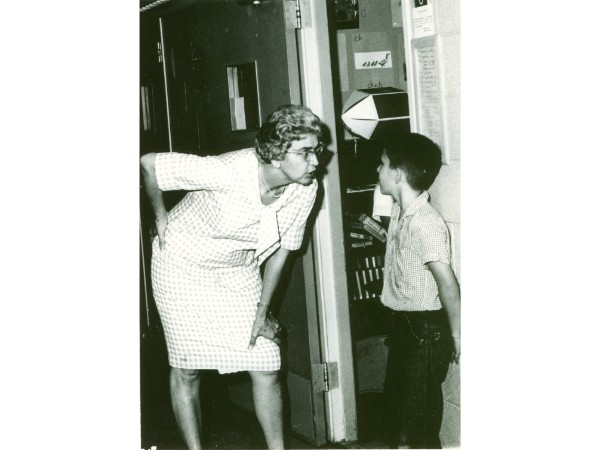
    This article examines how surveillance, discipline, and punishment have been inscribed on the bodies of schoolchildren throughout history. Drawing on historical photographs and visual ethnographic methods, Margolis and Fram analyze the ways schools have used physical control and monitoring to regulate student behavior, revealing patterns that persist across decades of American education.

    The research reveals how photographic evidence captures moments of institutional power exercised over children’s bodies — from dress codes and physical positioning to more overt forms of discipline — illuminating the hidden curriculum of bodily control in educational settings. By reading these images against the grain, the authors uncover how schools function as sites where docile bodies are produced through routine practices of observation and correction.

    Margolis and Fram situate their analysis within broader debates about the relationship between visual culture and institutional authority. The photographs examined in this study — drawn from school archives, yearbooks, and documentary collections — serve as both evidence of disciplinary practices and as instruments of surveillance themselves. The camera’s presence in schools, the authors argue, is never neutral; it participates in the very power dynamics it records.

    The article contributes to the growing field of visual sociology by demonstrating how historical photographs can be used as primary sources for understanding the embodied dimensions of educational experience. It challenges readers to look beyond the surface of familiar school imagery and recognize the disciplinary apparatus embedded in everyday scenes of classroom life.
  • School as Ceremony and Ritual: How Photography Illuminates Performances of Ideological Transfer

    School as Ceremony and Ritual: How Photography Illuminates Performances of Ideological Transfer

    Images of the places and activities called “school” as a formal institution are rich data for the inquiring gaze. This article

  • Images of assimilation: photographs of Indian schools in Arizona

    Images of assimilation: photographs of Indian schools in Arizona

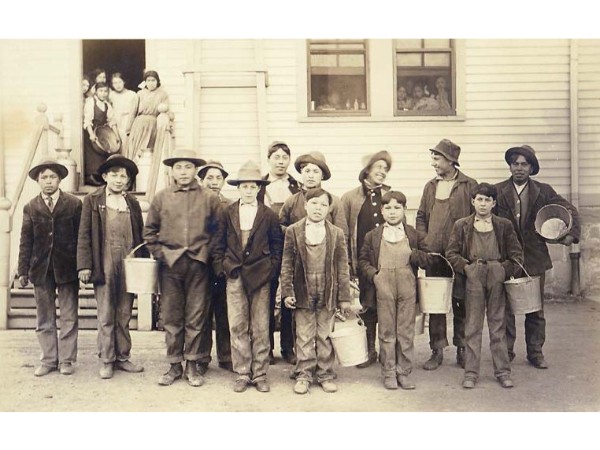
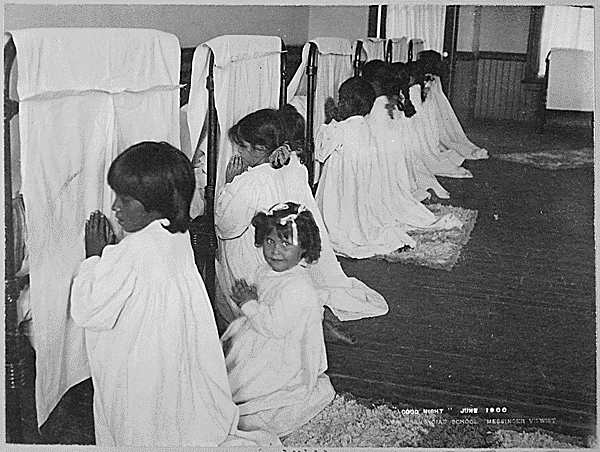
    In the late nineteenth and early twentieth centuries, the United States government established a network of boarding schools designed to assimilate Native American children into white American culture. In this article, Eric Margolis and Jeremy Rowe examine photographs from these Arizona schools to reveal how the visual record both documented and participated in the project of cultural erasure.

    The photographs follow a striking pattern: “before and after” images show children transformed from their traditional appearance into uniformed students with cropped hair and Western clothing. Margolis and Rowe argue that these images were not neutral records but deliberate propaganda — produced to demonstrate the “success” of assimilation programs to government officials, philanthropic donors, and the general public.

    Yet the same photographs, read against the grain, reveal what the original photographers did not intend to show: the resistance in children’s eyes, the persistence of cultural identity despite institutional pressure, and the physical conditions of schools that were often overcrowded, underfunded, and harsh. The article demonstrates how visual analysis can recover suppressed narratives from within the very images that were designed to erase them.

    Published in History of Education, this article contributes to the growing body of scholarship that uses visual evidence to re-examine the history of Indigenous education in America.

  • Integrating Sociology: Observations on Race and Gender Relations in Sociology Graduate Programs

    Integrating Sociology: Observations on Race and Gender Relations in Sociology Graduate Programs

    What do the experiences of graduate students reveal about the state of race and gender relations within sociology itself? In this collaborative study, Eric Margolis and Mary Romero surveyed graduate students across multiple departments to document patterns of inclusion and exclusion that shape who survives the doctoral process and who does not.

    The findings paint a troubling portrait of departments that, despite their disciplinary expertise in social inequality, often reproduce the very hierarchies they study. Students of color and women reported systematic differences in mentorship, funding, and intellectual validation that accumulated over the course of their graduate careers.

    Published in Race and Society, this article provides empirical grounding for ongoing debates about diversity in the academy and the gap between sociology’s analytical commitments and its institutional practices.

  • Looking at Discipline, Looking at Labor: Photographic Representations of Indian Boarding Schools

    Looking at Discipline, Looking at Labor: Photographic Representations of Indian Boarding Schools

    Eric Margolis is a sociologist in the Division of Educational Leadershipand Policy Studies at Arizona State University. His article, ‘ClassPictures: Representations of Race, Gender and Ability in a Century of SchoolPhotography’ (Visual Sociology Vol. 14,1999) was reprinted in Education Policy Analysis Archives http://epaa.asu.edu/epaa/v8n31/.He has produced visual sociology projects including photography exhibitions,multimedia and video programmes.

    ISSN 1472-586X printed/ISSN 1472–5878 online/02/020085–07 # 2004 International Visual Sociology Association DOI: 10.1080/1472586042000204861

    FIGURE 1. Debating class, Carlisle Indian School, Carlisle, Pennsylvania between ca. 1900 and 1903. Frances Benjamin Johnston Collection, Library of Congress, LC-USZ62-38126.

  • Paradigms, Disciplines and Human Understanding

    Paradigms, Disciplines and Human Understanding

    In this theoretical article, Eric Margolis examines three influential paradigms for understanding education — those associated with Talcott Parsons, B.F. Skinner, and Adam Smith — and argues that each offers only a partial and static explanation for what is fundamentally a dynamic social process. By analyzing these frameworks side by side, Margolis reveals how each reduces the complexity of education to a single dimension: socialization, behavioral conditioning, or human capital formation.

    The article traces how these paradigms have shaped educational policy and practice, often in ways that their original proponents did not intend. Parsons’ functionalism naturalized existing social hierarchies; Skinner’s behaviorism reduced learning to stimulus and response; Smith’s economics transformed education into an investment calculation. Each paradigm, Margolis argues, serves particular interests while obscuring others.

    Moving beyond critique, the article proposes a more integrated approach to understanding education that draws on the sociology of knowledge and the concept of paradigms as disciplinary structures. Margolis argues that recognizing the limitations of dominant frameworks is a necessary first step toward developing more adequate accounts of how education actually works in society.

  • Three Static Explanations for Describing Education: Parsons, Skinner and Smith

    Three Static Explanations for Describing Education: Parsons, Skinner and Smith

    essay on Durkheim and Freire (above). The form of Parsons ' discussions of the functions of education systems is the familiar LIGA "paradigm. "2 In going beyond these general functions, Parsons differentiates four functions of the higher education complex, each of which is conceived of as analogous to an industry. Each function (or industry) has a chapter devoted to it in The American University.

    I. Parsons This essay will examine passages from Talcott Parsons, 1 B.F. Skinner" " and Robert G. Smith as analyses of, or "explanation logics for "education. It will endeavor to show that the explanation-logics are not neutral, scientific or even very descriptive. They assume what they purport to explain; acknowledging them is a political decision—not a "learning of the truth." To Parsons the application of the general Parsonian functional scheme to education, while specifically referenced to the American University, is ' identical in substance to Emile Durkheim s socialization and division of labor functions. In the preface to The American University written by Talcott Parsons alone, Parsons states that he ". . . had long decided that higher education, including the research complex, had become the most critical single " feature of the developing structure of modern societies (1973:VI). While no immediate reason is given for this belief, it becomes clear that it is based on a Durkheim-like analysis of functions which perpetuate the moral community ' and advance the division of labor. Durkheim s assumptions with respect to

    The first industry is the "general education " industry. It forms the base line from which others are differentiated. The second is the research industry which is concerned with enhancing the cognitive capacity. . . . A third is graduate training of the . . . successors of current academicians. 3 A fourth industry . . . (is) the training of practitioners in the applied professions " (1973:5-6). In addition, the university complex also performs a general ideological function which is described as contributing to the "general cultural definition of the situation" (1973:6). However, this role is shared with intellectuals outside the university. The diagram on the next page shows the relationships of each function with the others and with the university complex as a whole.

  • Liberal Documentary Goes to School: Farm Security Administration Photographs of Students, Teachers and Schools

    Liberal Documentary Goes to School: Farm Security Administration Photographs of Students, Teachers and Schools

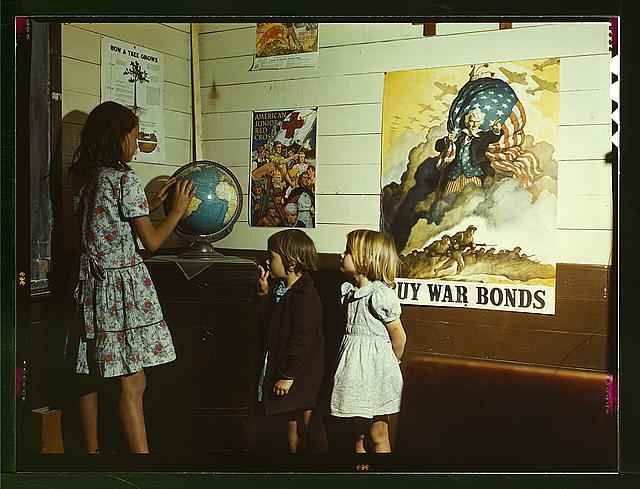
    During the Great Depression, photographers working for the Farm Security Administration produced some of the most iconic images of American hardship and resilience. In this article, Eric Margolis turns his attention to the FSA photographs that documented schools, teachers, and students — images that reveal how education functioned in communities devastated by economic collapse.

    Margolis analyzes these photographs not simply as historical documents but as products of a particular political vision. The FSA photographers were dispatched to build public support for New Deal programs, and their images of rural schools simultaneously documented real conditions and constructed a narrative about the redemptive power of education in times of crisis.

    The article demonstrates how visual analysis can recover meanings embedded in historical photographs that textual sources alone cannot provide, contributing to both the history of education and the methodology of visual research.