
Challenging Fronteras: Structuring Latina and Latino Lives in the U.S. Co-edited with Pierrette Hondagneu-Sotelo and Vilma Ortiz, this collection examines the social, economic, and political structures shaping Latino/a experiences in the United States.
Author: Mary Romero
-
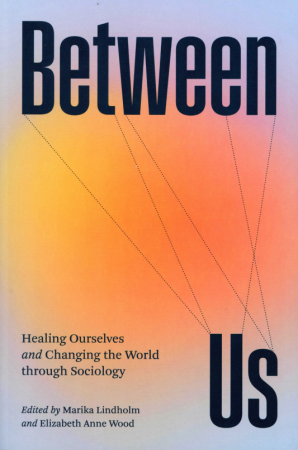
La Vida Chicana and the Art of Savage Discovery
Mary Romero
March 20, 1969, was not a usual Thursday afternoon spent waiting for the school bell to ring. Instead, our principal, Sister Benedict, an nounced over the intercom that Cathedral High School was on lock down because riots had broken out and protesters were moving to ward downtown, where the school was located. Dead silence filled our classroom. Chicano and Black students exchanged knowing glances. We were all aware of the increasing racial tension between our com munities and the Denver Police Department. There had been recent demonstrations against the police shootings of an African American man and an eighteen-year-old Chicano. Chicano and Black activism on the issues of school and housing segregation added to the charged atmosphere. Many white students were shifting uncomfortably in their seats, avoiding eye contact with us. By the time Sister Benedict an nounced permission to leave the school, it was too late to catch any bus other than the one near a police station, which I’d hoped to avoid. On other days, my journey home normally included a stop at Woolworths to drink a coke with friends before catching the bus. This Thursday, however, I avoided our customarily interracial group of friends. Many of the white students headed out to meet worried parents waiting in nearby cars. While some students of color walked together to catch buses, I avoided joining them, figuring that walking alone was less likely to attract police attention.
While walking the eight city blocks to the bus stop, I heard the con stant whine of police sirens. Older white riders at the stop avoided eye contact with me and other regular riders of color. As we waited, two young Chicano guys passed by quickly, swiveling their heads to check for police cars. Both appeared to have been beaten up. When my bus arrived, I was relieved to find an empty seat in the back that allowed me to avoid other passengers.
Not long after the bus began its route south, I found out that the “riot” began as a walkout by West High School students, who were joined by Chicano activists from the Crusade for Justice, an organi zation that encouraged cultural pride and provided resources such as bilingual schools and food banks for the Chicano community. West High was predominantly Mexican American and Black. At Lincoln, the public high school in my neighborhood, where I would have gone if I hadn’t convinced my parents to let me go to parochial school, the students were divided-Mexican Americans lived on one side of the boulevard and whites on the other side. Inside the school, these groups were tracked into different types of curricula, which were supposed to group students according to ability, IQ, and achievement level. How ever, race was the dominant criteria used: Mexican Americans and Blacks were assigned to vocational training, whites to college prep. My older brother and sister attended Lincoln. All their friends were Mexican Americans, except one or two whites who lived on our side of the boulevard. Both my sibs were tracked, and I cannot remember either of them doing homework or even talking about going to college.
I knew Cathedral High School was not a utopia. Even though I was in the same curriculum as the white students, they were always men tored to attend a four-year college or university. When I expressed in terest in college, the nuns advised me to apply to a community college. However, the dean of girls encouraged me to apply to Regis College, a private four-year school now called Regis University, a d helped me obtain financial aid. Even if I’d gone to community college, I was much better off than the male Mexican American students in my cohort. The war in Vietnam was raging, and they were advised to enlist in the mili tary. I still recall the day Doug Vargas was called out of class to receive the horrible news that his older brother, an alumnus of the school, had died in Vietnam. My brother enlisted in the navy to avoid being drafted into the army and becoming more likely to be placed on the front lines. While none of my cousins or neighborhood friends were killed in Viet nam, many returned with serious PTSD and drug addiction.
Sitting on the bus watching the Denver Police with billy clubs and weapons surround West school and the nearby park, I felt incredibly sad and angry. I couldn’t forget the bleeding faces of some West High School students who had been beaten by the police. Before that day, I’dfelt joy, seeing only brown faces, Chicano murals, Chicano com munity centers, and shops in the surrounding neighborhood. As the bus pulled away from the stop, I began to see the neighborhood dif ferently. Now I realized how old and run-down the West High School building had become. Instead of bright murals, I noticed the factories and pollution surrounding this barrio, the old buildings and cracked sidewalks, the highway dividing our communities.
A year later, I felt part of the Chicano struggle for better schools and housing, political representation, and equal rights. And these were my goals when I enrolled in my first college sociology course. I wanted to learn everything about the Chicano movement, Black Power move ment, American Indian movement, and Vietnam War protests. Why did school segregation exist? Why weren’t the streets paved in my neigh borhood? Why were there no sidewalks? Why did I never have a teacher who looked like me? Why were the police so violent in our neighbor hoods? As I read about Mexican Americans as a minority group, I was surprised to find us classified as an ethnic group instead of a racial group. After all, the Ku Klux Klan and police in Denver targeted visible African Americans and Mexican Americans. The students at West High School had not been demanding change as an ethnic group, but as a racial group-Brown is beautiful!
I was further confused by the sociological explanations given for social issues. I knew there were poor white people, so how did the concept of cultural deprivation, which was based on identifying cul tural disadvantages, such as having inferior norms, values, skills, and knowledge, or the notion of a culture of poverty, which blamed the problem on a values system that perpetuated poverty from one gener ation to another, explain low wages, discriminatory hiring practices, poor access to healthcare, and disproportionate deaths in Vietnam? What did being tracked in elementary school, and my brother and sister’s limited options in high school vocational training, have to do with our cultural practices at home? Certainly, Catholicism, listening to corridos, living in a household that included my grandmother and occasionally cousins, and eating tamales on Christmas were not why I experienced tracking in school. I couldn’t accept the belief that as similation (acquiring the cultural traits of white middle-class citizens in place of my working-class Chicano culture) was the great equalizer. This process of absorbing the dominant culture, or acting white, was not going to give me access to equipment in science class, college prep courses, or a well-funded library. These sociological concepts bore lit tle resemblance to my experiences growing up in Denver in the ’50s and ’60s. I also knew that changing me was not going to change the community.
The first book I read in college that offered what I thought was a reasonable explanation for my experience and that demonstrated the connections between schooling, housing, and poverty was William Ry an’s Blaming the Victim. Beginning with the first chapter, “The Art of Savage Discovery,” I began to see how problems, defined as cultural deprivation and the culture of poverty, were actually theories used to blame Chicanos for the racial inequality they experienced. Poor housing conditions and lack of street and sidewalk maintenance were attributed to residents’ disregard for personal property rather than to the negligence of landlords and the scarce resources allocated to communities of color. High dropout rates were frequently attributed to parents’ failure to embrace educational aspirations for their chil dren rather than to poorly trained teachers, segregated schools, and vocational tracking. Instead of connecting discrimination to exclusion and suppression, the lack of political representation was regarded as Chicanos’ cultural tendency to follow others rather than to develop leadership skills. While reading later chapters, I began to better un derstand the structural changes that the West High School students demanded in their walkout: bilingual education, classes in Chicano history and literature, desegregation of schools, the hiring of teachers of color, and an end to the practice of advising students to join the military instead of pursuing college.
As I continued through undergraduate and then graduate educa tion, schools, healthcare, media, and government programs slowly integrated in response to the Chicano movement’s call for civil rights. I was particularly attuned to identifying the ways that responses em phasizing culture, cultural deprivation, and assimilation were a source of social control in our communities. Bilingual family members were frequently called upon to translate at work, but they were never paid extra and were more likely to be denied promotions so they would re main available to assist higher-paying management. As bilingual edu cation expanded in Denver, my sister-in-law was recruited for low-level teaching positions, such as teacher aide and parent advocate. Although she was required to regularly enroll in training classes, she was never given the opportunity to acquire a teaching certificate. Consequently, bilingual Chicanas such as herwere paid less, and they were supervised by monolingual English-speaking teachers.
I examined how assimilation programs in the Southwest controlled Chicano and Mexican immigrant workers, tracked schoolgirls into do mestic science, and functioned as tools to erode solidarity. As the War on Poverty, affirmative action, and other initiatives developed around diversity and inclusivity, I began to develop research questions that examined the processes used to incorporate Mexican culture into white spaces where Chicanos remained subordinate. I found that removing Mexican culture from social spaces dominated by the Mexican com munity and appropriating them into white-dominated spaces served white diversity narratives and their interests, but ultimately functioned to subordinate Mexican people and culture. I continue to engage in research that aims to expose the mechanisms of social inequality and processes of marginalization.
As I revisit Denver, I’m dismayed to see the persistent inequality in schooling and housing. In response to desegregation mandates, white families moved to the suburbs, and more than half of the Denver School District remains segregated. A large portion of the community surrounding West High School was demolished to expand the Uni versity of Colorado at Denver and Metropolitan State College. Several other Chicano and Mexican immigrant neighborhoods are undergoing gentrification, forcing residents to move to the neighborhood I grew up in, located in southwest Denver. An enormous police station has taken the place of the K-Mart, and there is a constant police presence throughout the area. There are also positive changes that mark the advances gained from the Chicano movement and Civil Rights move ment. Among a visible Chicano middle class are lawyers, doctors, ad ministrators, school principals, teachers, and professors. It has been a long and difficult journey since the day I rode the bus past West High School, but there have been advancements in racial equality. Still, the work is far from over, and we must journey onward.
-

Bursting the Foundational Myths of Reproductive Labor under Capitalism: A Call for Brave New Families or Brave New Villages
Bursting the Foundational Myths of Reproductive Labor under Capitalism: A Call for Brave New Families or Brave New Villages by Mary Romero. This work contributes to the sociology of education, examining how institutional structures, pedagogical practices, and hidden curricula shape the experiences of students, teachers, and faculty.
The research employs rigorous qualitative and analytical methods to examine the social, cultural, and institutional dimensions of its subject matter. By grounding theoretical analysis in empirical evidence, the work offers both scholarly insight and practical implications for understanding complex social phenomena.
Mary Romero situates this analysis within broader debates about the role of educational institutions in either reproducing or challenging social inequalities. The findings have implications for how we understand the relationship between formal schooling, social mobility, and the transmission of cultural values across generations.
The article contributes to a growing body of scholarship that challenges taken-for-granted assumptions about educational institutions and their role in society. By making visible the hidden dimensions of academic life, this research encourages educators, administrators, and policymakers to critically examine the structures and practices that shape student experiences and outcomes.
-

Who Takes Care of the Maid’s Children? Exploring the cost of Domestic Service
When a mother works as a live-in domestic, who cares for her own children? Mary Romero’s investigation of this question reveals one of the most painful contradictions of paid care work: the women who nurture other people’s families often do so at the expense of their own. This article explores the hidden costs of domestic service borne by the workers’ children — costs that are invisible to employers and absent from economic calculations of the value of care.
Through interviews with domestic workers and their families, Romero documents the strategies mothers use to maintain bonds with their children despite long separations, the emotional toll on children who grow up in the shadow of their mother’s work, and the ways class and racial inequality are reproduced across generations through the organization of care.
-

Sisterhood and Domestic Service: Race, Class, and Gender in the Mistress-Maid Relationship
The relationship between a domestic worker and her employer is unlike any other labor arrangement — it unfolds in the intimate space of the home, blurs the boundaries between personal and professional, and is structured by deep inequalities of race, class, and gender. In Sisterhood and Domestic Service, Mary Romero critically examines whether feminist solidarity can bridge the divide between women who hire domestic help and the women who perform it.
Drawing on interviews with Chicana domestic workers, Romero challenges the notion that shared gender identity creates meaningful bonds across the employer-employee relationship. Instead, she reveals how the mistress-maid dynamic reproduces racial and class hierarchies even within households that consider themselves progressive or feminist.
Published in Humanity and Society in 1988, this article was among the first to apply an intersectional lens to the politics of domestic labor, anticipating debates that would reshape feminist theory in the decades to come.
-

Chicanas Modernize Domestic Service
In this influential study, Mary Romero examines how Chicana domestic workers in the late twentieth century actively transformed the occupation of household labor. Rather than passively accepting the traditional mistress-maid relationship, these women renegotiated the terms of their employment — setting their own schedules, defining tasks, and establishing professional boundaries that challenged the deeply personal nature of domestic work.
Romero’s qualitative research reveals a process of modernization driven from below, as Chicana workers drew on cultural resources, community networks, and strategic agency to reshape domestic service from a feudal arrangement into something closer to a modern occupation with defined roles and expectations.
Published in Qualitative Sociology in 1988, this article helped establish Romero as a leading scholar of domestic labor and laid the groundwork for her landmark book Maid in the U.S.A.
-

Life as the Maid’s Daughter: An Exploration of the Everyday Boundaries of Race, Class, and Gender
Growing up as the daughter of a live-in domestic worker, the subject of this study occupied a unique position between two worlds — the affluent household where her mother worked and the working-class community where she was raised. Mary Romero’s ethnographic exploration of these everyday boundary crossings reveals how race, class, and gender are negotiated in the most intimate spaces of American life.
The article traces how a child learns to navigate radically different social worlds, developing a double consciousness born of daily immersion in privilege that is not her own. Through careful observation and narrative analysis, Romero illuminates the emotional labor, identity conflicts, and strategies of survival that define this experience.
This research laid the groundwork for Romero’s acclaimed book The Maid’s Daughter: Living Inside and Outside the American Dream (NYU Press, 2011).
-

Nanny Diaries and Other Stories: Immigrant Women’s Labor in the Social Reproduction of American Families
* A longer version of this paper was originally published in DePaul Law Review 52, no. 3 (2003). •• Ph.D. en Sociología de University of Colorado, Estados Unidos. Profesora de Justice Studies en Arizona State University, Estados Unidos. Correo electrónico: nnary.romero@asu.edu
Nanny Diaries and Other Stories: Immigrant Women's Labor in the Social Reproduction of American Families Mary Romero
Wanted: One young woman to take care of four-year-old boy. Must be cheerful, enthusiastic, and selfless—bordering on masochistic. Must relish sixteen-hour shifts with a deliberately nap-deprived preschocler. Must love getting thrown up on, literally and figuratively, by everyone in his family. Must enjoy the delicious anticipation ofridiculously erratic pay. Mostly, must love being treated like fungus found growing out of employer's Hermes hag. Those who take it personaïïy need not apply (McLaughlin and Kraus 2002, back cover)
-

The Inclusion of Citizenship Status in Intersectionality: What Immigration Raids Tells us About Mixed-Status Families, the State and Assimilation
When immigration raids sweep through a community, they do not only affect undocumented individuals — they tear through entire families, including U.S.-citizen children, legal residents, and mixed-status households. In this article, Mary Romero argues that any meaningful analysis of immigration must account for how citizenship status functions as a dimension of intersectionality alongside race, class, and gender.
Drawing on documented cases of immigration enforcement actions, Romero examines how raids create cascading effects that destabilize families, traumatize children, and undermine the social fabric of communities. The article reveals how the state’s power to classify, surveil, and deport operates differently depending on the intersection of an individual’s legal status with their race, gender, and class position.
Published in the International Journal of Sociology of the Family, this article has become an important reference point for scholars working at the intersection of immigration studies and intersectional theory.