
sense but is that of the engaged researcher. He clearly cares about the lives of
Author: Eric Margolis
-

The Department is Very Male, Very White, Very Old, Very Conservative
What is it like to be a graduate student in a sociology department dominated by senior white male faculty with deeply conservative intellectual commitments? In this landmark article, Eric Margolis and Mary Romero document how the hidden curriculum of graduate sociology departments functions to reproduce race, class, and gender inequalities among the next generation of scholars.
Based on extensive interviews with graduate students, the article reveals a pattern of departmental culture in which theoretical orthodoxy is enforced through informal channels — through the allocation of research assistantships, the composition of dissertation committees, the social dynamics of departmental gatherings, and the subtle signals that communicate which students and which ideas truly belong.
Published in the Harvard Educational Review, this article became one of the most widely cited studies of graduate education and helped establish the hidden curriculum as a central concept in the sociology of higher education.
-
Methodological Approaches to Disclosing Historic Photographs
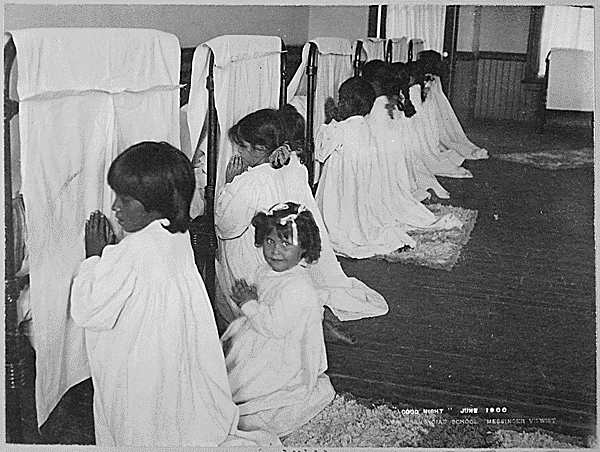
Historical photographs hold enormous potential as sources for social research, but working with images from the past presents unique methodological challenges. In this article, Eric Margolis and Jeremy Rowe develop a systematic approach to disclosing — that is, interpreting and contextualizing — historic photographs as evidence of social conditions, institutional practices, and cultural values.
The authors draw on examples from their research on educational institutions, mining communities, and Native American boarding schools to illustrate how photographs can be read at multiple levels: as records of physical conditions, as expressions of the photographer’s intent, as products of institutional power, and as sites where meaning is actively constructed by viewers across time.
Margolis and Rowe address the practical challenges of provenance, dating, and contextual reconstruction that arise when working with archival photographs, and propose a framework that balances close visual analysis with attention to the social and institutional contexts in which images were produced and circulated.
Published in Visual Studies, this article has become an important methodological reference for researchers working with historical visual materials across disciplines.