Author: Eric Margolis

  • Drug Policy in the Time of AIDS: The Development of Outreach in San Francisco

    Drug Policy in the Time of AIDS: The Development of Outreach in San Francisco

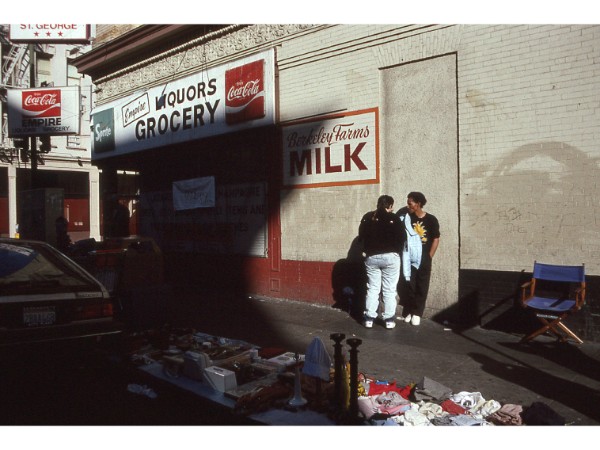
    As the AIDS epidemic swept through American cities in the 1980s, San Francisco became a laboratory for innovative public health responses — including the controversial development of outreach programs targeting injection drug users. This article by Eric Margolis examines how drug policy was transformed under the pressure of a public health emergency that demanded approaches fundamentally different from the punitive frameworks that had dominated American drug enforcement.

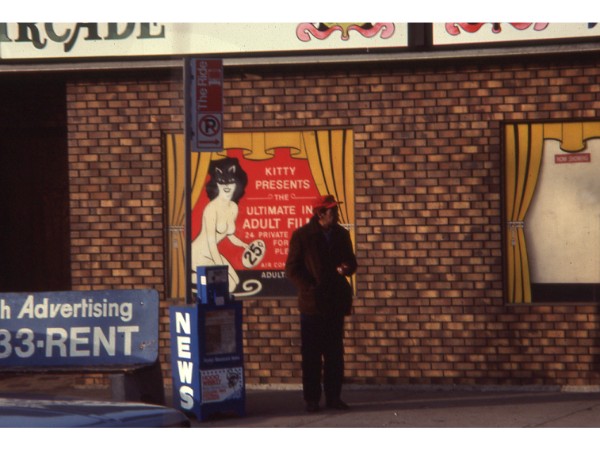
    The study traces the evolution of San Francisco’s outreach model from its origins in community-based harm reduction efforts to its gradual acceptance by public health authorities. Margolis documents how outreach workers — many of them former drug users themselves — navigated the dangerous spaces of street drug culture to provide clean needles, health information, and connections to treatment services.

    The article situates these local efforts within broader national debates about harm reduction versus abstinence-based approaches, showing how the urgency of the AIDS crisis forced a pragmatic rethinking of drug policy that had implications far beyond San Francisco. The research draws on fieldwork, interviews with outreach workers and public health officials, and analysis of epidemiological data.

    Published in Social Problems, this article provides important documentation of a critical period when the collision of the drug epidemic and the AIDS crisis forced American institutions to confront the limitations of purely punitive approaches to drug use.

  • Dissed in the Department: Women of Color Graduate Students Talk about Integrating Sociology

    Dissed in the Department: Women of Color Graduate Students Talk about Integrating Sociology

    What happens when women of color enter the predominantly white, male world of graduate sociology? In Dissed in the Department, Eric Margolis and Mary Romero give voice to graduate students whose experiences reveal a hidden curriculum of exclusion operating within the very discipline that studies social inequality.

    Through in-depth interviews, the article documents how women of color graduate students navigated departments where their presence was simultaneously tokenized and ignored — where faculty mentorship was scarce, where their research interests were dismissed as “not real sociology,” and where the social dynamics of seminars and colloquia reproduced the racial and gender hierarchies the discipline purported to critique.

    The findings expose a troubling gap between sociology’s stated commitment to diversity and the lived experiences of those who embody it, raising fundamental questions about who is welcomed in academia and on whose terms.

  • Between Feast and Famine: Coal Communities in the American West

    Between Feast and Famine: Coal Communities in the American West

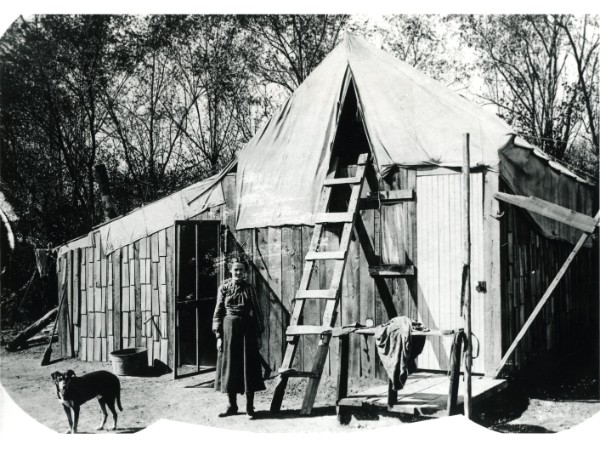
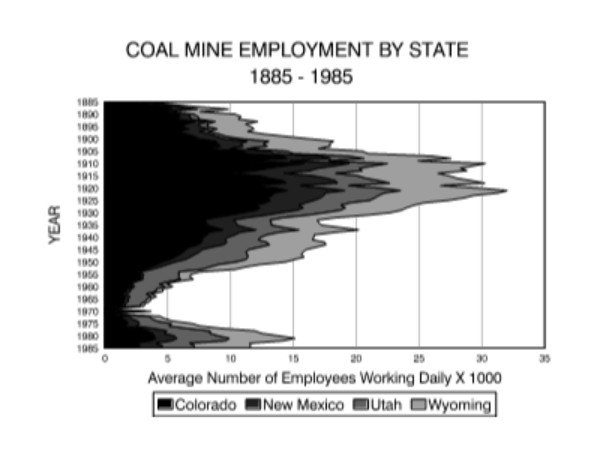
    In the American West, coal mining communities experienced dramatic cycles of growth and decline that shaped generations of workers and their families. Between Feast and Famine documents the volatile economic and social conditions in these communities, where periods of booming production and relative prosperity alternated with devastating busts that left towns abandoned and families displaced.

    Eric Margolis draws on extensive photographic archives and historical records to reconstruct the everyday realities of life in western coal camps — the company stores, the cramped housing, the dangerous working conditions, and the tight-knit social bonds that sustained communities through hardship. The visual evidence reveals dimensions of working-class experience that written records alone cannot convey.

    This article is part of Margolis’s larger body of photographic research on Colorado coal mining, which has been recognized as a pioneering contribution to both visual sociology and western labor history.

  • On Using Found Object Photographs in School Research

    On Using Found Object Photographs in School Research

    Photographs found in archives, flea markets, and family collections offer rich but methodologically challenging material for educational research. In this article, Eric Margolis and Jeremy Rowe develop a framework for using “found object” photographs as primary sources for studying schools and schooling.

    The authors address the practical and theoretical challenges of working with images whose provenance, context, and intended meaning may be unknown or uncertain. They propose methods for reading these photographs against the grain — extracting information about spatial arrangements, social hierarchies, and institutional practices that the original photographers may not have intended to document.

    The article contributes to visual research methodology by demonstrating that even photographs without clear documentation can yield significant insights when approached with appropriate analytical tools.

  • Visual Ethnography: Tools for Mapping the AIDS Epidemic

    Visual Ethnography: Tools for Mapping the AIDS Epidemic

    Visual Ethnography: "Tools for Mapping the AIDS Epidemic" Margolis, Eric Journal of Contemporary Ethnography; Oct 1, 1990; 19, 3; ProQuest pg. 370

  • Colorado’s Wobbly Strike

    Colorado’s Wobbly Strike

    Between 1927 and 1928, the Industrial Workers of the World — known as the Wobblies — led one of the last major coal strikes in Colorado history. This article by Eric Margolis reconstructs the events, strategies, and outcomes of the strike through a combination of archival research, oral history interviews with surviving participants, and photographic evidence.

    The strike erupted in the coalfields of southern Colorado, where miners had long endured dangerous working conditions, company-controlled housing, and wages that barely sustained their families. The Wobblies brought a vision of industrial unionism and worker solidarity that challenged not only the coal operators but also the more conservative leadership of the United Mine Workers.

    Margolis documents how the strike was ultimately broken through a combination of corporate intransigence, state intervention through martial law, and the internal tensions between radical and moderate factions within the labor movement. Yet the legacy of the Wobbly strike, he argues, extended far beyond its immediate defeat — it contributed to the gradual erosion of the feudal labor system that had governed Colorado’s coalfields for decades.

    Drawing on interviews conducted between 1976 and 1984 with miners who participated in the strike, this article preserves firsthand accounts that would otherwise have been lost to history.

  • Class Pictures: Representations of Race, Gender, and Ability in a Century of School of Photography

    Class Pictures: Representations of Race, Gender, and Ability in a Century of School of Photography

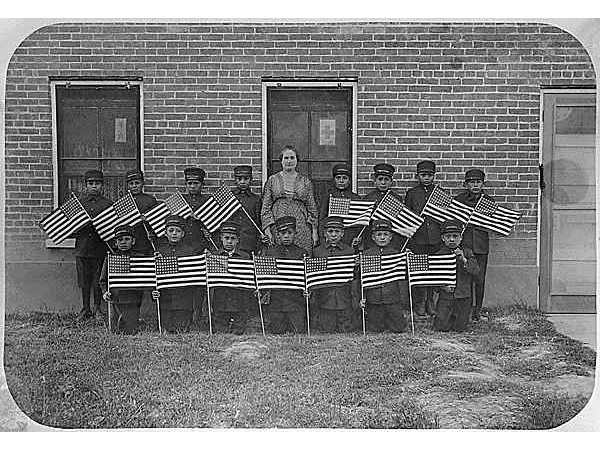
    For over a century, school photographs have served as a ritual of American education — class pictures, yearbook portraits, and group shots that seem to capture innocent moments of childhood. In Class Pictures, Eric Margolis looks beneath the surface of this familiar genre to reveal how school photography has systematically represented and reinforced hierarchies of race, gender, and ability.

    Analyzing photographs spanning from the late nineteenth century to the present, Margolis demonstrates how the composition, staging, and distribution of school images reflect the social order of their time — who is centered and who is marginalized, who is shown as capable and who as dependent, whose bodies are disciplined and whose are celebrated.

    The article contributes to the growing field of visual studies in education, showing how everyday photographic practices participate in the construction of social categories that students carry with them long after they leave school.

  • “Images in Struggle: Photographs of Colorado Coal Camps.” Visual Sociology, (1994) Vol. 9, No. 1, pp. 4-26

    “Images in Struggle: Photographs of Colorado Coal Camps.” Visual Sociology, (1994) Vol. 9, No. 1, pp. 4-26

    Published in Visual Sociology in 1994, this article presents a visual ethnography of the Colorado coal camps that were at the center of some of America’s most dramatic labor conflicts. Eric Margolis uses photographs from the late nineteenth and early twentieth centuries to document the physical landscapes, living conditions, and social dynamics of communities built around coal extraction.

    The photographs examined in this study — drawn from company archives, union records, newspaper morgues, and private collections — reveal a world of stark contrasts: the orderly grid of company housing against the wild terrain of the Rocky Mountain foothills, the formality of posed group portraits against the chaos of strike violence, the pride of skilled miners against the vulnerability of families dependent on a single dangerous industry.

    Margolis argues that these images are not mere illustrations of historical events but active participants in the struggles they depict. Photographs were used by mining companies to project an image of benevolent paternalism, by unions to document exploitation and mobilize support, and by newspapers to shape public opinion about labor conflict. Reading these competing visual narratives reveals the contested meanings of work, community, and power in the industrial West.

    This article is part of Margolis’s extensive body of photographic research on Colorado coal mining, which has been recognized as a pioneering contribution to visual sociology and western labor history.

  • Hogwarts Identified As Underperforming School! Ministry Takes Over, Headmaster Replaced Back To Basics Curriculum Imposed

    Hogwarts Identified As Underperforming School! Ministry Takes Over, Headmaster Replaced Back To Basics Curriculum Imposed

    In this satirical essay, Eric Margolis uses the fictional world of Harry Potter to illuminate very real dynamics of educational accountability and institutional power. When Hogwarts School is identified as “underperforming” and subjected to a regime of standardized testing and bureaucratic oversight, the parallels to contemporary education reform become unmistakable.

    The article uses humor and imagination to critique the No Child Left Behind era of education policy, examining how metrics-driven accountability systems can undermine the very qualities that make education meaningful. By transplanting these policies into J.K. Rowling’s magical world, Margolis makes visible the absurdity of reducing complex learning to measurable outcomes.

    Published in Education Review, this essay demonstrates how creative scholarly writing can reach audiences beyond the academy while making serious points about the politics of education.

  • Teaching John Dewey: An essay review of three books on John Dewey. Education Review, 10(14) November 2007

    Teaching John Dewey: An essay review of three books on John Dewey. Education Review, 10(14) November 2007

    An Essay Review of Three Books on John Dewey Eric Margolis Arizona State University

    Martin, Jay. (2002). The Education of John Dewey: A Biography. NY, NY: Columbia University Press Pp. 592 $43 (hard cover) ISBN 10: 0231116764 Simpson, Douglas J. (2006). John Dewey: Peter Lang Primer. NY, NY: Peter Lang. Pp. 159 $19 (paper cover) ISBN 10: 0820471364 Johnston, James Scott. (2006). Inquiry and Education: John Dewey and the Quest for Democracy. Albany, NY: State University of New York Press. Pp. 244 $25 (paper cover) ISBN 10: 0791467244

    Citation: Margolis, Eric. (2007, November 29). Teaching John Dewey: An essay review of three books on John Dewey. Education Review, 10(14). Retrieved [date] from http://edrev.asu.edu/essays/v10n14index.html