


Visual
Ethnography


Letter to the American Sociological Association challenging their position on Palestine
After reading the Executive Director and current ASA President’s letter stating that ASA will not honor previous practices and are unwilling to follow Section 9 of the Bylaws or respond to members’ concerns about the continued inclusion of Israeli academic institutions complicit in the genocide of Palestinians, I am withdrawing my participation in the 2026 annual meeting.
Israel policies and US administrations support have had an enormous impact on American universities: freedom of speech is increasingly compromised; international students are being denied visas, and many have been deported; Dreamers live in constant fear of detention and deportation; sociological research funding is being withheld; organizations like the Canary Mission and Turning Point USA are harassing and threatening faculty. How can ASA support sociology faculty and students when they are unwilling to address policies instigated by a foreign government, in consortium with the US regime that attack our research, teaching, practice, and funding?
The letter distributed to the membership selectively chose information that supported a view to justify violating Section 9 of the Bylaws. Over the life of our organization ASA has made numerous statements criticizing human rights violations as they particularly impact sociologists and students. There is ample sociological qualitative and quantitative data that Israel state policy established an apartheid system and are committing genocide against the Palestinian people. We also have ample sociological evidence of the role that institutions, including universities, grants, and scholarship, play in maintaining government policies. The resolution for the ASA Boycott of Israeli academic institutions assures that as an association, our membership does not contribute to or support organizations that participate in genocide, human rights violations or in the current US regime’s campaign of scholasticide.
The argument about membership is a red herring. Like other academic associations, ASA has low participation rates in voting. Members vote when issues are important to them or to their sections (and past data show that members identify more with their sections than the overall association). Low membership participation occurs not only when voting on policies but also when voting for elected officers. Yet, I have never heard of our association contemplating not installing an elected officer or rejecting a bylaw revision because only a minority of the total membership voted.
While some ASA members may have left in response to the 2024 resolution, there are many who stayed because it did pass. (If the Executive Office and Council were concerned with losing members, they might have considered the consequences of holding annual meetings exclusively on the East Coast and Chicago.)
For several years now, I have been disappointed as the Association moved from being a member’s incorporated Association to a Corporation that now relies on lawyers to justify actions not supported by the ASA Bylaws and increasingly centralizes all decision-making processes in the Executive Office thus removing democratic practices. I expressed these concerns in 2017 after the association made a complete transition that removed 10 long term staff members and began ignoring Council decisions made in the past, thus erasing the mechanisms of institutional memory, and eroding ASA’s structure as a membership-based organization.
After serving as a Council Member-at-Large (2006-2009) and Secretary (2013-2016), I returned for my first Council Meeting as President Elect in 2017 and was handed the meeting agenda book marked with the statement “Confidential For Council Use Only.” This statement binds Council members to secrecy, that prohibits Council members from discussing or seeking input with members before the Council deliberates policy. Council agreed that members had the right to know what topics/issues Council is to deliberate before the fact. In the past Council made this policy explicit by requiring the Executive Director to publicly post each Council’s Agenda well in advance of the meetings, allowing members to know what will be discussed in case they want to provide input.
ASA relies on enormous amounts of volunteer labor to function, and we serve gladly because we are a member association; that work may become less attractive and more difficult to justify if the association morphs into a corporation and continues its undemocratic practices. This could be as dangerous a time to be a sociologist as in Germany in the 1930’s. The fundamentals of sociological reason and research — that is, how social systems, structures, and functions work, change, and affect various social groups — are under attack by our own government. Antisemitism is being callously used as a propaganda weapon to fire university presidents and eliminate social sciences that criticize aspects of domestic or foreign policy. Campuses in Florida, Texas, and other states have been purged of sociological reason. Content is being dictated by state and federal government who have also commissioned “politically correct” textbooks. More than ever the American Sociological Association has to choose if it will use data and rationality to take a public stand and protect all social groups including Palestinians or knuckle under to an administration that has no respect for our discipline and in some cases see sociologists as the enemy.
Respectfully,
Mary Romero
Mary Romero’s New Articles & Books
All Books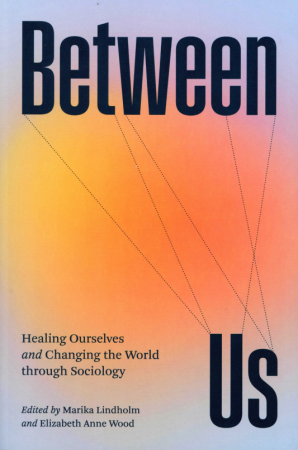
La Vida Chicana and the Art of Savage Discovery
Published in Between Us: Healing Ourselves and Changing the World Through Sociology (2024), University of Chicago Press.

Introducing Intersectionality
How can we hope to understand social inequality without considering race, class, and gender in tandem?

The Maid’s Daughter: Living Inside and Outside the American Dream
A complex rendering of the upbringing of Olivia — the daughter of a live-in maid to a wealthy family.
Publications
View All
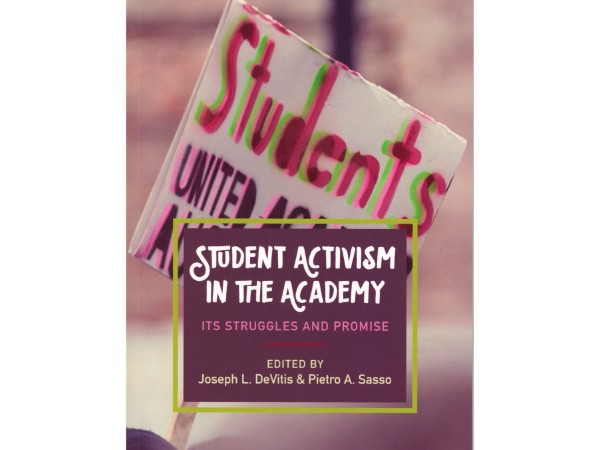
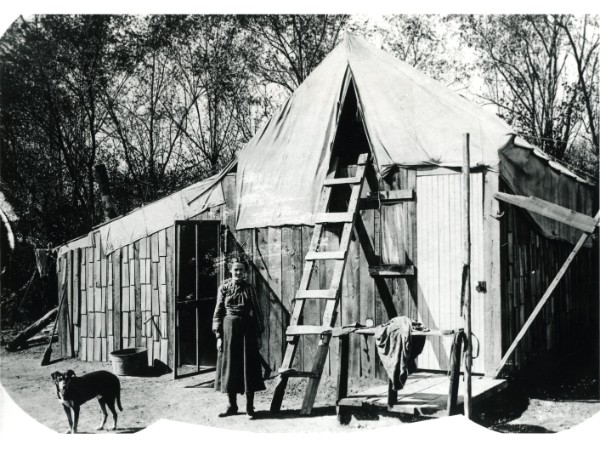
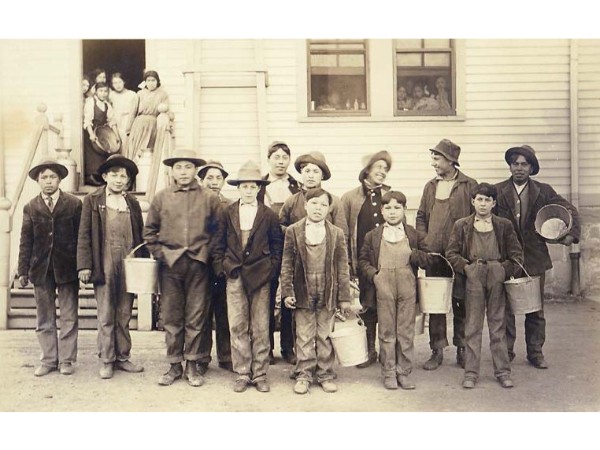
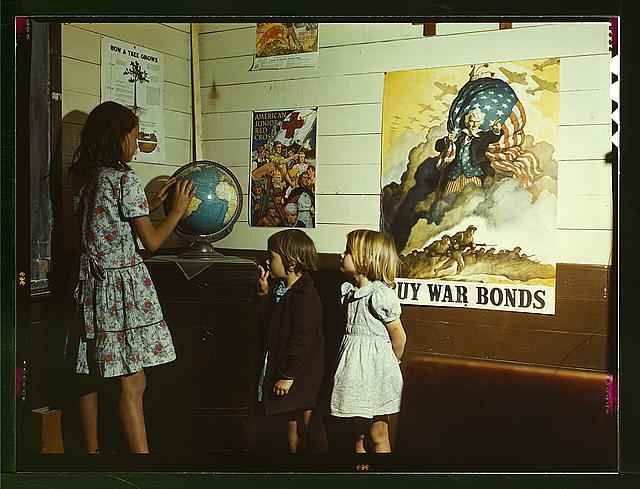

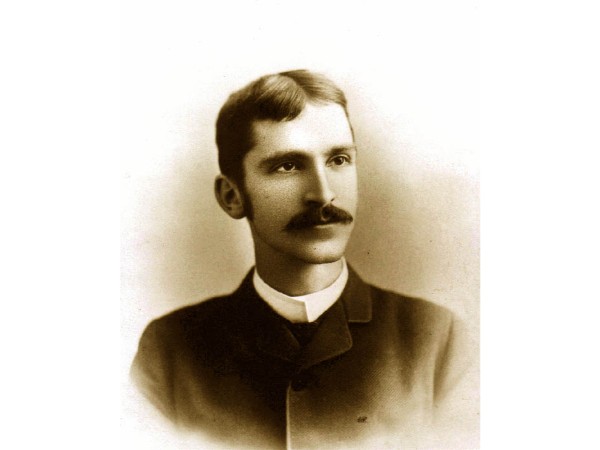
Photos of Eric Margolis


Latest from the Blog
All Posts-

W.E.B. Du Bois Career of Distinguished Scholarship Awarded to Mary Romero
Mary Romero, Arizona State University Mary Romero is Professor of Justice Studies and Social Inquiry at Arizona State University and…
-

Mary Romero’s Presidential Address August 2019 in NYC
In this paper, she dismantled the false history of sociology that ignored African Americans, persons of color, women, and social…
-

SCHOOLS, SOCIALIZATION, AND THE STATE: THE THREAT OF EDUCATIONAL REFORM
Abstract: School choice advocates make two arguments: the first is economic, that a “government monopoly” of schooling is inefficient, lacks…